
Mobility Matters—August 2026
This quarterly newsletter highlights recent projects, partnerships, and publications related to NLR’s transportation and mobility research.
Subscribe to receive this newsletter via email.
In This Edition
We're Exploring the Future at the Intersection of Transportation and Energy

Transportation is rapidly evolving from a stand-alone mobility sector into a foundational component of the nation's broader energy, industrial, logistics, and infrastructure systems. These sectors are increasingly becoming interconnected, with growing challenges requiring coordination and scale-up across transportation infrastructure, digital systems, energy systems, and operations.
As you'll see in this newsletter edition, NLR is intimately familiar with the complexities these sectors face. Our researchers are supporting affordability by identifying sources for alternative jet fuels and stronger supply chains by finding a way to use biomass to domestically produce the critical mineral graphite. We offer resources for American airports to meet travelers' needs without wasted costs, and for utility companies to proactively manage growing residential electricity demand.
We look forward to continuing to engage in these critical conversations that could inform the future of transportation and energy.
Drive on,

Chris Gearhart
Director, NLR's Center for Integrated Mobility Sciences
Research News Highlights
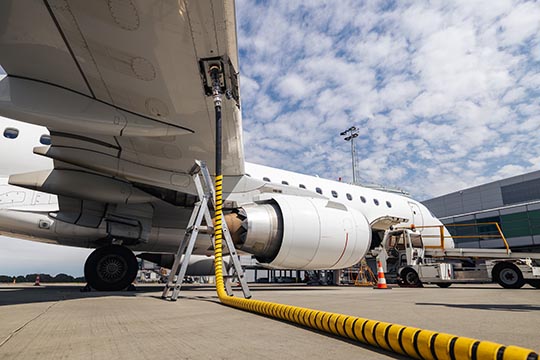
Researchers Evaluate Potential of Five Emerging Jet Fuels
Could emerging jet fuels help expand the current aviation fuel mix? That's the question NLR researchers tackled in a new NASA-funded report, where they evaluated the production potential of SAF liquid hydrogen, liquefied natural gas, liquefied ethane, and Jet X. Produced with domestic resources, these fuels represent potential to insulate the aviation industry and travelers from supply chain shocks.
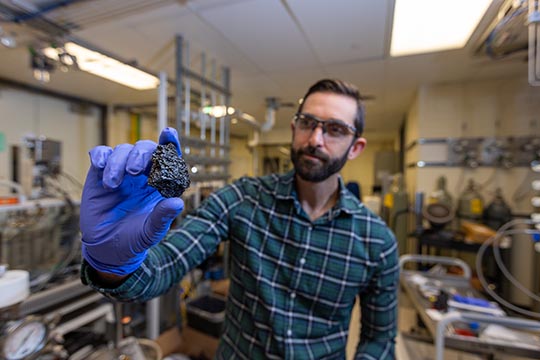
Could Turning Biomass Into Graphite Help Secure the U.S. Critical Mineral Supply?
The United States imports nearly half the graphite it needs. Now, NLR researchers have developed two novel pathways to create bio-based graphite at lower temperatures than conventional graphite, creating significant cost and energy savings. The processes, which leverage waste materials, could bolster American graphite production and secure a critical supply chain for battery and steel manufacturing.
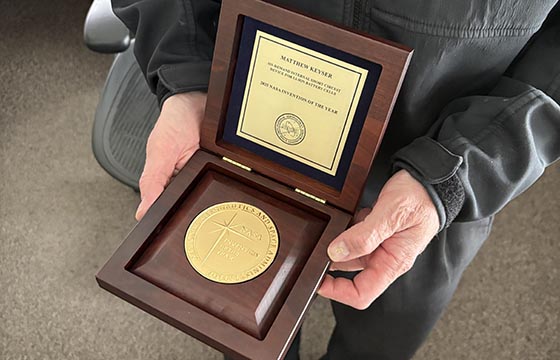
NLR Battery Innovation Awarded NASA's Invention of the Year
NLR researchers have spent more than a decade collaborating with NASA and industry partners to make sure batteries can safely withstand extreme operating environments, including the Artemis II expedition around the moon. NASA recently awarded NLR researchers the 2025 Invention of the Year for an innovation that enables scientists to implant an internal short-circuit device into lithium-ion cells, triggering battery failure that improves battery testing for space-bound systems. An NLR Peaks to Power Podcast episode highlighted this exciting recognition.
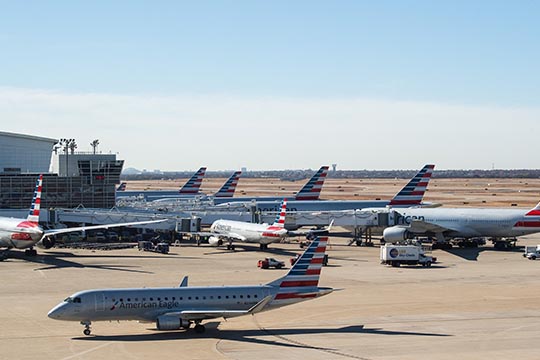
Energy Modeling Informs Strategic, Cost-Effective Airport Advancements
The Athena project's Aeroportal houses computational models for airport ground support equipment, vehicles, and infrastructure, built using data from more than 300 airports and NLR's high-performance computers. It can help any airport in the country accurately model plans for new equipment to meet growing passenger needs before projects start, reducing costs and wasted effort. Plus, listen to the NLR Peaks to Power podcast coverage of the story.
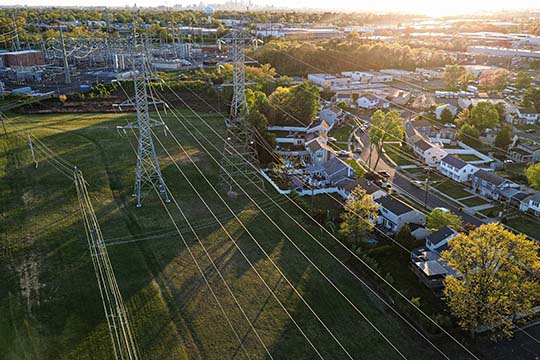
Smart Energy Management Research Could Unlock Grid Flexibility and Cost Savings
Xcel Energy partnered with NLR to identify how to mitigate pressure on grid infrastructure from residential vehicle energy demand. Researchers modeled demand scenarios on portions of the utility's grid and analyzed the impact of smart algorithms that can balance loads, reducing the need for costly physical grid upgrades. The team's new open-source tool enables any utility to conduct similar analyses. Listen to more in the Smarter Grids Peaks to Power podcast episode.

Lab's Decision Support Tools Help Air Traffic Control Tower Preparedness
Air traffic control towers are critical safety infrastructure that need to withstand both short power interruptions and long grid outages caused by grid overloads or natural disasters. NLR is helping the Federal Aviation Administration (FAA) identify towers that could be good candidates to analyze for pathways to improve their self-sufficiency. Researchers developed a guidebook and a visualization tool to help the FAA analyze towers nationwide to prioritize site upgrade decision-making.
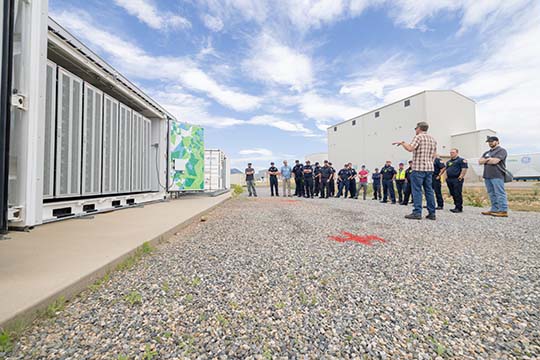
NLR's Cradle-to-Crisis Research Approach Improves Battery Safety and Performance
As energy demand continues to grow and new chemistries push the boundaries of energy density, batteries are solidifying their role as critical infrastructure and power sources. Keeping safety in step with that momentum requires more than isolated testing—it demands comprehensive research spanning a battery's life cycle. NLR researchers use a rigorous safety evaluation framework backed by advanced analytical techniques and real-world data to deliver unique insights for emerging battery chemistries and designs, field performance, and emergency response protocols.
Get To Know Our Team: Joe Simon
A conversation with Joe Simon, who leads transportation right-of-way (ROW) research at NLR.

What does your work focus on?
I'm a licensed architect working as a technology-agnostic principal investigator and group manager. At NLR, I seek opportunities to connect lab capabilities with industry interests, prioritizing commercialization and cross-sector connections. My DOE Transportation Technologies Office-funded work focuses on evaluating the geospatial and regulatory suitability associated with utilizing highway ROWs for energy resources. This project analyzes the suitability of siting battery energy storage systems, microgrids, direct-use geothermal and geothermal ground-source heat pumps, and, through a related project, longitudinal transmission. The ROW team aims to provide a comprehensive analysis to help decision makers understand the regulatory and geospatial suitability of existing transportation ROW for housing energy infrastructure while maintaining safety, compliance and allocation of risk, liability, and maintenance responsibilities.
What single mobility challenge would you say will come to the forefront in the next 5 years?
Updating utility accommodation policies to clearly define risk, liability, and maintenance ownership is a primary challenge in siting energy infrastructure within highway ROWs. The energy industry and transportation industries share many similarities but also have many areas of intersection and potential conflict. Energy infrastructure siting requires land use approaches that facilitate siting energy infrastructure without affecting safety standards in these corridors. These requirements necessitate review procedures specifically designed for highway ROW projects from different agencies and departments to reduce permitting timelines while ensuring safety.
Can you share a defining moment in your research career?
I found my way to the national lab by participating in a DOE-funded collegiate workforce development and research showcase program that tasked students to design, build, and publicly present innovative houses. The program required close collaboration across disciplines such as architecture, engineering, finance, communications, and logistics. Forging partnerships outside of one's own technical silo to advance the state of the art and increase the impact of research findings has remained a priority of mine ever since. This approach is especially important in this project where we need to connect departments of transportation with energy industry professionals and, even within the energy field, connect technical expertise across multiple areas of focus such as transmission, storage, and generation.
What piece of research are you most proud of conducting?
I am especially proud of developing new programs that bring together expertise from across national labs, academia, and industry to identify challenges and develop solutions. The creation of DOE's EnergyTech University Prize engaged regional partners, multiple program offices, and hundreds of students annually to develop business plans for emerging energy technologies, promoting research impact and commercialization. I love hearing of alumni who have advanced their careers and their solutions in the time since their participation, and that a program run by a national laboratory can catalyze action externally.
Must Reads
ARIES Annual Report Highlights Platform's Capabilities To Anticipate and Address Future Energy Needs
NLR's Advanced Research on Integrated Energy Systems (ARIES) platform is DOE's test bed to demonstrate and de-risk energy systems. Looking back at Fiscal Year 2025, the ARIES annual report provides a high-level overview of the more than 200 projects and 600 researchers working to anticipate and address future energy needs in energy security, system reliability, and technology deployment. Among the many highlights is the ÆNodes project with NASA, which uses a mix of virtual and physical emulation—plus partner demonstrations—to prove the possibility of airports supplying energy services beyond just transit.
NLR Supports U.S. National Security Through Cybersecurity Partnerships
At NLR, we're studying energy evolution and threats to understand the challenges they pose for security, defense, and reliability. This fact sheet highlights how capabilities like the ARIES Cyber Range help bridge the gap between cyberthreats and real-world consequences to deliver actionable solutions to large utilities and other partners. These solutions reduce vulnerabilities and help strengthen U.S. national security.
Uncovering Energy Landscapes in Batteries Using Machine Learning
What if you could map the invisible thermodynamic forces inside a battery without ever looking inside it? An NLR-co-authored article in Energy Storage Materials covers how researchers can uncover the hidden energy landscapes that govern material behavior using only the electrical signals a device already produces. This new physics-informed machine-learning approach (Bayesian model-integrated neural network) reveals internal states and phase transitions that were previously accessible only through specialized, large-scale experimental facilities, opening new possibilities for studying complex materials in action.
NLR Accelerates SAF Technologies From Laboratory to Deployment
NLR works with industry, academia, and other national laboratories to develop, scale, and de-risk technology pathways for producing SAF from biomass and waste resources. This fact sheet highlights examples in NLR's research portfolio that the lab is currently researching and scaling, including partnerships with airlines and fuel companies with diverse feedstocks and pathways.
Fact Sheet Highlights On-Demand Transit's Features, Benefits, Challenges, and Beyond
On-demand transit, or microtransit, is a flexible form of public mobility that adjusts where and when service is provided rather than following predetermined schedules and routes. Having evolved from commercial ride-hailing business models like Uber and Lyft, on-demand transit uses smartphones and real-time route optimization to provide highly responsive and dynamic service. Learn more about how NLR partners with communities and transit agencies across North America—from rural towns in Canada to large urban areas like St. Louis, Missouri—to support and evaluate customized on-demand transit systems.
Did You Know?
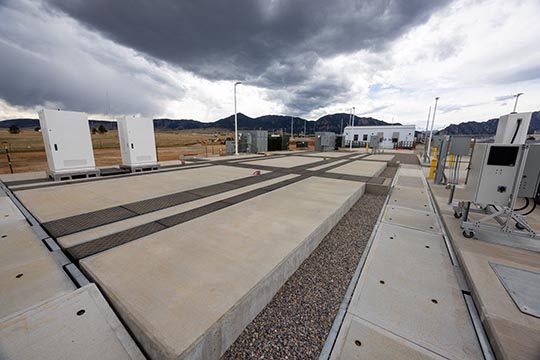
NLR's new Advanced Research in Power Conversion for Direct-Current Microgrids facility will open in late 2026. This newest ARIES asset will enable partners to emulate grid implications of large loads like mining, advanced air mobility, and large-scale computing infrastructure.
Share

Last Updated Aug. 6, 2026