
Material Efficiency and Substitution Research
NLR designs new materials and technologies that reduce dependence on scarce critical minerals while maintaining high performance in electronic devices and energy systems.
Capabilities
- Sodium-ion batteries
- Novel magnetic materials
- Autonomous material synthesis and characterization
- High-efficiency piezoelectrics and ferroelectrics
Projects
NLR's magnetic materials discovery capabilities directly support critical mineral security by targeting competitive ferromagnetic materials that avoid or reduce the use of rare earth elements—key components in current energy technologies but vulnerable to supply chain disruptions. Leveraging expertise in crystal chemistry, high-throughput computational prediction, and advanced bulk and film synthesis and detailed characterization, NLR develops design strategies for identifying and creating novel magnetic phases, including nitrides and other underexplored chemistries. This capability broadens the limited design space for industrially relevant magnetic materials and reduces dependence on supply-chain-constrained critical minerals.
Contacts: Stephan Lany and Rebecca Smaha
NLR's work on aluminum nitride-based alloys such as (Al,Sc)N and related ferroelectric nitride materials directly supports next-generation high-efficiency memory and computing applications. Conventional high-performance piezoelectrics and ferroelectrics used in non-volatile memories often rely on lead-containing oxides or other materials that are challenging to integrate with conventional semiconductors. By developing high-performance nitride-based alternatives such as metastable nitride alloys and nitride perovskites, NLR is creating pathways to achieve comparable or superior functionality through domestic development and manufacturing pipelines.
Contacts: Rebecca Smaha and Andriy Zakutayev
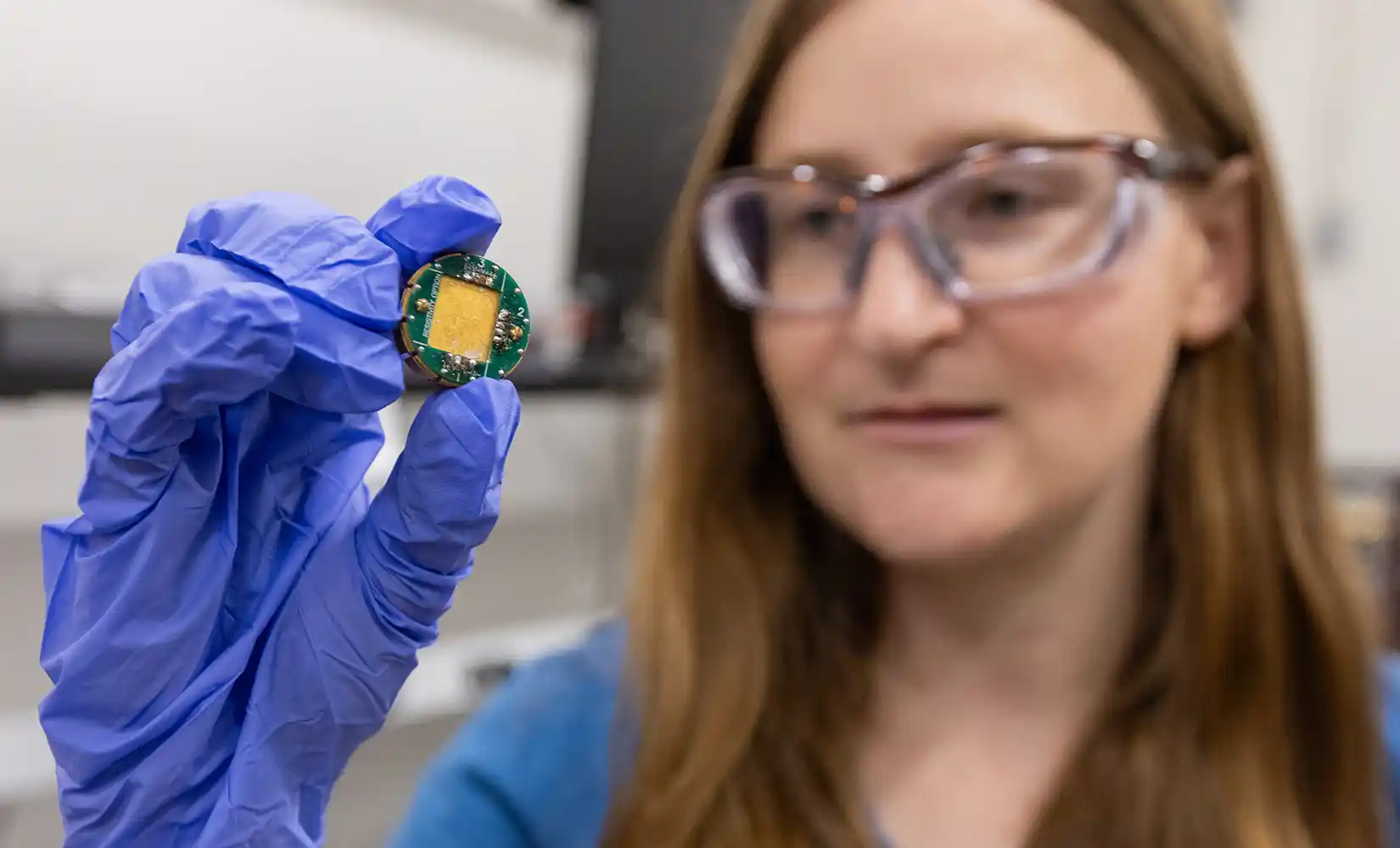
For semiconductor materials synthesis and characterization, NLR materials discovery and design researchers use a high-throughput experimental approach based on combinatorial deposition, spatially resolved characterization, and automated data analysis, followed by targeted thin-film experiments. This enables NLR to rapidly identify alternatives to critical-mineral-containing functional materials.
NLR is developing an autonomous materials-discovery suite for electronic materials, comprising AI-driven physical-vapor-deposition chambers and characterization tools. This suite is designed to rapidly develop efficient manufacturing pathways for advanced semiconductors and dielectrics that contain fewer or no critical elements, such as gallium, germanium, scandium, and others.
Contacts: Davi Febba and Andriy Zakutayev
Single-crystal semiconductor wafers account for up to 90% of material use in electronic and optoelectronic chips. NLR researchers have been developing a novel process to reuse these single-crystal wafers with minimal reprocessing. This includes two novel approaches to wafer reuse: spalling and laser lift-off. In the spalling process, a controlled fracture is generated within the crystalline substrate to remove the working device, leaving a pristine surface for re-use. In the laser lift-off process, a high-power laser is used to ablate a selected film beneath the electronic device, thereby removing it from the parent wafer. Both these approaches reduce the dependence on critical gallium and germanium elements that compromise most of these wafers.
For more information, see low-cost III-V solar cells.
Contacts: Aaron Ptak and John Simon
U.S. Department of Energy Critical Mineral Research Initiatives
NLR is a contributor to several U.S. Department of Energy critical minerals initiatives.
The Minerals to Materials Supply Chain Research Facility builds upon existing Department of Energy efforts to accelerate the establishment of new, domestic critical minerals and materials supply chains.
The Critical Materials Innovation Hub seeks to accelerate innovative scientific and technological solutions to develop resilient and secure supply chains for rare earth metals and other materials critical to the success of energy technologies.
Share

Last Updated April 15, 2026