
We steward supercomputing and artificial intelligence as national assets for applied energy research.
View this overview of accomplishments or download the full report.
In Fiscal Year 2025, NLR expanded the Kestrel high-performance computing (HPC) system to 56 peak petaflops, enabling larger, more complex simulations and accelerating the integration of artificial intelligence (AI) methods.
Computing Usage
In Fiscal Year 2025, NLR's HPC resources supported cross-disciplinary research, yielding more than 700 technical outputs that pushed the boundaries of science and engineering.
HPC facilities supported 507 modeling and simulation projects across the spectrum of energy technologies and systems integration research.
Advanced Capabilities at a Glance
NLR's advanced computing capabilities include these featured projects. For more details and all upgrades, download the full report.
Expanding Kestrel for the AI Era of Energy Innovation
Kestrel was enhanced with a set of capability upgrades, expanding performance and capacity to meet the growing demands of AI-enabled energy research. Upgrades—including the addition of 24 nodes and 96 NVIDIA H100 GPUs, two CPU racks (512 nodes total) that doubled network bandwidth, and expanded memory capacity on a select CPU and GPU nodes—substantially boosted throughput for emerging AI and machine learning (ML) workflows. This enabled researchers to tackle larger models, higher-resolution datasets, and more complex state spaces that increasingly define modern AI and high-fidelity simulation workloads.
Connecting People, Data, and Displays
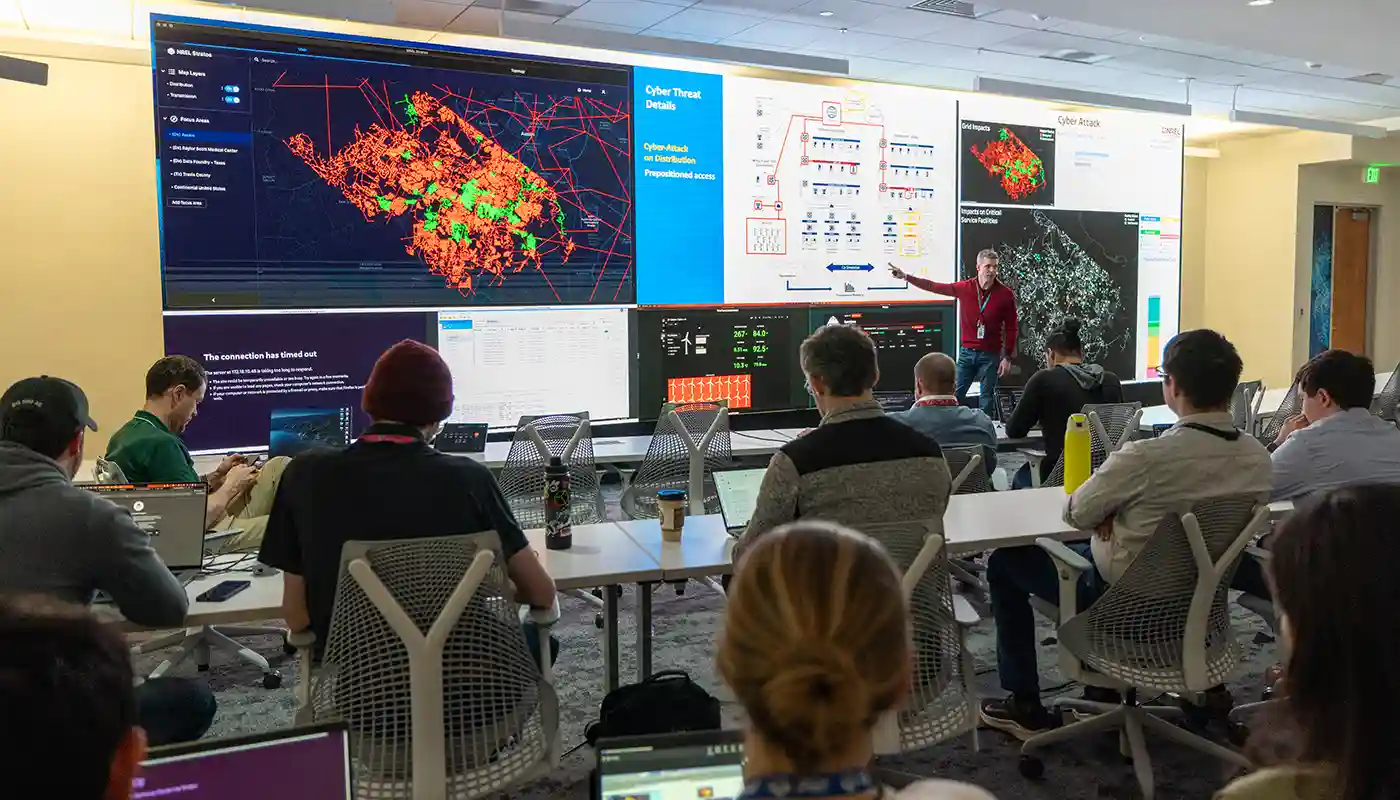
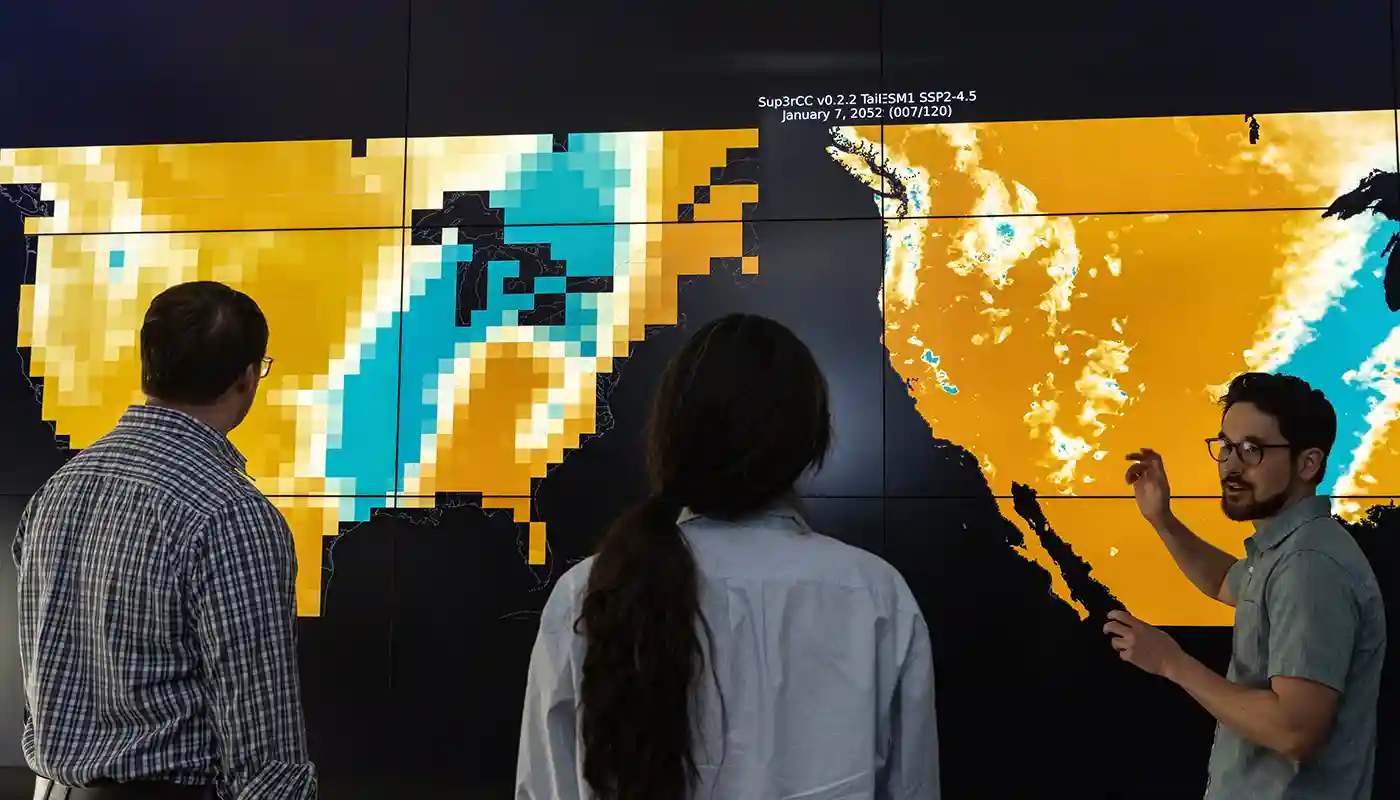
In the Insight Center, visualization scientists developed the Heterogeneous Orchestration Server framework, a software capability that transforms independent visualization tools into a coordinated, multidevice ecosystem. By linking multiple applications and views, experts from different domains can explore how changes in one domain or model affect others.
NLR also brought extended-reality visualization from exploratory experimentation into a production capability. Researchers can now deploy immersive, desk-scale, and room-scale applications that combine simulation outputs, real-world context, and intuitive 3D interaction.
Turning AI Data Centers Into Grid Assets
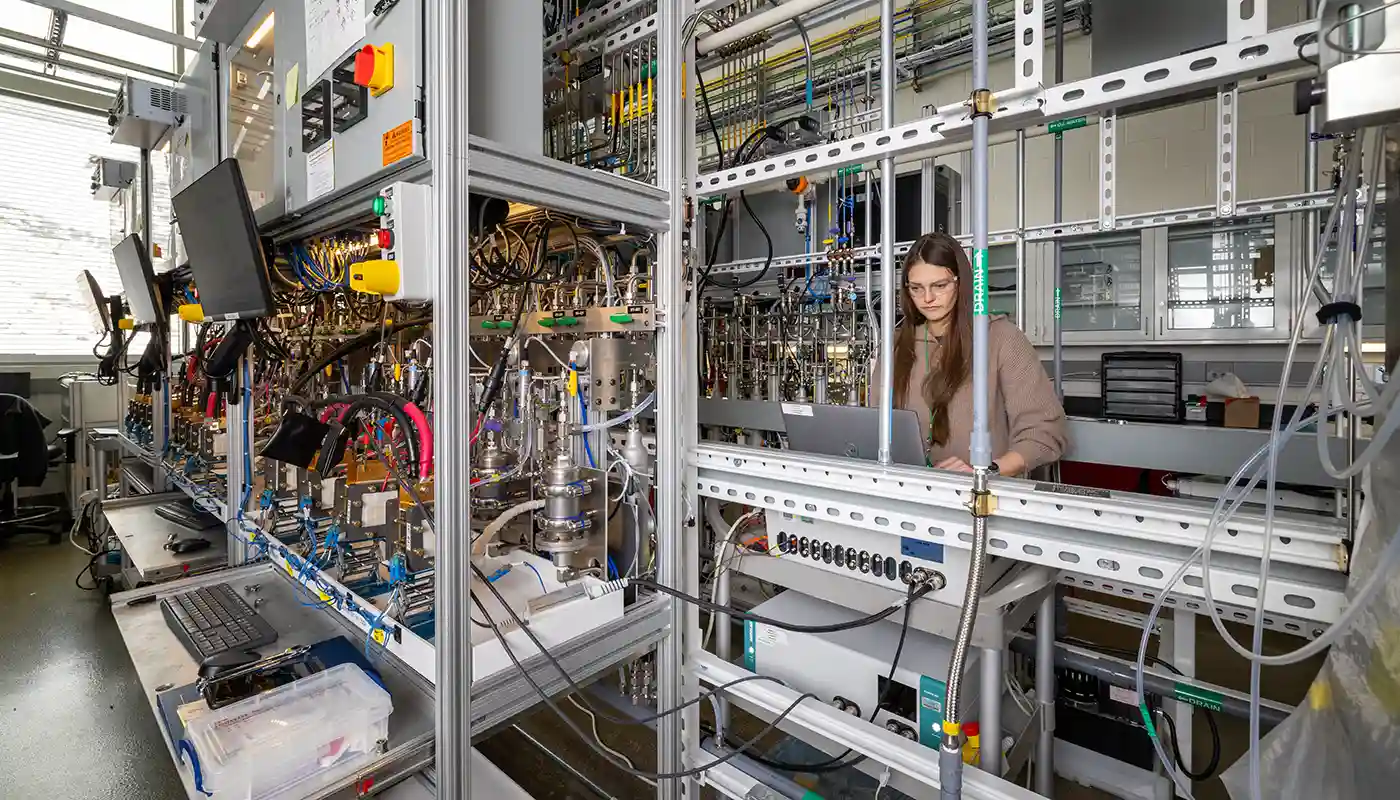
NLR HPC systems are tightly integrated with the Advanced Research on Integrated Energy Systems (ARIES) platform, enabling the study of how next-generation AI infrastructure can actively support the electric grid. Newly installed high-fidelity power metering enables real-time measurement of the true electrical behavior of production AI workloads, providing detailed insight into how large-scale computing interacts with power systems.
Research Highlights
Advanced computing research collaborations spanned multiple disciplines and technologies as these featured highlights show. For more details, download the full report.

The Broader Computing Ecosystem
AI Research Assistant Fuels Geothermal Research
Built and operated by NLR, the Geothermal Data Repository (GDR) is the U.S. Department of Energy's primary platform for preserving, curating, and delivering geothermal research data to the public. Hosted on NLR's cloud computing infrastructure, the GDR provides the scalable, reliable foundation needed to support open access to large, growing datasets. A new AI-powered research assistant called AskGDR further improves how users discover and use this free data.
Funded by the U.S. Department of Energy Critical Minerals and Energy Innovation Office
Early Careers in Computing
Quantifying Uncertainty in Machine Learning
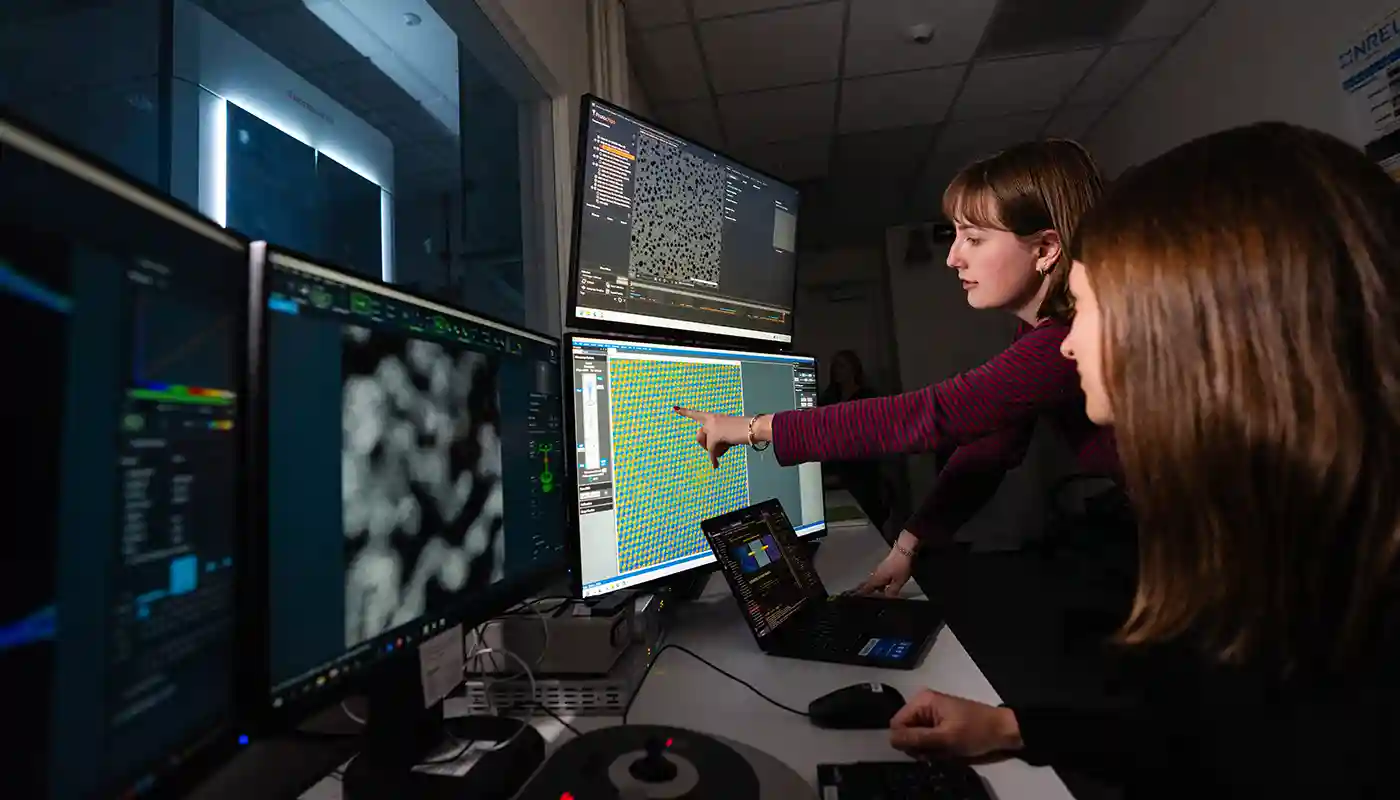
NLR researchers developed methods to estimate and propagate uncertainty arising both from noisy data and from data gaps in training datasets, resulting in a general framework to help determine objective, reliable quantifications of the uncertainty of ML models—an essential step before deploying ML surrogates in real-world energy applications. Research results were published in Engineering Applications of Artificial Intelligence.
Initiated through the U.S. Department of Energy's Computational Science Graduate Fellowship and later funded by the U.S. Department of Energy's Advanced Scientific Computing Research program
Publications
View a 2025 list of NLR computational science publications or download the full report.
Download
Read more about advanced computing accomplishments in Fiscal Year 2025 by downloading the full report.
For information about NLR's advanced computing capabilities, visit Computational Science.
Share

Last Updated April 29, 2026