
Impacts
Learn about the Distributed Generation Market Demand (dGen™) Model's impacts on distributed generation research at NLR and beyond.
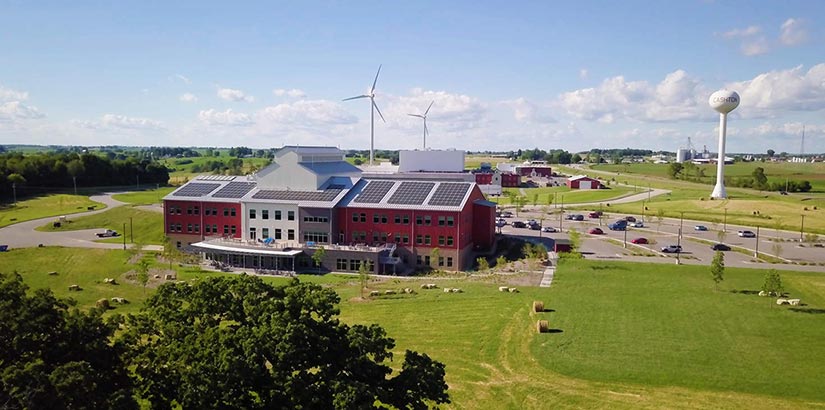
Distributed Wind Energy Futures Study
NLR added new, higher-resolution data and modeling capabilities to the Distributed Wind model—a module within the dGen model suite—to understand opportunities for widespread U.S. distributed wind deployment in 2035.
dGen-Supported Studies
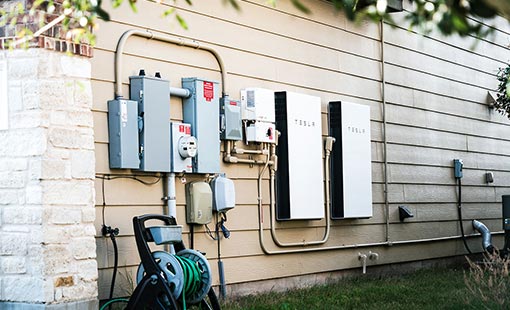
New York State Case Study
dGen modeled the potential of behind-the-meter and front-of-the-meter distributed solar and wind systems for each parcel of property in New York State, where the New York State Public Service Commission has been pioneering new compensation mechanisms for distributed energy resources.

Permit Power Report
The nonprofit organization Permit Power customized dGen to simulate residential adoption trends of rooftop PV and coadopted battery storage in the United States. dGen was used to compare the impacts of reducing rooftop PV technology costs to match peer countries on key techno-economic metrics such as cumulative installed capacity, customer energy bill savings, and peak demand reductions.

Standard Scenarios Reports (2021–2024)
dGen models customer adoption of distributed photovoltaics to feed into the annually released Standard Scenarios—a technology cost and performance database that captures a range of possible power system futures to study market and policy impacts on the electricity sector.
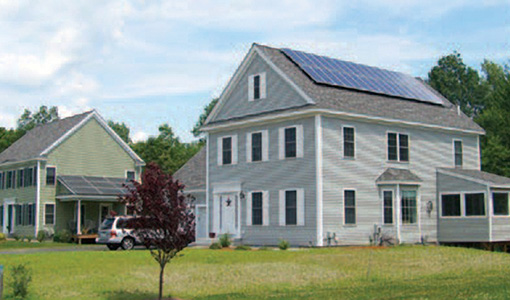
ISO-New England Distributed Generation Forecast Working Group (2023–2025)
NLR provided ISO-New England with technical assistance to complete its yearly distributed energy resource forecast for rooftop PV and battery energy storage systems in its six-state service territory encompassing Connecticut, Maine, Massachusetts, New Hampshire, Rhode Island, and Vermont. Various policy scenarios are modeled using dGen, with results used to estimate policy impacts on peak energy demand through the adoption of PV and battery energy storage systems.

California Energy Commission Distributed Generation Tax Credit Impacts
The California Energy Commission used dGen to model the effect of eliminating the Investment Tax Credit on statewide adoption of PV and battery energy storage systems. The results of the dGen model were used to evaluate the impact of the Investment Tax Credit on max market share, payback period, and annual PV installations and cumulative capacity.

Credit for Energy Program Payments Preference Review
NLR provided Washington State Legislature’s Joint Legislative Audit and Review Committee with technical assistance using dGen to model the impacts of a state tax credit program for energy payments. Based on dGen results, the committee recommends that Washington State let the program expire in 2030. Read 2021 Tax Preference Performance Reviews: Credit for Renewable Energy Program Payments.
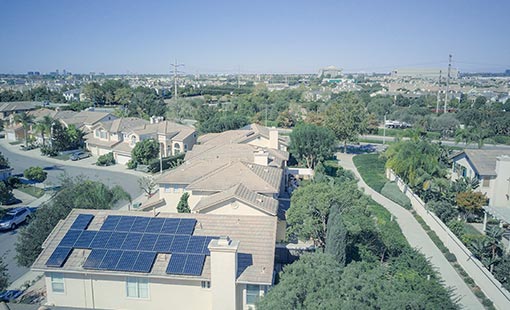
Wisconsin Rooftop Solar Potential
Cadmus, a technical consultancy, customized dGen to simulate market adoption potential of rooftop solar PV in the Public Service Commission of Wisconsin service territory. dGen projects significant solar technical potential, but only a small fraction could be adopted by 2034. A statewide net metering policy could accelerate adoption.
Share

Last Updated May 11, 2026