
REDi Island
NLR presents an immersive virtual world where learners can investigate the science and technology behind marine energy and hydropower—and see how these systems shape our world.
REDi Island App
Explore the OpenEI REDi Island web application.
Have a question or comment about REDi Island? Let us know.
Imagine a world where rivers, tides, and waves help power our communities, monitor our environment, and provide clean drinking water. Or better yet, explore that world through the REDi Island web application.
What Is REDi Island?
REDi Island is a virtual world powered by innovative energy technologies and home to more than a dozen interactive waystations. If you're curious about how our energy systems work and how we can power our world with the vast power flowing in the world's rivers and oceans, then REDi Island is for you. The REDi Island mission is to:
- Engage in energy science
- Educate tomorrow's energy innovators
- Inspire an energy revolution.
Teachers can incorporate this virtual exploration tool to help students investigate how energy systems work and explore real-world challenges and solutions. Students from elementary through graduate school can discover the many exciting careers available in water power. Anyone can learn what water power could do for their communities—from remote, coastal, or island villages to farmlands and even urban hubs.
REDi Island is part of NLR's water power outreach and education efforts to support the next generation of the energy workforce in hydropower and advance the future of marine energy. The lab's water power researchers, who advance research and development of the kind of marine energy and hydropower technologies depicted in these videos, helped explain the basic science behind how the ocean and river works to power REDi Island.
Created by NLR, the REDi Island initiative is fully funded by the U.S Department of Energy and developed by IKM 3D's three-dimensional visualization and software development specialists.
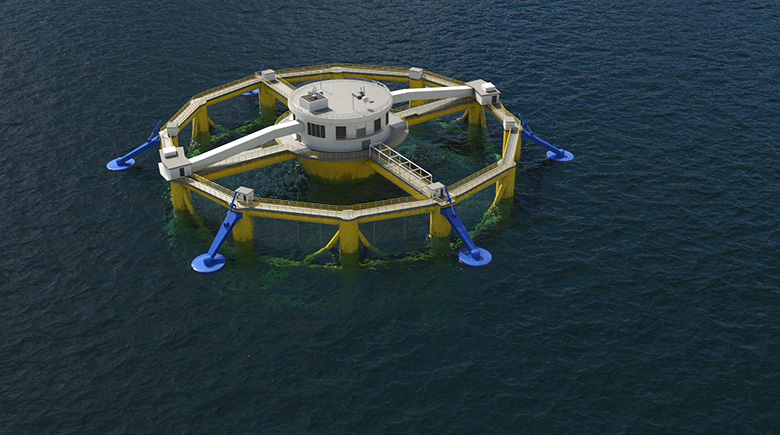
REDi Island's Aquaculture Arena. Visualization from IKM 3D
About 3 billion people around the world depend on fish, either wild-caught or farmed. Many offshore fish farms still rely on fuel delivered from shore, which can be costly, logistically challenging, and difficult to sustain in remote locations.
But a solution already surges within those offshore farms. At REDi Island's Aquaculture Arena, wave energy converters capture the power of ocean waves to generate electricity. By providing local power, these farms can feed and care for their fish, shellfish, or algae and maintain operations with greater efficiency and reliability.
Visit Aquaculture Arena to find out how marine energy can power the future of seafood.
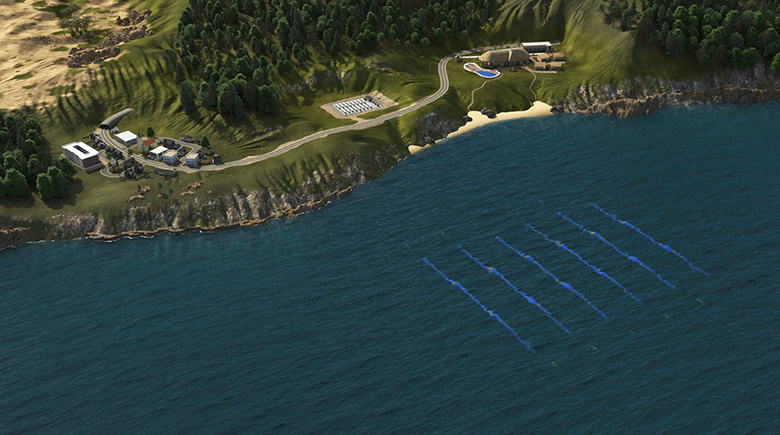
REDi Island's Bulge Wave Boulevard. Visualization from IKM 3D
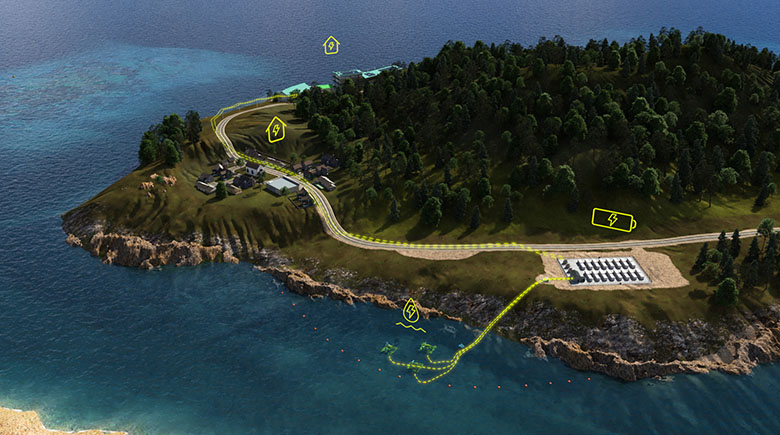
When a snake swallows a big meal, a prey-shaped bulge slowly squeezes down its slender body. A bulge wave energy converter works in much the same way. These long, slender devices could be installed in parallel rows just offshore. As a wave surges past the sea-snake-like tech, it creates a bulge of energy that slowly creeps along the device's flexible body. And that body houses many individual energy converters that transform the bulge into usable electricity.
On REDi Island, Bulge Wave Boulevard generates energy from ocean waves and stores that energy in onshore batteries. These energy reserves can provide backup power for remote, rural, and coastal communities or even big urban centers. If other energy sources can’t keep up with high energy demand, that battery bank can fill the gaps to ensure the power grid is reliable.
Visit Bulge Wave Boulevard to check out these sea snakes in action.
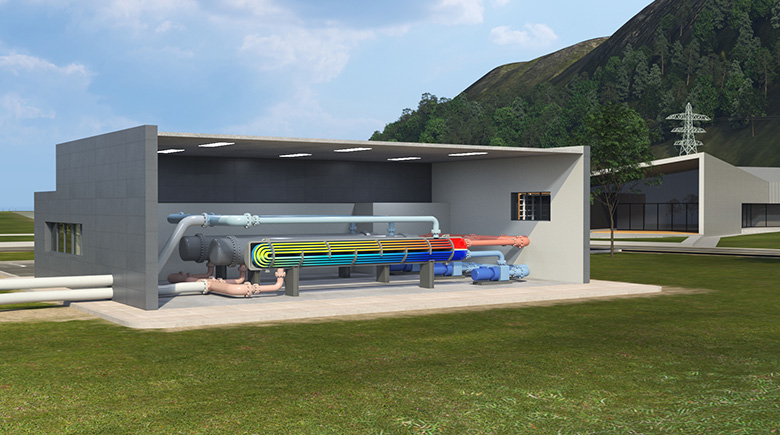
REDi Island's Cooling Concourse. Visualization from IKM 3D
As people depend even more on air conditioners to keep cool, the demand for conventional cooling systems continues to rise. Luckily, there is another approach for meeting cooling needs in certain regions: the ocean.
At REDi Island's Cooling Concourse, an airport terminal uses cold water from the deep ocean to cool its air. The island's saltwater air conditioning system uses pipes to send water into the ocean depths, which cools it down. Then, as that chilled water loops back through the building, it absorbs heat from the air. Because these systems use a fraction of the energy of conventional air conditioners, they could help us keep our cool while reducing the operational load of traditional cooling equipment.
Visit Cooling Concourse to learn how cool seawater can be.
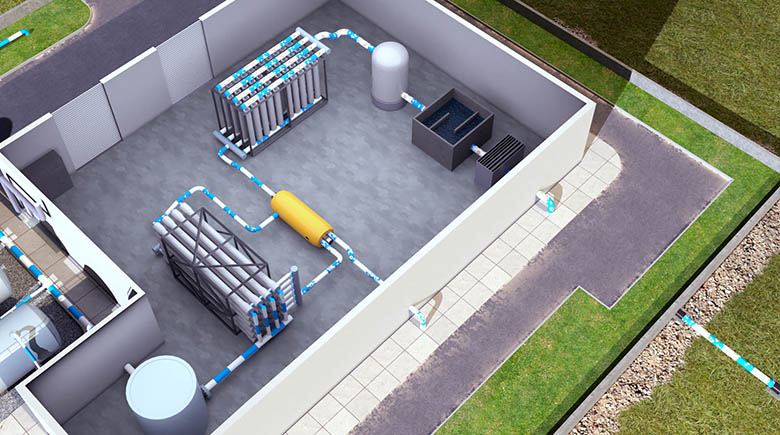
In the coming years, 40 U.S. states expect to see water shortages in at least part of their land. But if traditional sources dry up, drought-stricken areas could lean on nontraditional sources, such as wastewater and salt water, to boost their supplies. To do that, those states will need cost-effective desalination plants, which filter contaminants out of water—often saving energy in the process.
Speaking of energy, some water treatment systems, including REDi Island's Desalination Station, could create drinking water with the power from ocean waves. For remote villages, island communities, and disaster recovery areas, wave-powered desalination could be valuable to build reliability and get vital resources even during a crisis.
Visit Desalination Station to learn more.
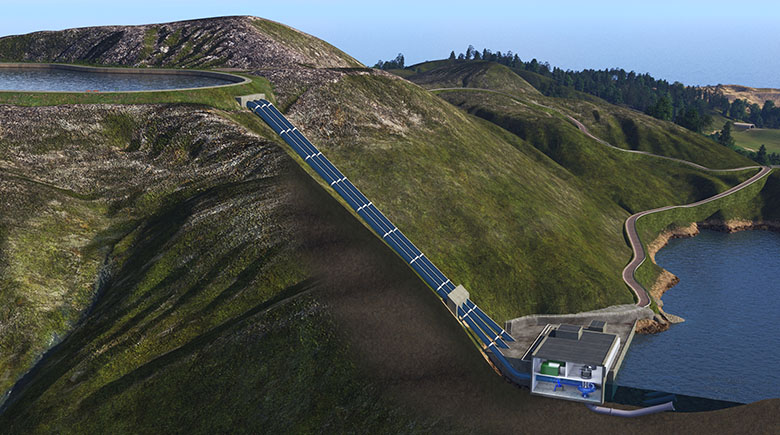
Power failures increasingly affect people across the world, shutting off vital air conditioning, air purifiers, and oxygen machines. But one of the world's oldest forms of energy storage, pumped storage hydropower, could help prevent outages caused by heatwaves, hurricanes, or cyberattacks. Plants such as the one at Hydro Heights can help keep energy flowing and support more reliable operations for communities.
Pumped storage hydropower plants are made by connecting two reservoirs, one at a higher altitude than the other, and generate power as water moves down from one to the other (discharge), passing through a turbine. The system also requires power as it pumps water back into the upper reservoir (recharge), where it is stored in the upper reservoir for future use. When demand increases, that water is released down through a turbine, which spins a generator and pumps energy back into the grid.
Explore pumped storage hydropower in action at Hydro Heights.
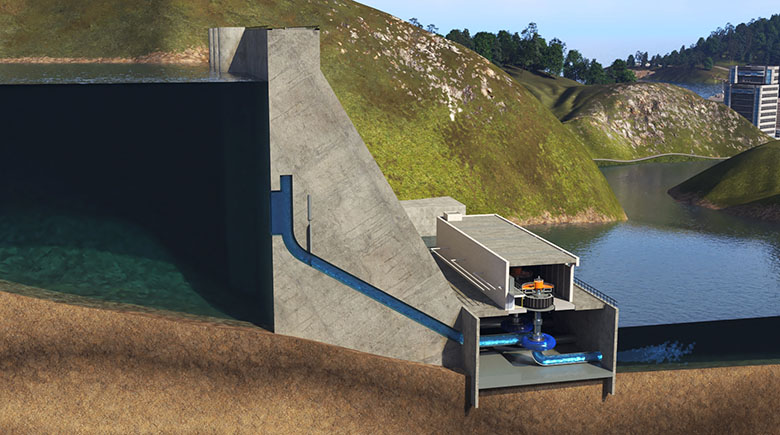
Even century-old technologies, like hydropower, can play a role in a next-generation power grid. In fact, hydropower's flexible, reliable, on-demand energy will be especially valuable for a grid that runs on more variable energy sources. When energy demand exceeds supply, hydropower facilities, such as REDi Island's Hydro Hollow, can quickly generate energy—at affordable prices, too.
For example, Hydro Hollow's conventional dam can store water until REDi Island's city dwellers need more power. Then, that water is released, spinning a turbine, which runs a generator, sending electricity to the main power grid. Once energy demand slows, Hydro Hollow can rest, reserving water for when it's needed most.
Hydropower may be old, but it's perhaps more necessary than ever. Today, the hydropower industry is growing and adding many well-paying, varied jobs in manufacturing, utilities, professional and business services, construction, trade and transportation, energy systems, water management, environmental science, welding, machinery, and more.
Visit Hydro Hollow to learn more.
.jpg?sfvrsn=861207c1_1 "hydrokinetic-haven (1)")
REDi Island's Hydrokinetic Haven. Visualization from IKM 3D
Some communities are so remote, they live beyond the reach of major power grids. To power their homes, schools, hospitals, and lives, many of these communities rely on shipments of fuels. But these shipments can be expensive and risky. If a storm waylays deliveries, a remote village could be forced to go without power while they wait for fuel to arrive.
Luckily, even if major grids cannot reach these communities, water can. Rushing rivers, for example, can generate enough power to bridge energy gaps, reduce dependence on transporting fuels, and potentially lower energy costs while increasing a community’s energy independence. REDi Island’s Hydrokinetic Haven shows how a remote farm can get energy from the powerful river flowing nearby.
Visit Hydrokinetic Haven to find out how water power can help communities transition to energy independence.
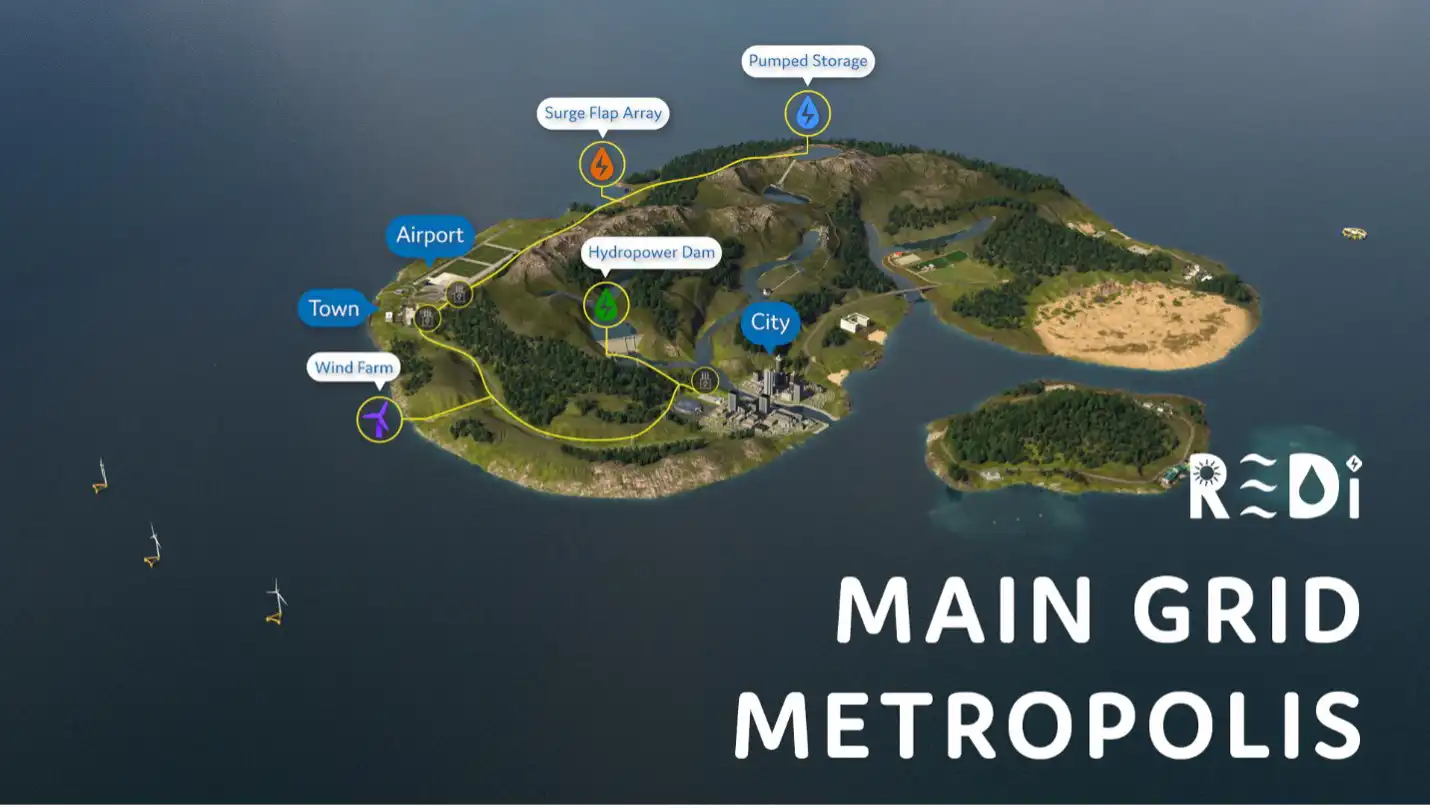
REDi Island's Main Grid Metropolis teaches viewers how to optimize electric power grids. The electric power grid delivers electricity from power plants to homes and businesses, ensuring a reliable and consistent energy supply. Conventional hydropower generates electricity using the energy of flowing water. Dams are built on rivers to create reservoirs, storing water. When released, the water flows through turbines, spinning them to produce electricity. This process converts the kinetic energy of moving water into mechanical energy, and then into electrical energy. Hydropower relies on the natural movement of water through the water cycle.
Visit Main Grid Metropolis to learn more.
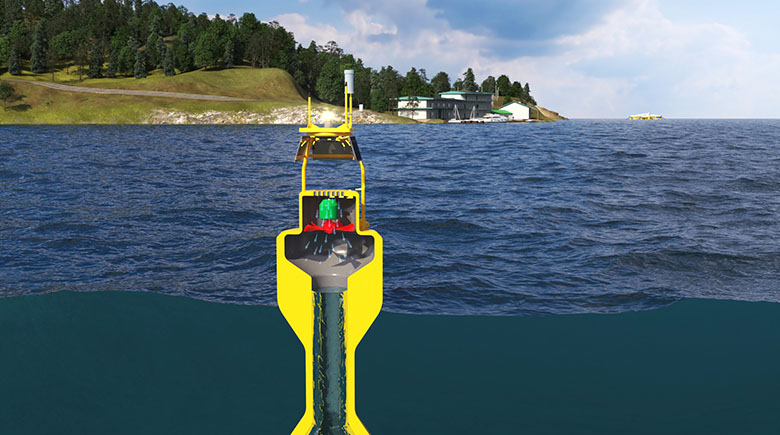
The world's oceans are increasingly used for commerce and recreation. But these waters are also home to about a million species. To promote international trade and shipping while protecting marine ecosystems, we need ocean-bound technologies that can steer vessels away from nautical hazards or protected areas, such as shallow coastal reefs.
As a bonus, these navigation technologies can run on ocean energy, too. Bobbing buoys can transform the energy from waves into electricity to power sensors. When those sensors detect a ship, the buoy can send a message to warn the crew of the reef nearby.
Visit Navigation Network to explore this early-warning system in action.
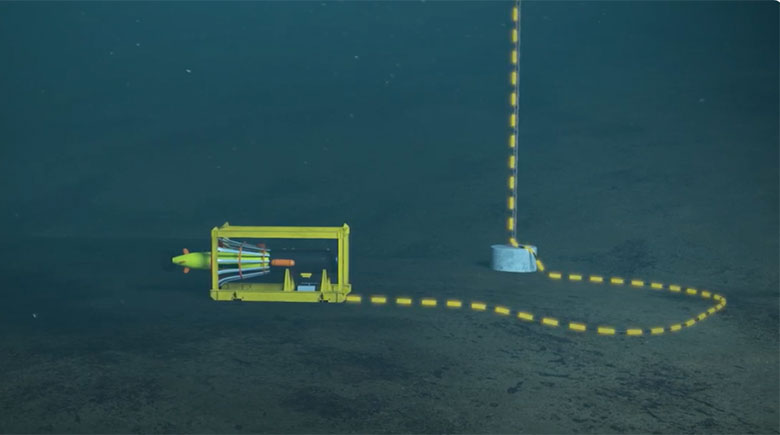
As ocean conditions continue to change over time, researchers track key indicators to understand trends in this global system. To monitor the health of ocean waters and their wildlife, marine researchers often rely on underwater drones—also known as autonomous underwater vehicles—which glide through the ocean collecting data. These vehicles can map the ocean floor, explore ship-wrecks, record environmental markers, and more. But when these small machines need to juice up, they must either return to shore (expending precious energy and research time) or wait for a boat to travel out to meet them (also expending time and money, and adding logistical hurdles).
At REDi Island's Power-Up Point, underwater vehicles can dock and power up with energy generated from ocean waves. As this floating buoy bobs up and down, it converts wave energy into electricity, which is stored on the seabed. When a vehicle docks at this power station, it can recharge and even transmit its data back to researchers on shore.
Visit Power-Up Point to glimpse the power behind marine research.
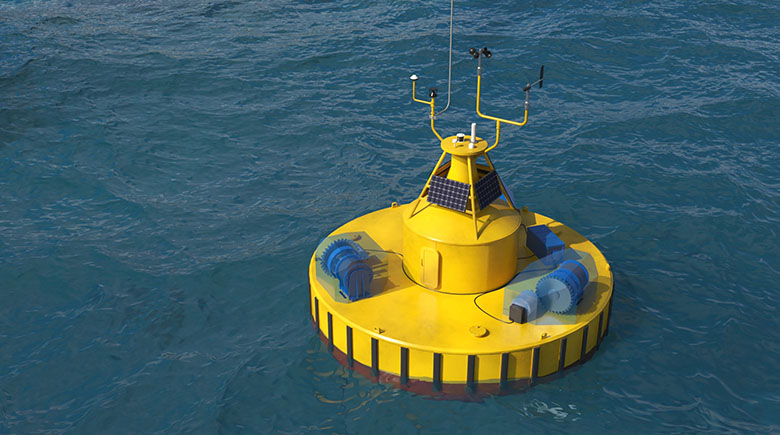
Over 80% of the Earth's oceans are unmapped and rarely monitored, but ocean monitoring is becoming even more important.
At Research Reef, scientists can study ocean conditions and gather long-term data with wave-powered ocean monitoring technologies. There, wave energy converters—which transform ocean waves into electricity—power sensors that observe everything from above-water atmospheric conditions to below-water ocean environments, helping scientists keep track of key ocean indicators and changing conditions.
Visit Research Reef to learn more.
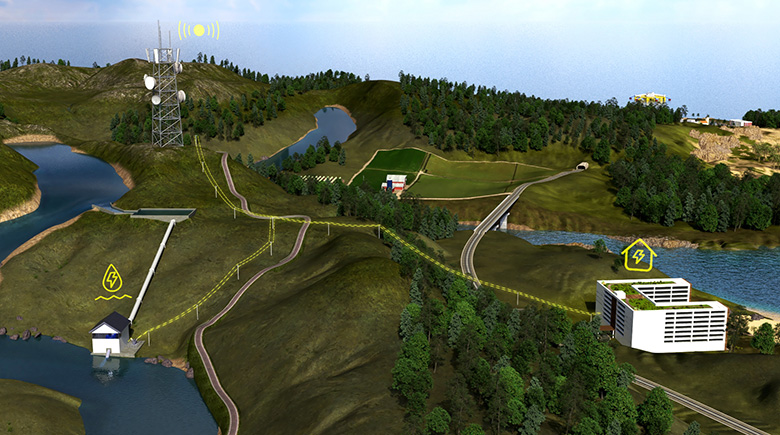
REDi Island's River Ramble. Visualization from IKM 3D
Not all hydropower plants need a dam. Like conventional hydropower facilities, run-of-river systems harness the natural flow of a river's downhill current. But instead of corralling the river’' main channel, these systems divert part of the river to flow through a separate canal where the water spins a turbine, generating electricity.
Like REDi Island's River Ramble, run-of-river hydropower systems can be built with minimal environmental impacts and in almost any location where a river flows downhill. Although some of these systems don’t generate as much energy as some of their hydropower counterparts, they can provide a steady, reliable source of energy for localized grids, including microgrids, that serve small or remote schools, farms, or communities.
Visit River Ramble to learn more about run-of-river hydropower.
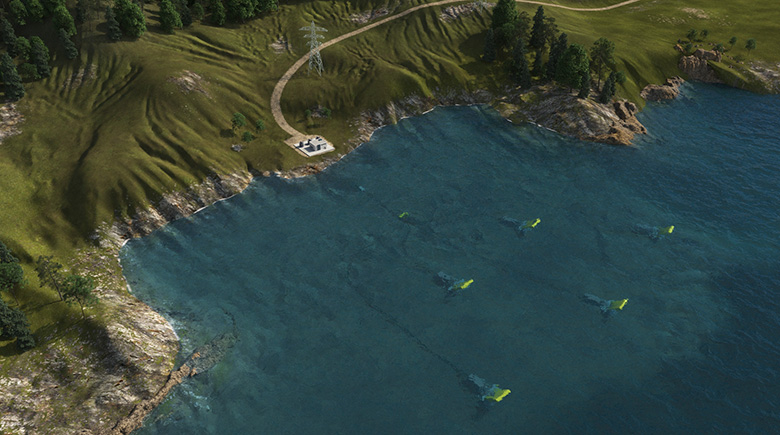
REDi Island's Surge Flap Sands. Visualization from IKM 3D
Ocean waves are not only powerful but also predictable, carrying consistent and reliable amounts of energy to shorelines each year. Although wave energy varies slightly from one season to the next—in the winter, waves tend to amass more power, egged on by offshore storms—this minor change matches up with seasonal dips in other more variable energy resources. When other energy sources wane in the winter, for example, waves can be a powerful, reliable partner, keeping the power grid humming along smoothly.
At REDi Island's Surge Flap Sands, a wave energy farm takes advantage of the ocean’s predictable power to generate energy for the power grid. The farm is built in shallow waters and outfitted with a specific type of wave energy converter called an oscillating surge flap, which uses paddle-like flaps that sway back and forth in the ocean waves to collect energy.
Visit Surge Flap Sands to explore wave energy in action.
Around the world, tides carry a predictable, steady, source of energy through our rivers and oceans. In the United States, tidal energy has the potential to power up to 21 million homes (about 15% of the country's total number of houses).
Tidal energy technologies, such as those deployed at Tidal Town, could be valuable for coastal and remote communities. Often more isolated from the national grid, these communities tend to pay higher energy prices and experience more extreme weather-induced outages. Soon, tidal turbines could generate local, affordable, electricity for such isolated communities.
Visit Tidal Town to learn more.
Resources
Explore additional marine energy educational resource materials.
Explore additional hydropower educational resource materials.
Follow the #REDiIsland hashtag on social media.
Stay up to date on the REDi Island project by subscribing to NLR's water power newsletter, The Current.
Contact
Share

Last Updated Aug. 4, 2026