
New Kind of Surfer Is Riding Waves—and Producing Power
NLR and University of Hawaii Deploy Wave Energy Device, Capturing and Sharing Data for Marine Energy Industry
Sept. 2, 2026 | By Samantha Cuneo | Contact media relations
Like a surfer, the Small Underwater Research Flap Wave Energy Converter, or SURF-WEC, rides the ocean's waves—but this system converts wave motion into electricity. The WEC recently made the leap from lab to ocean off Makai Research Pier in Oahu, Hawaii.
Decades of theoretical and modeling research have advanced the field of marine energy. But open-water deployment and testing of marine energy devices have been limited, leading to gaps in data and knowledge needed for commercialization. The deployment of SURF-WEC can help close these gaps: The device is expected to generate critical data the industry can build on.
"The marine energy community is so data starved,” said Bri Friedman, a National Laboratory of the Rockies (NLR) researcher on the project. “There's just so few deployments that have occurred. And on top of that, a lot of those deployments don’t have accessible or shared data."
To help fill that void, NLR researchers and University of Hawaii (UH) at Manoa researchers combined their expertise in wave modeling, controls, and ocean deployment to do something different: deploy a low-barrier, small-scale wave energy converter and provide open access to its design, data, and lessons learned.
Enter SURF-WEC.
"Projects like SURF-WEC work because different teams bring different expertise," said Pat Cross, program manager for marine energy at Hawaii Natural Energy Institute in the UH Manoa School of Ocean and Earth Science and Technology. "NLR led much of the power take-off engineering, while we helped ensure a robust anchoring and deployment approach and supported testing here in Hawaii. We learn from each other—and that collaboration is what makes projects like this successful."
A Techno-Athlete, Born To Adapt
Born from earlier wave energy modeling work at NLR and an existing research flap developed by UH, the SURF-WEC turns wave motion into electricity.
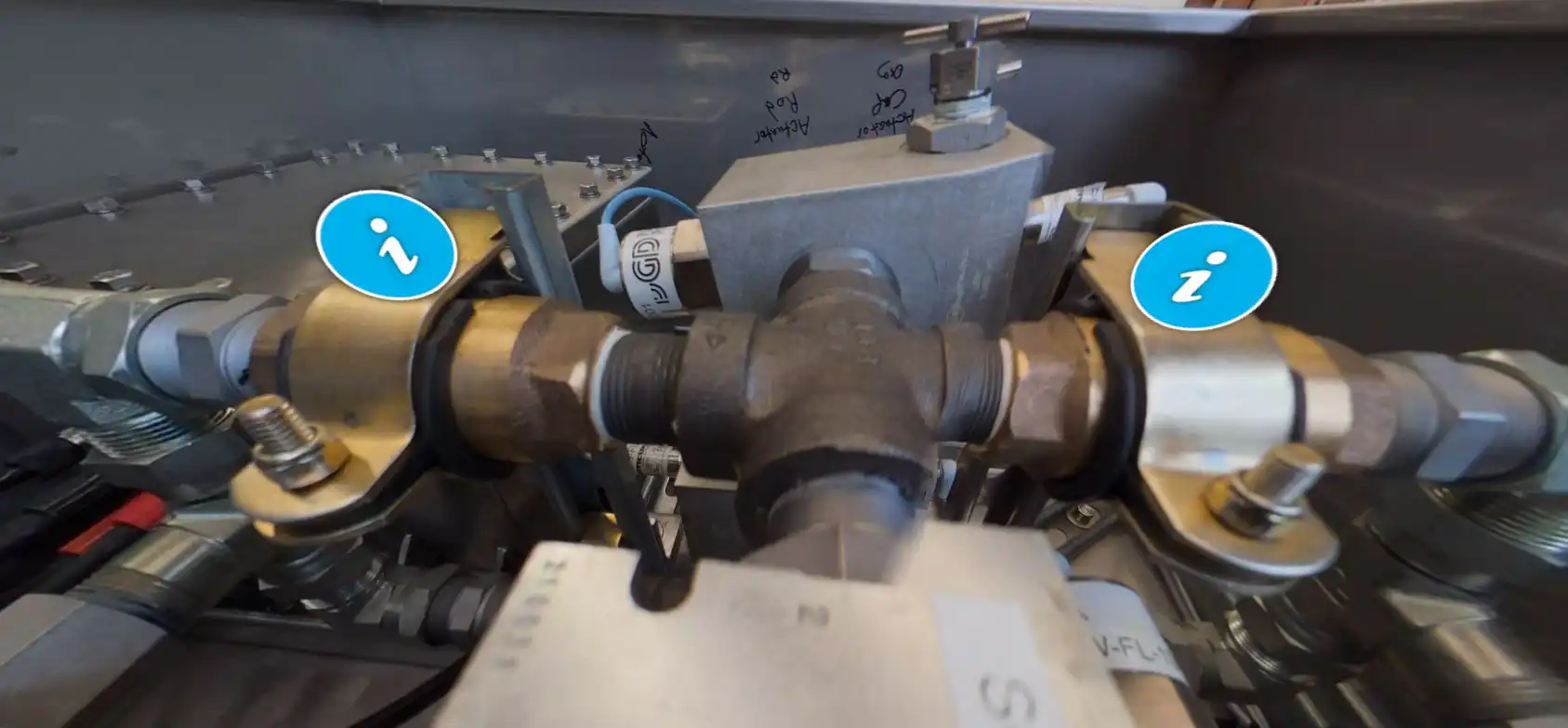
Explore the Power Take-Off System in 360°
Get a Look Inside the SURF-WEC with our interactive 360° tour of the Power Take-Off system.
A buoyant flap anchored just offshore, roughly the size of a big-screen TV, oscillates back and forth with each passing wave—like a door swinging on its hinges. The movement of the flap from ocean waves drives a hydraulic system, which pumps fluid through a sealed system, building pressure over time. When a set pressure is reached, it is used to spin a motor connected to a generator, which produces electricity.
What makes SURF-WEC unique is its ability to adapt. Researchers can remotely adjust how the system responds to waves, testing both passive and active modes to better understand how to capture energy more efficiently.
"There's a lot of theoretical work done on active systems versus passive systems," Friedman said.
Passive systems harvest energy without adapting to incoming wave conditions, which can limit their efficiency. Active systems can adapt to changing waves in real time and theoretically capture more energy.
"Active systems generally outperform passive systems in models, but reality is a different story. Active systems also introduce more losses," Friedman said. "What's exciting here is that, from my desk in Colorado, I can push a button and switch the SURF-WEC between active and passive modes."
Those "losses" refer to the extra energy required to run sensors, controls, and mechanical adjustments—energy used by the WEC that would not make it onto the grid.
Built To Perform
Before the SURF-WEC ever reached the ocean, it was built and tested piece by piece in the lab.
NLR researchers combined hydrodynamic models developed with partners at UH Manoa using wave modeling tools like WEC-Sim with detailed simulations of the power take-off system—the mechanism that converts wave motion into usable electricity—to understand how the flap would oscillate and how much energy it could generate under different conditions.
Those insights guided the design of the hydraulic system, which was then built and tested at NLR in Colorado. After assembling components at the Flatirons Campus, the NLR research team used an electric actuator to mimic the movement of the flap in an ocean wave, allowing them to test and refine the SURF-WEC system in a controlled environment.
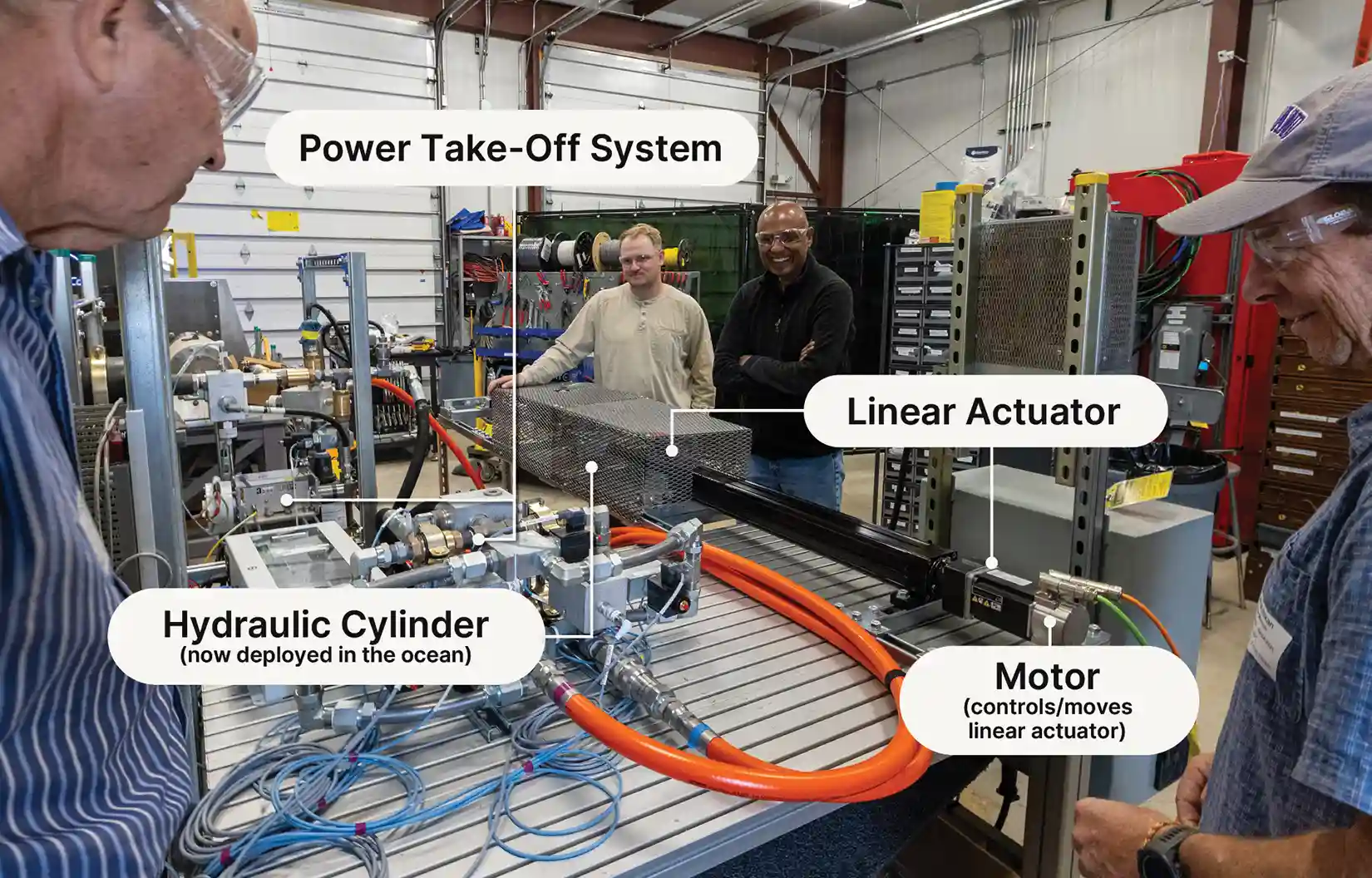
Dry testing at NLR’s Flatirons Campus allowed the research team to evaluate system performance, understand efficiency losses throughout the system, and test operation under extreme conditions. Photo by Gregory Cooper, National Laboratory of the Rockies
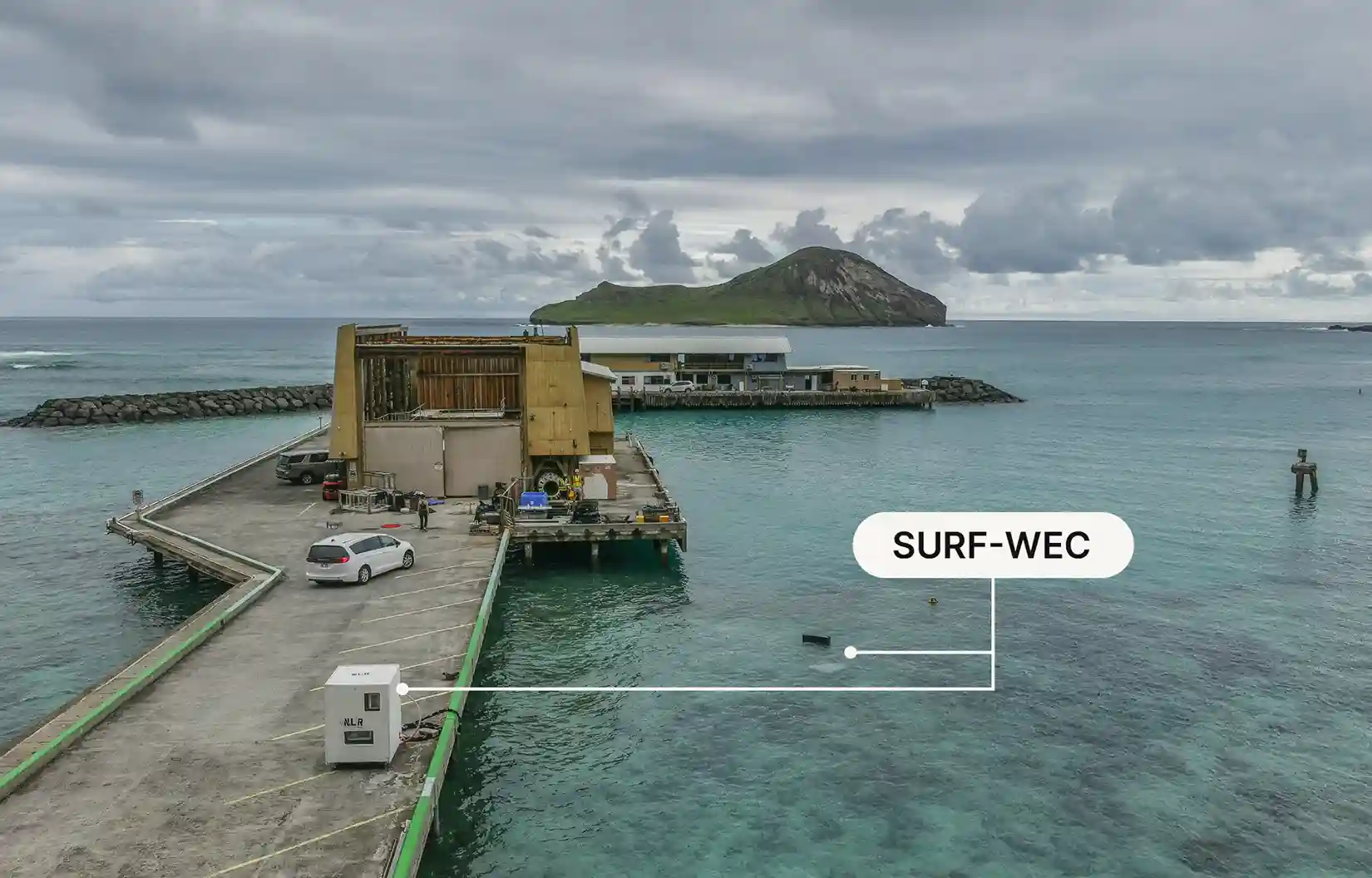
Hours after deployment, SURF-WEC begins capturing wave energy just off of Makai Research Pier. Photo by Josh Bauer, National Laboratory of the Rockies
NLR researchers also developed MODAQ 2.0, a custom data-and-control platform used to monitor performance and operate the system. The platform served as the project's digital backbone, enabling researchers to collect data, monitor conditions, and manage system operations throughout testing. Once validated, the entire setup was adapted—sealed, protected, and reinforced—to operate in the extremes of the marine environment.
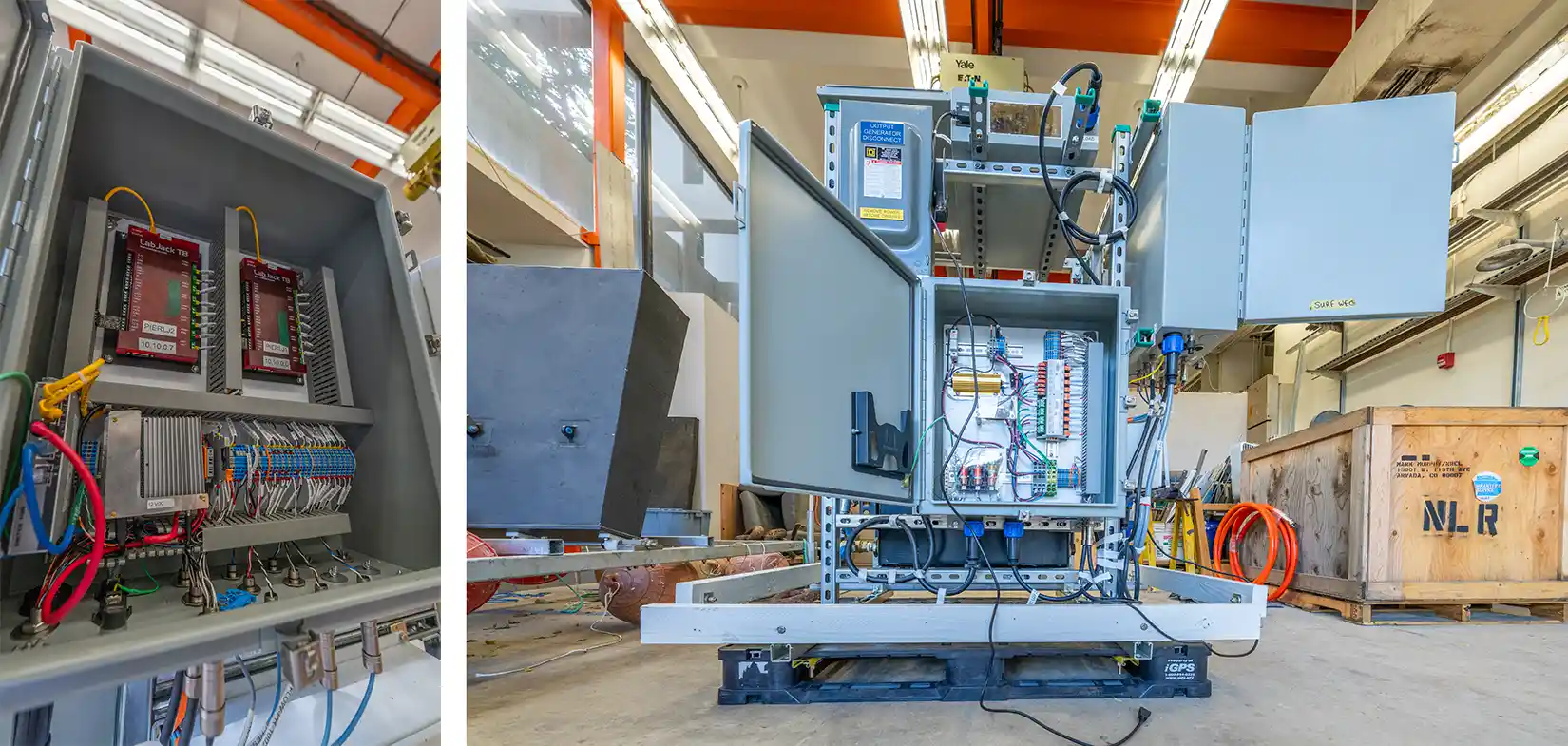
MODAQ 2.0 operates both underwater and onshore as the SURF-WEC's brains. The MODAQ system monitors performance, controls key functions, and continuously collects data as waves pass. That information is then shared through a live interface, offering a window into real-world performance. In doing so, the project extends beyond a single deployment—creating data, tools, and insights that the marine energy industry can build on. Photos by Josh Bauer, National Laboratory of the Rockies
Out of the Lab, Into the Ocean
After two years of modeling, building, testing, and validating the system in the lab at NLR, the project reached a major milestone: open-ocean deployment.
Following shipment to Hawaii and assembly on the UH Manoa campus, the team loaded trucks with the SURF-WEC components and set out for Makai Research Pier.
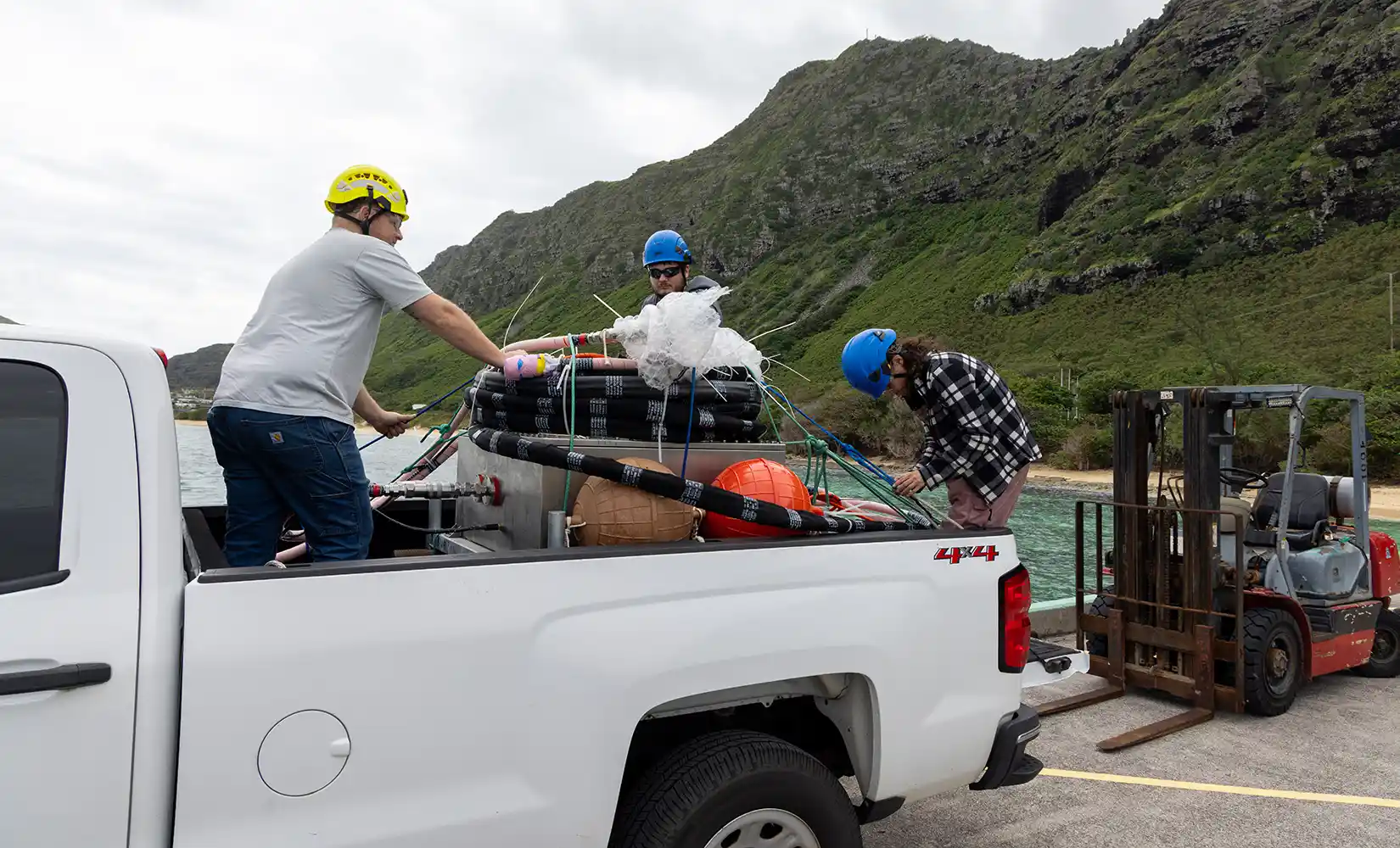
Years of engineering work culminated in a few days of logistics. Researchers carefully unloaded the SURF-WEC at Makai Research Pier, where the device would soon be assembled and deployed into Hawaiian waters. Photo by Taylor Mankle, National Laboratory of the Rockies
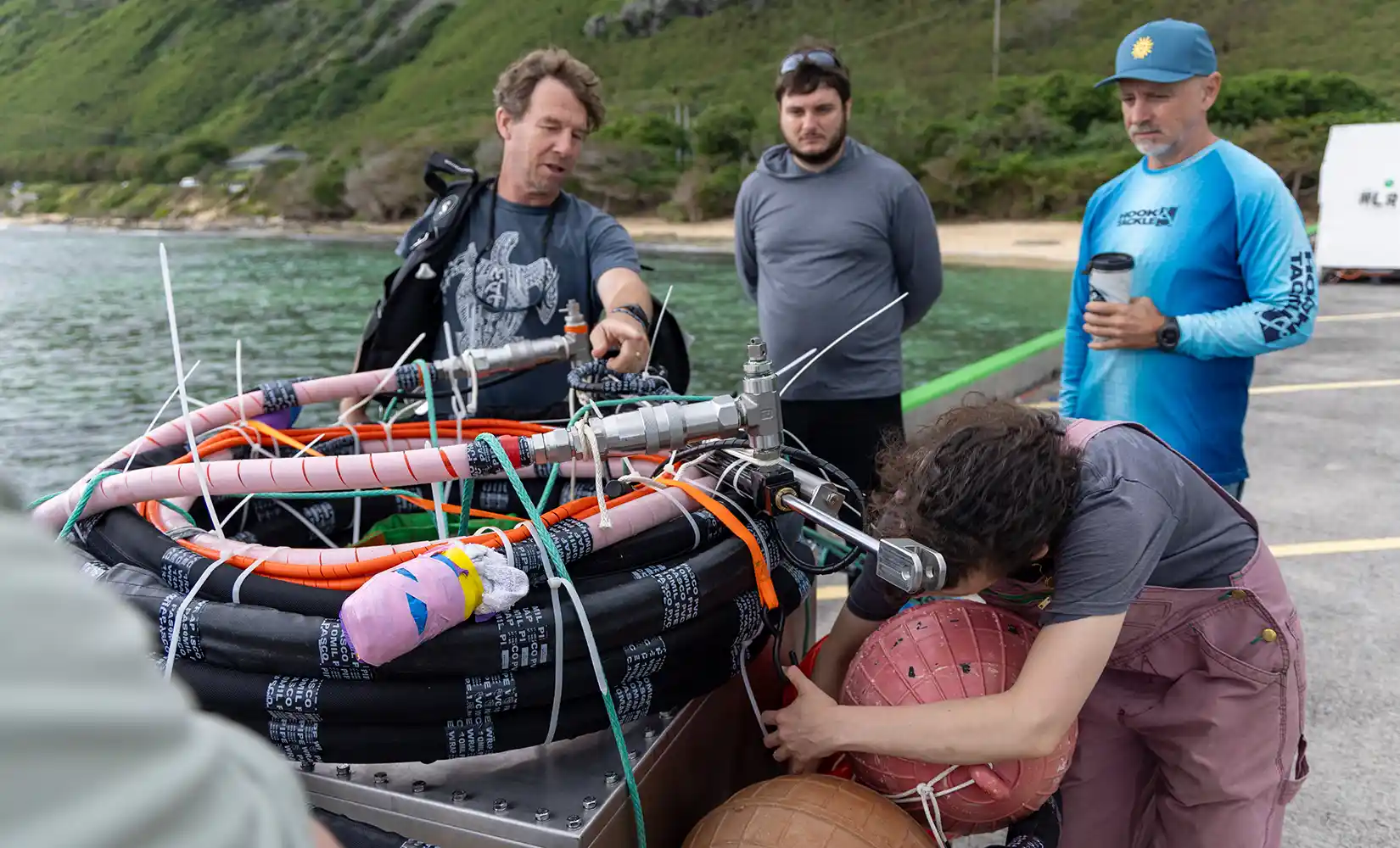
After unloading the system, the research team staged the SURF-WEC's power take-off, hydraulic hoses, and frame on shore before preparing the device for deployment in the water. Photo by Taylor Mankle, National Laboratory of the Rockies
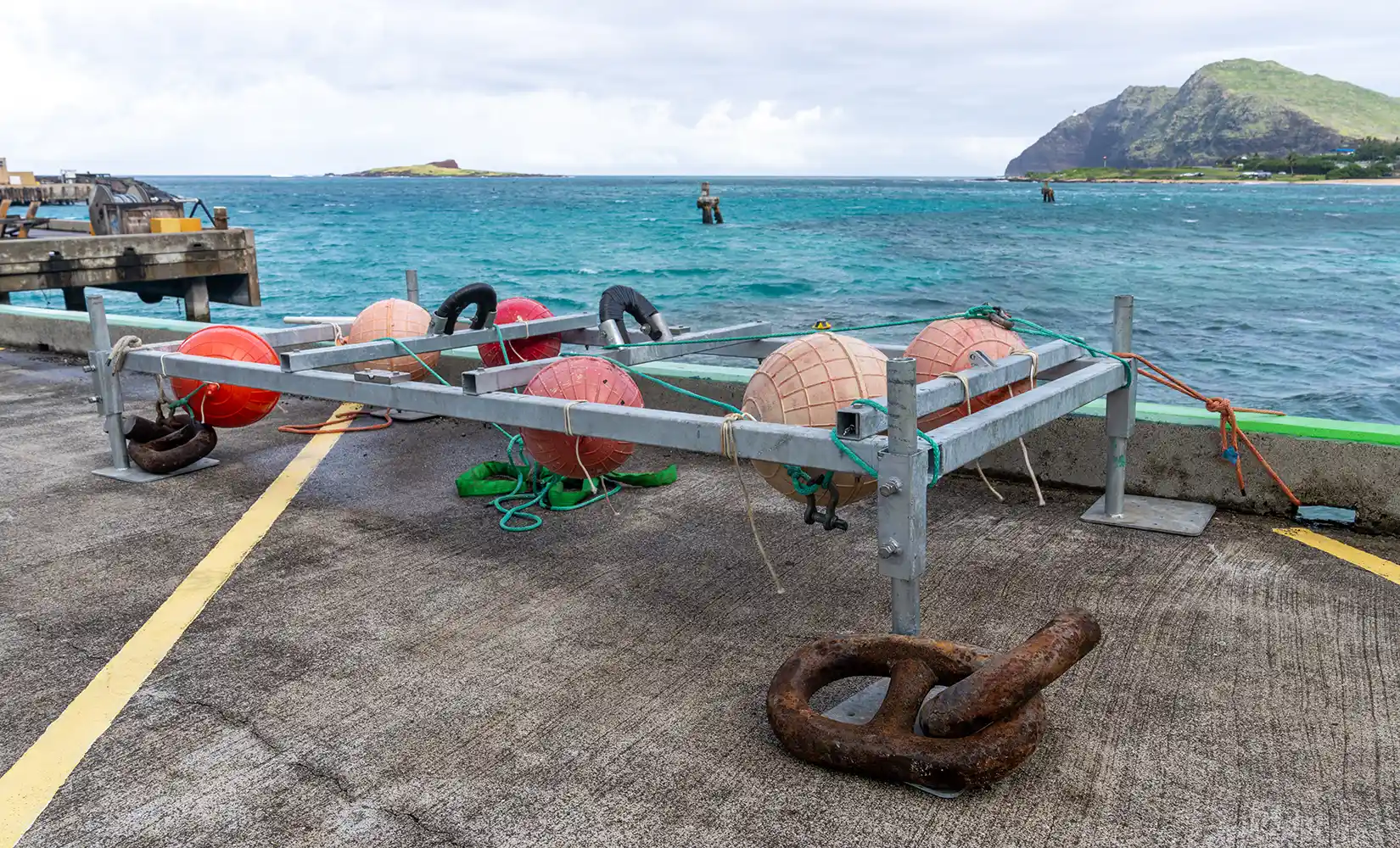
Due to an incoming storm, the research team decided to deploy only the SURF-WEC's frame, with the remaining components to follow once the storm passed. Buoys attached to the frame helped divers gently lower it into the water and made the structure easier to handle during deployment. Photo by Josh Bauer, National Laboratory of the Rockies
But just before deployment, the team faced an unexpected challenge: A powerful Kona storm was approaching Oahu, bringing strong winds and wave conditions well beyond what the researchers had anticipated from historical wave data.
Instead of rushing the full system into the water, the team secured only the frame in place and waited out the storm.
Back at the UH Manoa lab, researchers ran updated simulations using real-time data from nearby spotter buoys, recalculating how the system might respond once conditions settled.
Two days later, with the worst of the storm past and new modeling in hand, the team moved forward with deployment.
With NLR and UH Manoa researchers coordinating between the pier, the lab, and the water, the team installed the rest of the system just offshore, anchoring it to the seabed and connecting it back to the pier.
"Just a small crew and a forklift—that’s all it took to get everything in the water," said Kimball Millikan, a marine energy research engineer UH Manoa who lead the deployment from land to sea.
The flap and offshore power take-off system settled into place beneath the surface, with cables running back to shore where MODAQ 2.0 stood ready to receive and process data.
Then, after days of weather watching, came the moment of truth.
'We Got Power'
As divers swam back to shore after securing everything in place, Friedman and fellow researchers gathered patiently around the MODAQ system to read inputs.
"We got power," Friedman shared, as the team celebrated on the pier.
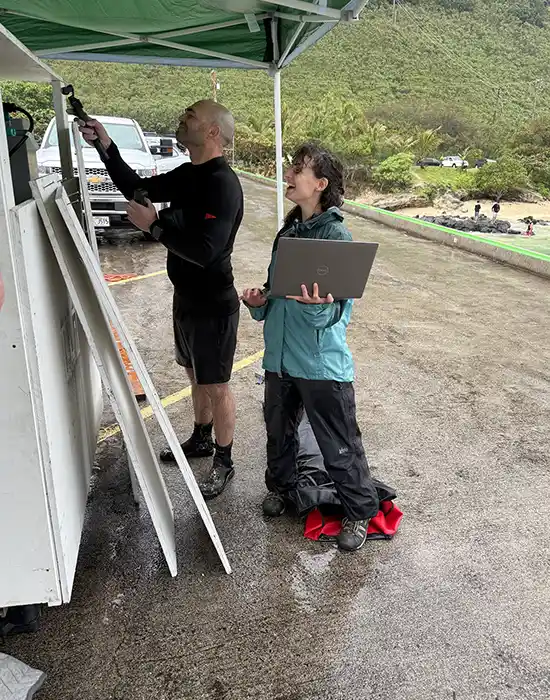
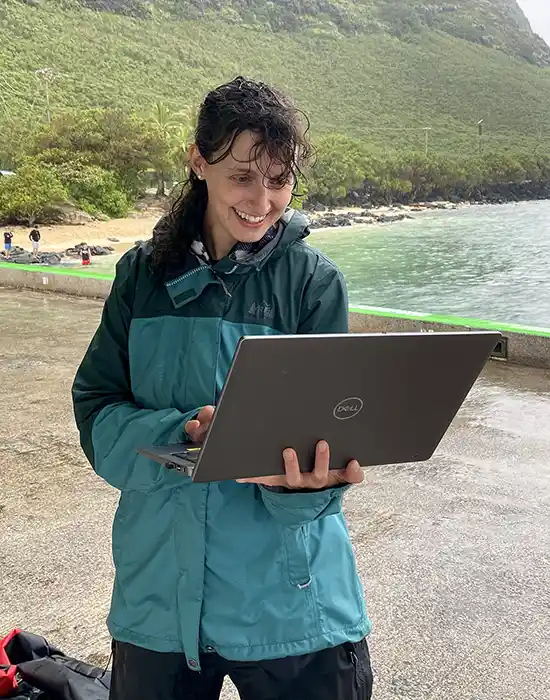
NLR marine energy researcher Bri Friedman reviews live data on MODAQ as SURF-WEC produces its first watts in the open ocean. Photos by Amanda Norton, National Laboratory of the Rockies
It has been over five months since the system was deployed, and insights are already beginning to emerge. The team plans to keep SURF-WEC in the water for up to a year—collecting data to support future marine energy research and technology development.
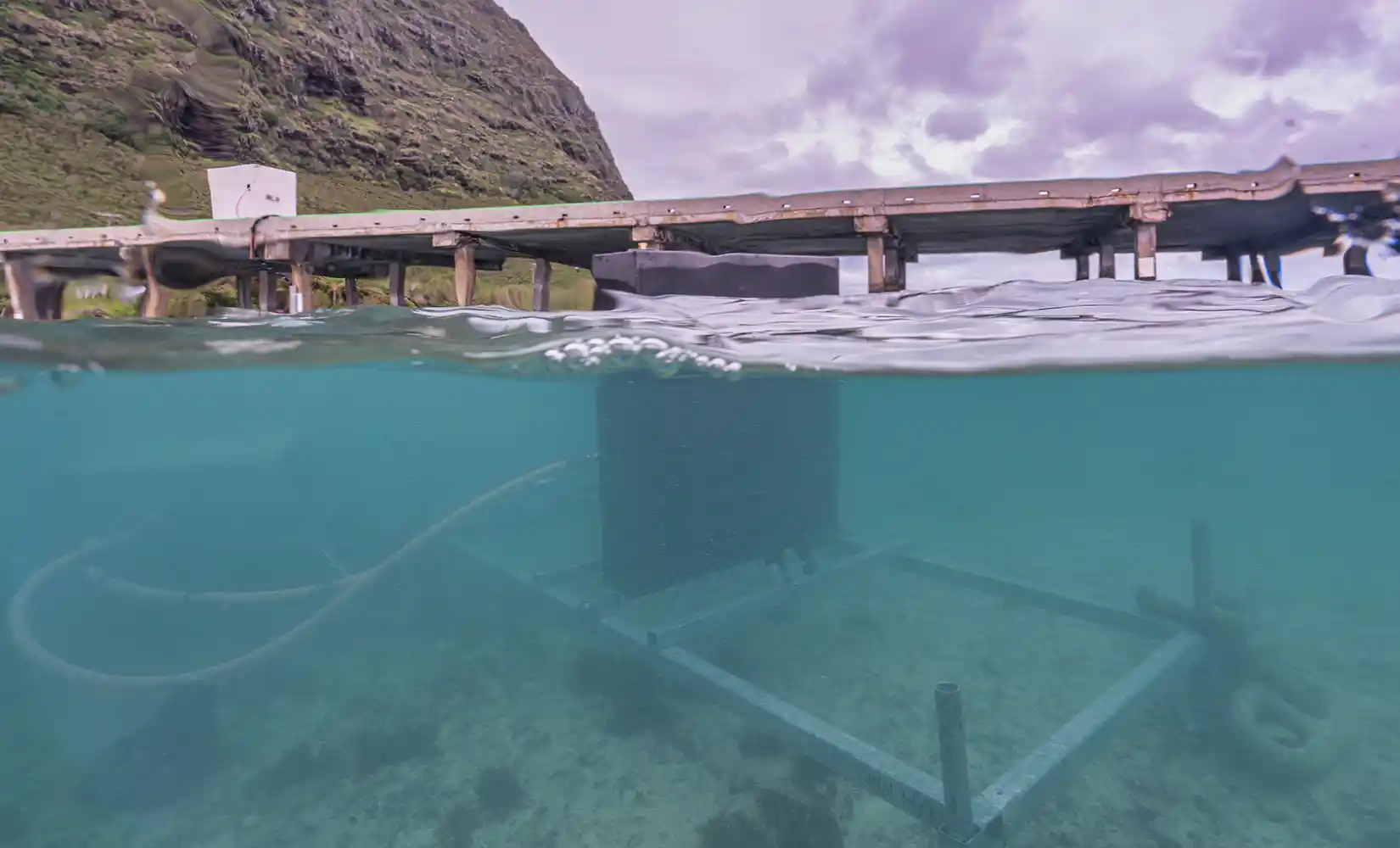
Beneath the surface near Makai Research Pier, the SURF-WEC's flap moves with incoming waves, converting the ocean's motion into mechanical energy that drives the system's power take-off. Photo by Josh Bauer, National Laboratory of the Rockies
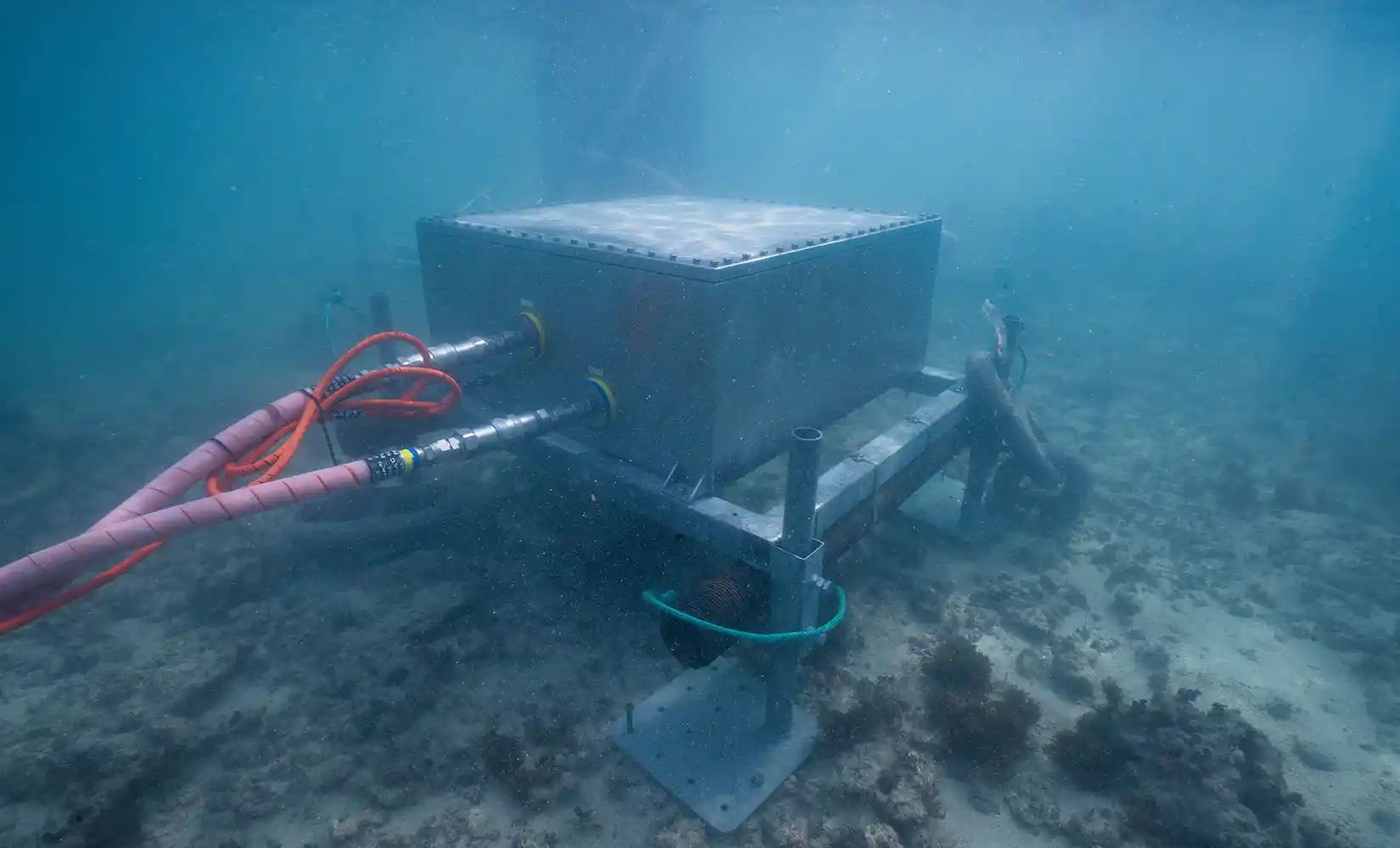
The SURF-WEC's power take-off system captures energy from the motion of the flap as the device operates in real-world ocean conditions. Data collected from the system will help researchers better understand and improve future marine energy technologies. Photo by Josh Bauer, National Laboratory of the Rockies
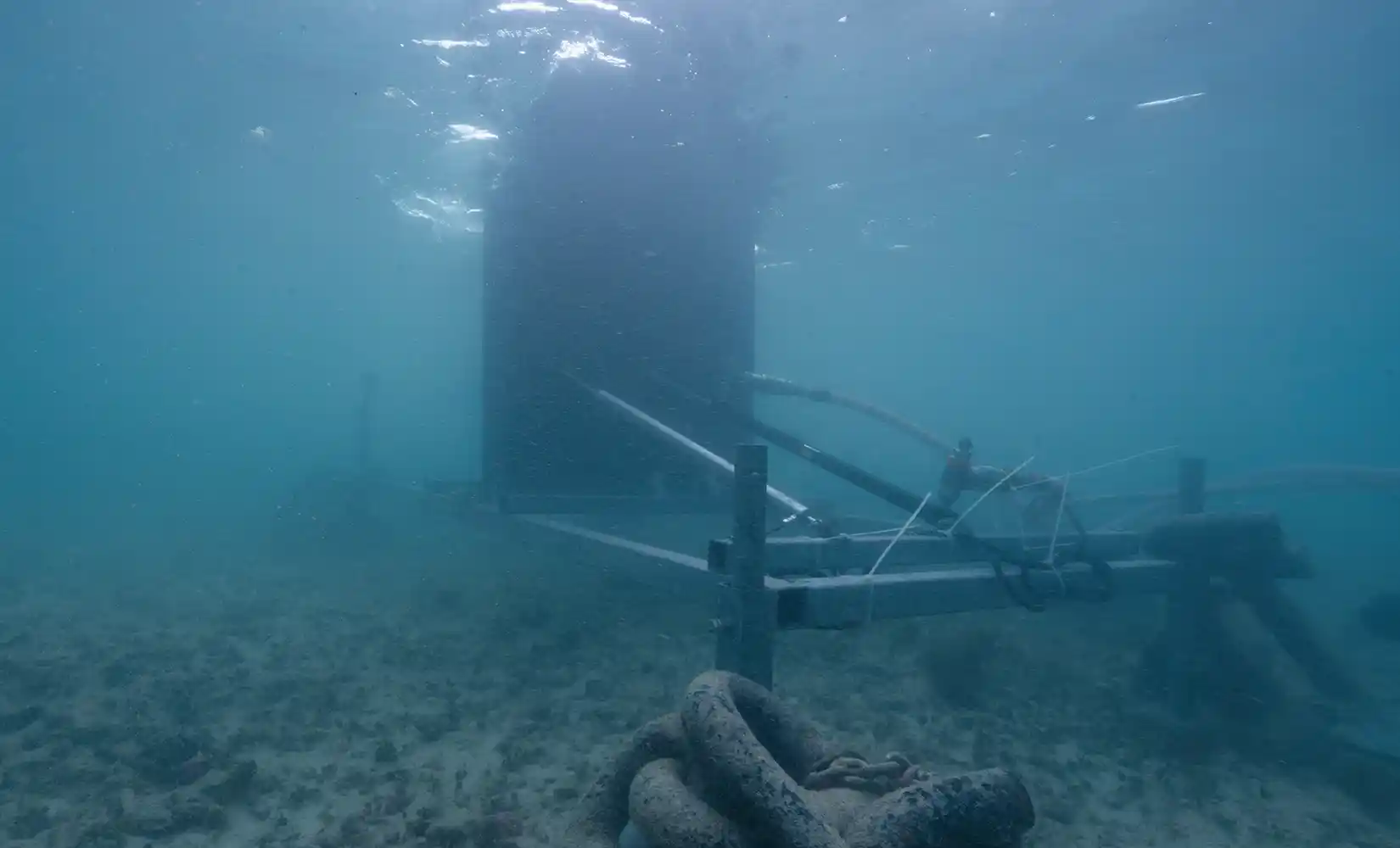
Now operating offshore at Makai Research Pier, the SURF-WEC is collecting real-world performance data from beneath the ocean's surface. The research team plans to keep the system in the water for up to a year, learning from its performance in changing ocean conditions. Photo by Josh Bauer, National Laboratory of the Rockies
"The whole point of research is to learn," said Senu Sirnivas, the NLR principal investigator who is leading the portfolio of work. "It will be great if SURF-WEC stays in the water for a year. But even if it doesn't, it's still a success. We learn—and those lessons will be shared with the community."
Anyone can follow along in real time through the system's live data feed. As SURF-WEC continues operating offshore, researchers at NLR are gathering the information needed to publish a final report, which will be publicly available.
"We're taking something from a whiteboard, building it in the lab, and then seeing it work in the ocean," Friedman said. "That's what makes this so exciting."
Like a surfer waiting in the lineup, the SURF-WEC is finally in position. After three years of preparation, it is now tucked in the elbow of Makai Research Pier and the shoreline, capturing steady waves from the northeast—learning from its time in open water and capturing much-needed data.
This work was funded by the Department of Energy's Hydropower and Hydrokinetic Office.
Interested in learning more? Visit the SURF-WEC's open-source data, and learn how to partner with NLR in marine energy. Subscribe to The Current—NLR's water power newsletter—to stay up to date on the latest news.
Share
Last Updated Sept. 2, 2026