
Will Water-Powered Microgrids Work in the Real World?
Webinar Series Will Highlight How Researchers Test and De-Risk Marine Energy Microgrid Technologies in the Lab

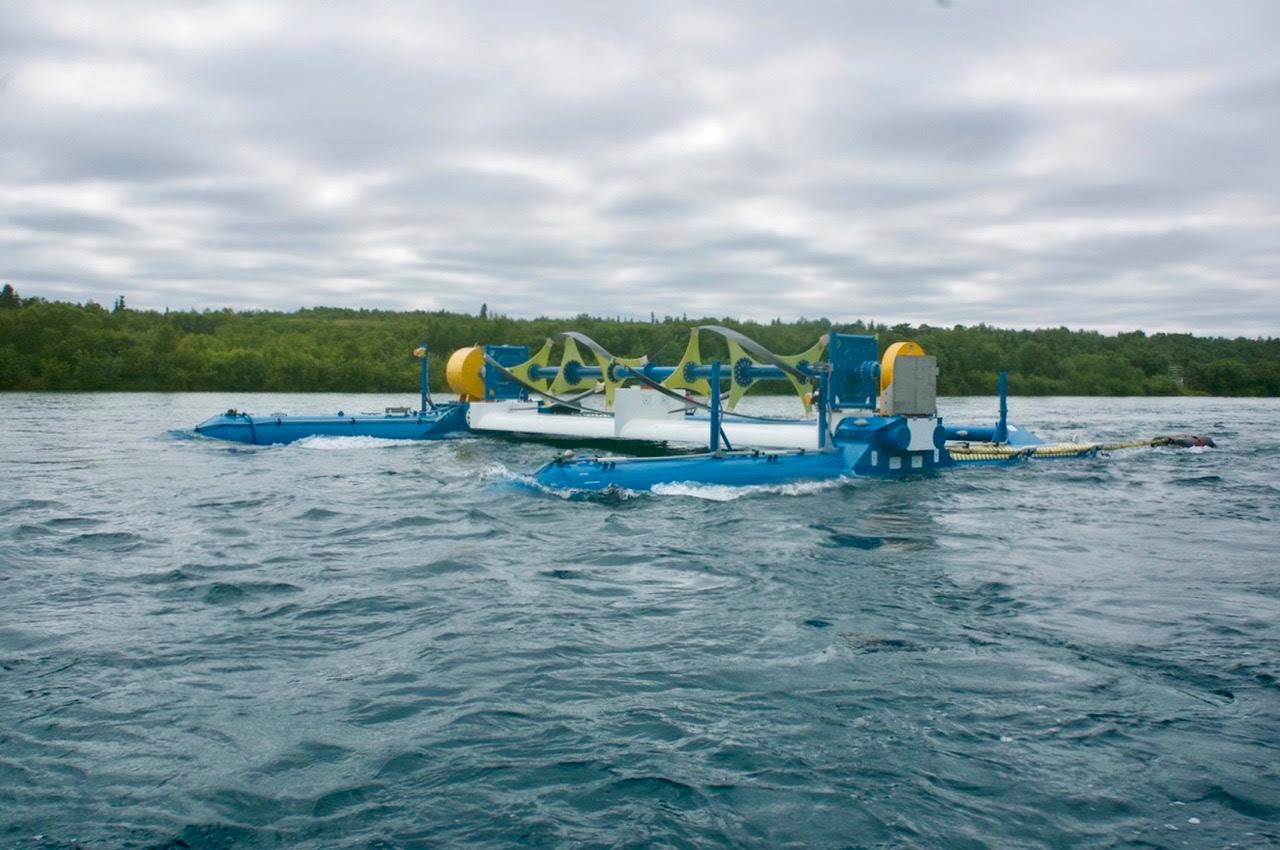
In remote places where water flows freely but electricity often does not, the potential to harness the power of waves, currents, and tides is palpable. But is it possible?
Although marine energy technologies like wave, tidal, and river-current energy-conversion devices are still relatively new, an overview of U.S. marine energy opportunities published by the National Laboratory of the Rockies (NLR) in 2021 characterized their resource potential as “immense and distributed widely across the nation’s coastlines and rivers.”
2026 Marine Energy Microgrid and Power Electronics Webinar Series: Sign Up Now!
- Feb. 9: Introduction to Microgrid Research and Marine Energy Technology Integration
- April 13: A HERO WEC Journey: Energizing Microgrids With Wave Energy
- June 8: Advancing Power Electronics for Wave Energy Converters
- Aug. 10: Microgrid Power Hardware-in-the-Loop Modeling
In many remote communities, there is a strong synergy between locally available energy resources and the conditions needed to deliver reliable, affordable power. Advances in technology, supportive regulatory frameworks, and community-approach system design could help support the development of energy-efficient systems and overcome unique economic and environmental challenges. This opportunity is especially evident in remote Alaska, where more than 250 communities operate isolated microgrids and are well positioned to benefit from solutions that leverage local resources to meet their unique energy needs.
Deploying early-stage marine energy technologies on remote, islanded microgrids is fraught with risk for communities and developers. Mitigating such risk is the focus of the first webinar in the laboratory’s four-part Marine Energy Microgrid and Power Electronics series, which kicks off February 9 at noon Mountain Time.
When in Doubt, Test It Out
“Introduction to Microgrid Research and Marine Energy Technology Integration” will highlight the potential challenges remote communities face when integrating power generated by emerging energy technologies—like wave energy converters and hydrokinetic devices—with their existing microgrids. National Laboratory of the Rockies presenter Alec Schnabel will demonstrate how marine energy technologies can be tested in the lab before they are deployed using NLR’s modeling and power-hardware-in-the loop (PHIL) software.
This helps de-risk the process of testing and validating newer technologies, which can cause instability issues on remote community microgrids that residents depend on for their livelihoods.
“The whole purpose of doing PHIL and simulated testing in the lab is so [the community is] not a test bed—rather, we're the test bed,” Schnabel said. “Especially when you're dealing with someplace like Alaska, where the conditions are just tough. They want to validate as much as possible before jumping into the deep end.”
“The whole purpose of doing PHIL and simulated testing in the lab is so [the community is] not a test bed—rather, we're the test bed.” –Alec Schnabel
Join the Webinars To Learn More
Although marine energy innovations hold significant potential for remote communities to address unique energy challenges, the costs and risks associated with piloting such technologies represent steep barriers to adoption. Engaging a research laboratory like NLR to perform simulated testing can help remote communities in Alaska and elsewhere answer key questions about system efficiency, performance, and reliability before deploying new technologies on their existing microgrids.
Register for “Introduction to Microgrid Research and Marine Energy Technology Integration” to learn more about how the laboratory’s modeling tools and hardware-in-the-loop testing capabilities can help communities, developers, and other stakeholders de-risk and validate emerging marine energy technologies.
To hear how National Laboratory of the Rockies researchers are using wave energy converters to desalinate seawater and how they are improving the power electronics in these devices, check out the other webinars in our four-part Marine Energy Microgrid and Power Electronics series.
Last Updated April 28, 2026