
Students To Help Identify Retirement Options for Energy Technologies
New Competition Invites Collegiate Teams To Develop Creative Yet Practical Ways To Recycle or Reuse Parts and Materials

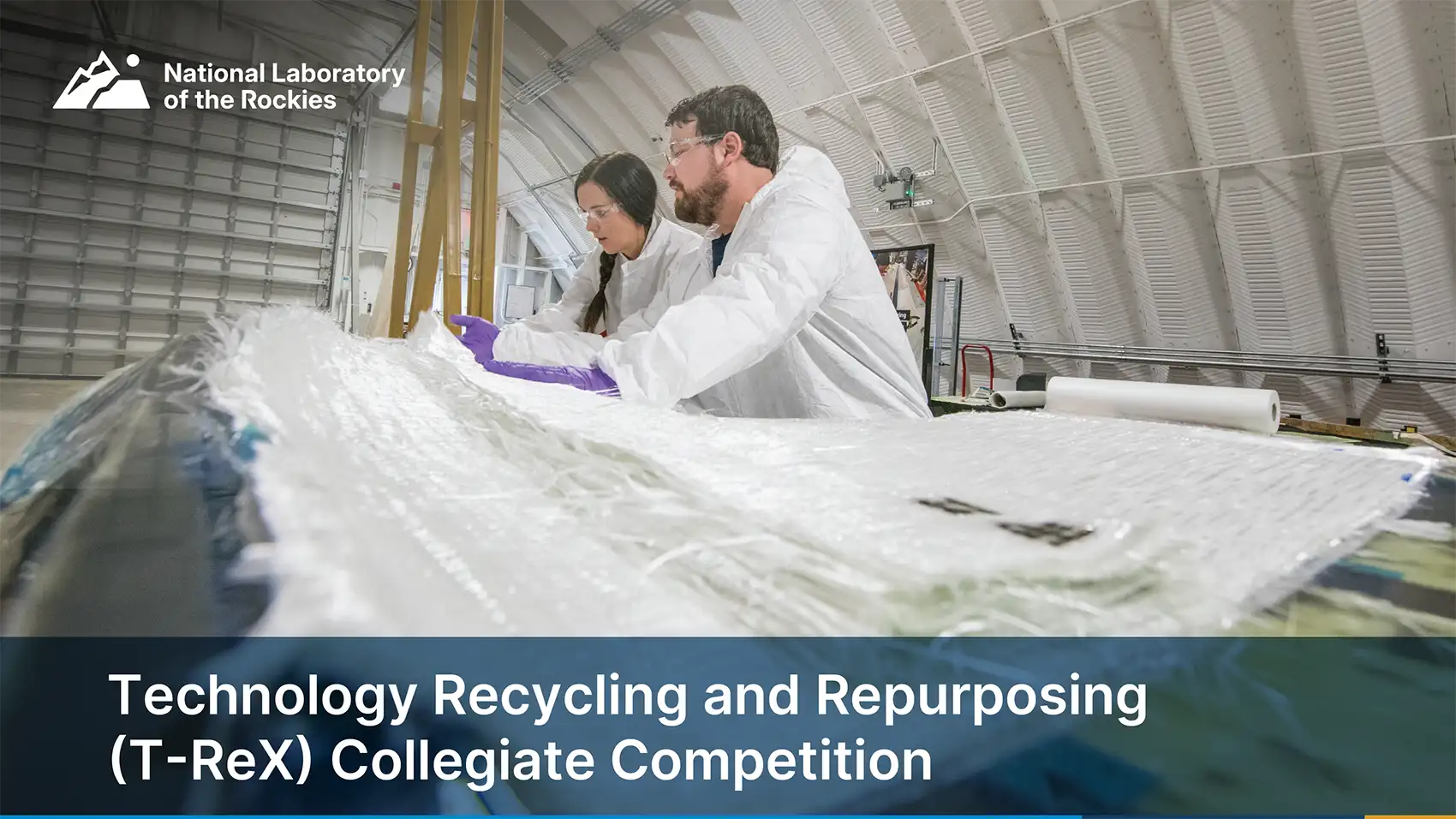
Where do energy technologies go after they retire? A new competition challenges undergraduate and postsecondary students to brainstorm new options for components and materials—that do not involve them being dumped in a landfill.
As energy infrastructure reaches retirement age, the United States faces a growing need to recover valuable minerals and materials and reduce the cost of end-of-service efforts. With the Technology Recycling and Repurposing (T-ReX) Collegiate Competition, the National Laboratory of the Rockies (NLR) is turning that need into an opportunity for students to help solve real-world energy and manufacturing problems.
Funded by the U.S. Department of Energy (DOE), the T-ReX Collegiate Competition invites students to develop practical ways to recycle, repurpose, and recover value from decommissioned energy technology components. Through the competition, students will gain workforce experience and contribute to strengthening domestic manufacturing, U.S. supply chains, and energy system innovation.
Phase 1: Project Conception
Teams of mostly undergraduate students that are selected to participate in Phase 1: Project Conception will spend time during the 2026 academic fall semester developing a proposal for either recycling or repurposing components and materials from wind turbines owned by DOE and decommissioned after a lifetime of research at one of its national laboratories.
Although many turbine materials can already be recycled, some components remain difficult or costly to process at scale. Student teams will need to focus on feasible, efficient approaches that can help recover more materials—like steel, copper, carbon fiber, and rare earth magnets—and reduce waste, especially of critical minerals. Based on a set of criteria related to the creativity, practicality, and safety of their work in the first phase, teams will be invited to continue on to Phase 2.
“They’ll really have to use their imaginations,” said NLR researcher Elise DeGeorge, the lead organizer of the new competition. At the same time, the multidisciplinary teams will need to consider the logistics involved in breaking their part down and connecting with manufacturers or recycling companies to figure out how they can recycle or repurpose the materials. “There are a lot of connections to be made. It’s a great learning opportunity with significant relevance to the end-of-life asset management challenges we face,” DeGeorge said.

Phase 2: Design Execution
Those continuing on to Phase 2: Design Execution will get the opportunity to visit NLR’s Flatirons Campus to see the decommissioned equipment and select their preferred parts or materials. After their chosen equipment is shipped to them, they will spend the rest of the spring 2027 semester working to bring their design to (second) life with some technical assistance from NLR staff.
The teams will present their finished products at a final event in May 2027 to other teams and judges from industry. They will also have the opportunity to share community engagement efforts they will complete throughout the year. The final event is also where the winners will be recognized.
Experience and Connection
The competition aims to help students gain hands-on experience and network with members of the energy, manufacturing, and materials industries, helping the next generation find their future calling—while giving decommissioned equipment a new purpose. The program also helps build a workforce that can support the industry and communities as they navigate end-of-service considerations for energy projects.
Throughout the competition, teams will engage with their local communities to learn about challenges they face when retiring energy projects—like ensuring land is used responsibly and avoiding unexpected costs—and spread awareness about the benefits of recycling and reusing the materials from those projects.
When the end of an energy project is part of the plan from the very beginning, the technologies that brought power to American houses yesterday can be reimagined today as a bus stop bench in a major city or reused to connect a satellite to controls back on Earth. The competition will expose even more recycling and repurposing possibilities, giving energy technologies a new sort of power.
Applications for Phase 1 of the T-ReX Collegiate Competition are due Sept. 30, 2026. Learn more by visiting the T-ReX Collegiate Competition webpage.
Last Updated April 28, 2026