
Remote Control: Rural Alaska Communities Seek Nuanced Solutions to Energy System Challenges
Researchers Model Configuration Options for Local Energy Generation To Understand Unique Technical Requirements, Costs, and Operational Implications for Remote Alaska Communities

Remote Alaska communities face numerous energy challenges—particularly those communities that are not connected to a larger grid and rely primarily on imported fuel for electricity generation.
While some remote Alaska communities have adopted local energy-generation technologies, they face considerable challenges in integrating them with existing infrastructure. But as case studies in a report show, integrating local energy sources in remote Alaska communities can be successful with proper planning, workforce training, and control systems.
Two such communities in the Aleutian Islands—Nikolski and St. George—sought help investigating energy alternatives and integration strategies from the U.S. Department of Energy’s (DOE’s) Energy Technology Innovation Partnership Project (ETIPP). Managed by the National Laboratory of the Rockies (NLR), ETIPP supports remote, coastal, and island communities with technical assistance and energy planning to help them build more reliable and affordable energy systems.
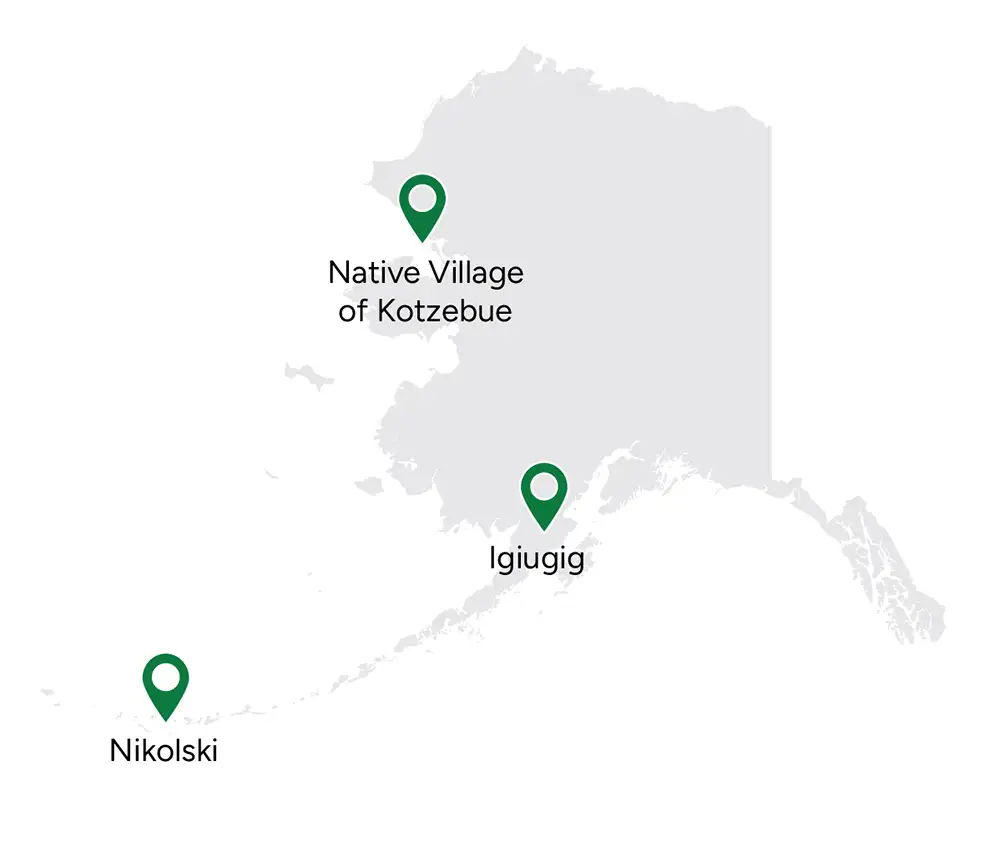
The report presents lessons learned from efforts to integrate localized energy generation in remote Alaska communities, including both Nikolski and St. George, as well as Kotzebue (north of the Arctic Circle), Igiugig (in southwestern Alaska), and others. The findings suggest options for adapting existing power plants and distribution systems to integrate local energy resources. NLR led the technical assistance for the projects highlighted in this report.
“While we don’t intend this report to be a one-size-fits-all solution for Alaska communities, we hope that by sharing the challenges and successes that other remote communities have encountered when integrating local energy resources into their power systems it will facilitate the sharing of best practices between communities,” NLR senior engineer Rebecca Meadows said.
Existing Impediments and Needs in Off-Grid Alaska Communities
Alaska is one of eight regions ETIPP serves, and part of ETIPP’s work involves helping remote Alaska communities meet their energy goals while navigating resources, logistics, and other challenges. Nikolski and St. George are among the 25 Alaskan communities—with 10 new communities joining in cohort 5— where ETIPP has supported efforts to improve their energy security, reliability, and affordability.
Integrating new local energy resources in rural Alaska can be challenging because most legacy power plants and distribution systems were not designed for such resources. Communities often need a baseline system assessment to identify necessary upgrades before other resources can be added.
A second barrier is operational: Diesel engines must run above a minimum load to avoid accelerated wear. When local generation lowers diesel demand, engines may be forced below that threshold, leading to maintenance and reliability issues.
Finally, workforce capacity is essential. Even with the right technology, projects can falter without trained local staff who can operate and maintain hybrid systems and manage diesel engines effectively alongside new resources.
Integration Pathways for Remote, Reliable Energy
Successes and lessons learned from communities in the region can offer a blueprint for other rural Alaska communities, said Greg Stiegel, deputy director of REAP, ETIPP’s regional partner organization for Alaska.
“REAP believes strongly in investing in the people in rural Alaska to ensure that communities are positioned to control their energy destiny,” Stiegel said. “REAP's work in education, workforce development, and meaningful engagement aligns with [NLR’s] work in integrating localized energy generation into islanded microgrids, as outlined by the case studies in this report. Bolstering local skills and leveraging regional patterns is a key part in finding success when operating and improving remote power systems.”
The Alaska case studies demonstrate that effective integration strategies are central to successful energy projects. Communities can employ several approaches to help reduce energy costs and mitigate supply chain risks while maintaining high power quality and reliability, including:
- Advanced control systems, which coordinate diesel power generation with variable generation and storage assets to support reliable and efficient power supply. They act as the glue that ties all resources together, enabling communities to reduce diesel use while maintaining grid stability.
- Dispatchable thermal loads, such as electric boilers, can turn excess power into heat, stabilizing microgrids and ensuring communities capture the full value of local generation.
- Energy storage systems, which capture excess generation and supply it later, reducing diesel run time and fuel use. Storage smooths fluctuations in variable generation output, maintaining steady voltage and frequency in small grids. By providing spinning reserve and bridging variability, storage increases reliability and enables integration of locally generated energy.
- Demand-side energy efficiency strategies to lower energy demand, reduce costs for households, and decrease the size and expense of new generation assets.
“With robust energy monitoring resulting in investment-grade data, energy efficiency can turn into the ‘fuel’ of choice—it should really be the first thing in the toolbox,” Griffin Hagle-Forster, executive director of the Association of Alaska Housing Authorities, said in the report. “Energy efficiency is your vegetables, and [local generation technologies] are your dessert.”
Diesel-fired generators power much of rural Alaska’s remote communities. Integration challenges have meant that locally generated energy has not been effectively woven into power systems in some communities, but new strategies are changing that. Holistic consideration of power systems—where power plant controls are integrated with dispatchable loads or energy storage—is central to success and may help other Alaska communities as they pursue energy security and independence when far from urban centers.
Energy Successes in Alaska Communities
Nikolski, Igiugig, and Kotzebue illustrate a variety of challenges and successes remote Alaska communities face in supplementing diesel-generated electricity with local sources of power, and they have all worked with ETIPP toward their energy goals. Highlights from their case studies are described below.
Nikolski
In the remote island village of Nikolski, on the west Aleutian island of Umnak, energy is costly and complicated by logistical challenges of getting fuel to the small community of fewer than 20 people.
Through a partnership with ETIPP, Nikolski developed a community energy plan with a goal to “reduce the amount of imported diesel required to heat and power the village,” focusing on technologies that can be easily maintained by the community, said Nikolski representative Jan Dushkin.
Nikolski’s plan provides a clear, phased pathway to reduce diesel consumption by up to approximately 30% (leading to lower energy costs) and training community members to maintain energy technologies. Success depends on securing funding, implementing generation and storage technologies, and sustaining partnerships for technical assistance and training.
Success also depends on the integration strategies communities use to supplement their power systems. In Nikolski, they planned to upgrade their power system and install a new energy generation and storage project that utilizes excess energy to keep their greenhouses warm.
Igiugig
Igiugig is a remote village accessible only by air, located at the mouth of the Kvichak River on Lake Iliamna in southwestern Alaska. The village relies on the Kvichak River for drinking water and fishing, and on diesel for electricity.
Igiugig imports approximately 25,000 gallons of diesel annually to power the village. As in Nikolski, that comes with high prices that are subject to volatile international commodity markets. Since the early 2000s, Igiugig has developed a commercial microgrid, deployed a power system that generates electricity from river currents in 2019, and installed a battery energy storage system (BESS) in 2022, though commissioning was delayed until 2024.
BESS can play a critical role in enabling greater localized energy-generation integration in remote, imported-fuel-dependent microgrids. By storing excess generation and providing essential grid services—such as frequency regulation, spinning reserve, and voltage support—BESS can allow communities to reduce imported-fuel reliance, minimize curtailment, and operate their systems more efficiently.
In collaboration with NLR, in 2022 Igiugig developed a comprehensive energy plan, which aims to reduce diesel fuel for electricity 50% by 2030, a strategy central to reducing energy costs. As a result of ETIPP support, Igiugig secured funding for a local energy-generation source that, when paired with the existing 253-kilowatt-hour/125-kilowatt battery installed in 2021, is projected to reduce diesel consumption for electricity by about 36% and lower the levelized cost of electricity by $0.15 per kilowatt-hour. The community also plans to install additional generation equipment this year and beyond.
Igiugig has since shared lessons learned to guide other communities considering energy storage. Key recommendations include:
- Define interoperability requirements early, such as ethernet and internet needs
- Establish contingencies for commissioning delays, including agreements on technical support and cost coverage
- Use independent third-party assessments to verify proof of concept
- Ensure consistent, dedicated representation from both the microgrid controller and BESS manufacturers.
Kotzebue
Approximately 3,200 residents live north of the Arctic Circle in the village of Kotzebue, a place rooted deeply in Iñupiat culture. Primarily accessible by air, Kotzebue also experiences the high cost of importing diesel fuel to generate electricity.
Since the 1990s, Kotzebue has focused on finding localized energy sources to reduce supply chain risks and lower the cost of electricity by installing local energy-generation technologies and using BESS to stabilize the power system.
Key localized energy-generation integration projects in Kotzebue include:
- Electric boilers at the hospital and National Park Service building to utilize excess energy to reduce heating costs and help regulate grid frequency
- A 1-megawatt lithium-ion battery installed in 2015 that provides spinning reserve and frequency support, with additional storage planned for installation
- Smart meters and remote monitoring systems that enhance energy management
- Advanced control software that optimizes additional energy integration.
As of 2024, approximately 25% of Kotzebue’s electricity was generated from local energy resources—and the community plans to increase that capacity to 50%.
As remote communities seek energy solutions, learnings from ETIPP engagements and the successful strategies and cases reported may be a guidepost for best practices in other Alaska communities.
“Reliable energy at a low cost should be a given for everyone, no matter where you call home,” said Tessa Greco, ETIPP’s program manager at NLR. “The latest technologies coupled with practical implementation strategies and a trained workforce make affordable, quality energy access possible, and we're already seeing this happen throughout Alaska.”
The U.S. Department of Energy’s Energy Technology Innovation Partnership Project (ETIPP) is a community-led technical support program for coastal, remote, and island communities to access unique solutions and increase energy security and reliability. By uniting DOE and its national laboratories, regional organizations, and community stakeholders, ETIPP provides tailored technical support to help communities achieve affordable, reliable solutions to their energy system challenges. This collaborative model leverages the combined expertise and resources of its partners to deliver comprehensive, practical solutions that align with local needs. Learn more about the program on the ETIPP website.
Last Updated April 28, 2026