
Partners for Critical Defense: NLR and Natural Resources Research Institute Enhance Collaboration
Project Aims To Recover Critical Minerals From Department of War Waste To Boost U.S. Supplies for Defense Applications

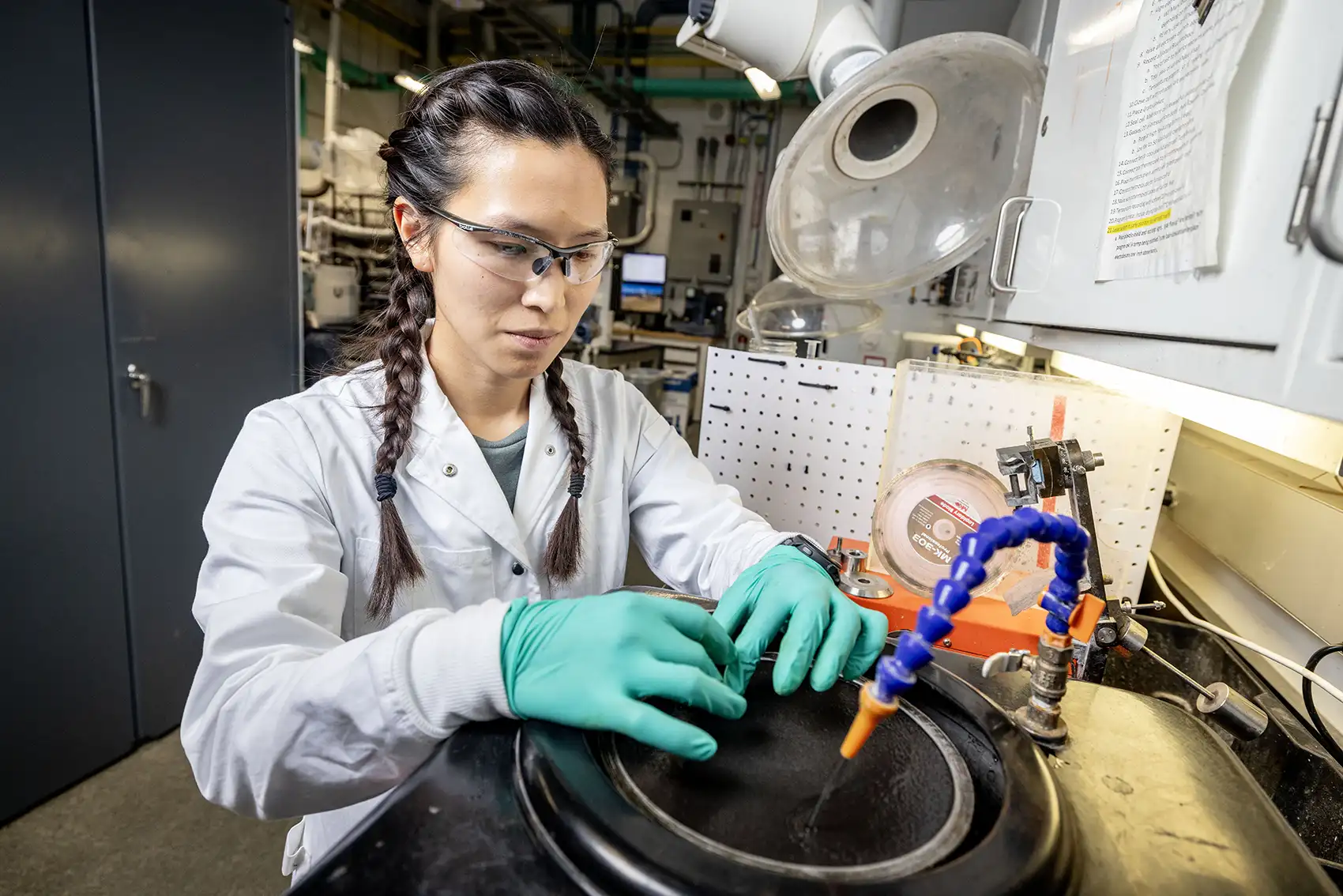
Many defense technologies—including vehicles, jet engines, radar systems, and more—contain critical minerals. When those technologies reach the end of their lifespans, those minerals—many of which are not currently accessible within the United States and must be imported—tend to get lost rather than recycled.
If the country can recover those minerals, U.S. industries and the government could source a portion domestically rather than having to depend exclusively on foreign supplies, which can be expensive, delayed, or limited.
Now, the National Laboratory of the Rockies (NLR) and the University of Minnesota’s Natural Resources Research Institute (NRRI) are working together to design a new, scalable method to recover and recycle elements necessary to build many of today’s modern defense technologies. These technologies tend to require especially pure metal alloys to operate as intended. But today’s low-purity waste streams contain high amounts of variation, and current recycling methods—like conventional pyrometallurgical and hydrometallurgical processes—are either too complex or costly for widespread use.
Through their existing partnership, called Innovative Materials and Processing for Advanced Critical Technologies (or IMPACT), experts from NLR and NRRI plan to evaluate a new, potentially more promising method to extract metals and alloys from even highly heterogeneous waste. Their method involves melting, vaporization, and electrical separation to precisely recover elements, such as scandium and lithium, from high-tech aerospace scrap.
This new phase in the IMPACT partnership is funded by the U.S. Department of War’s Environmental Security Technology Certification Program (ESTCP), which provides support and facilities for researchers to assess how a new technology could work in competitive, commercial applications. The project kicked off on June 1, 2026, and will take place over the next 24 months.
“We need critical minerals for many of the technologies that support our economy and national security. But many of these materials are discarded because that’s cheaper and easier than using currently available recycling processes,” said Jud Virden, NLR director. “Projects like this one are critical to exploring practical ways to recover and reuse these resources and strengthen our domestic supply chains. And that’s hard to do without sustained collaboration between our national laboratories, universities, industry, and government.”
The cross-laboratory team combines the theoretical with the practical. NLR’s researchers bring expertise in high-performance computing for modeling, system design, and validation and scale up. The laboratory’s experts can virtually replicate and test the recycling process to refine and optimize it before building small-scale prototypes. NRRI researchers have deep expertise in natural resource stewardship and resource use, spanning minerals and materials, water, energy, and industrial systems. Its researchers bring a practical understanding of how technologies interact with real-world resource, environmental, infrastructure, and industry conditions.
“Materials used in defense technologies are often not designed with recovery in mind, which makes recycling them especially challenging,” said Tim Tetrault, a laboratory program manager at NLR who leads development of partnerships between the laboratory and defense agencies. “The goal of the ESTCP program is to not just demonstrate new capabilities but transition them into production-scale operations. And the partnership between NLR and NRRI creates the perfect combination of capabilities and expertise to successfully transition this new material recovery process.”
The team’s new recycling process is also designed to adapt to serve a wider variety of alloy chemistries, which means it could potentially help recover minerals from even especially difficult-to-recycle systems, like nickel superalloys and titanium-based alloys contained within coatings, adhesives, and other organic materials.
“By pairing NRRI’s unique, broad natural resources research portfolio and demonstration facilities with national laboratory scientific excellence, this alliance provides a coordinated research platform to position Minnesota as a national center for next-generation materials, manufacturing, and energy innovation," said Rolf Weberg, NRRI's executive director, in a press release.
Last Updated April 28, 2026