
NLR’s Kalen Rasmussen Wins Energy Security Award at National Lab Research SLAM
Postdoc Gives Winning Presentation About Recovering Critical Metals From Spent Batteries

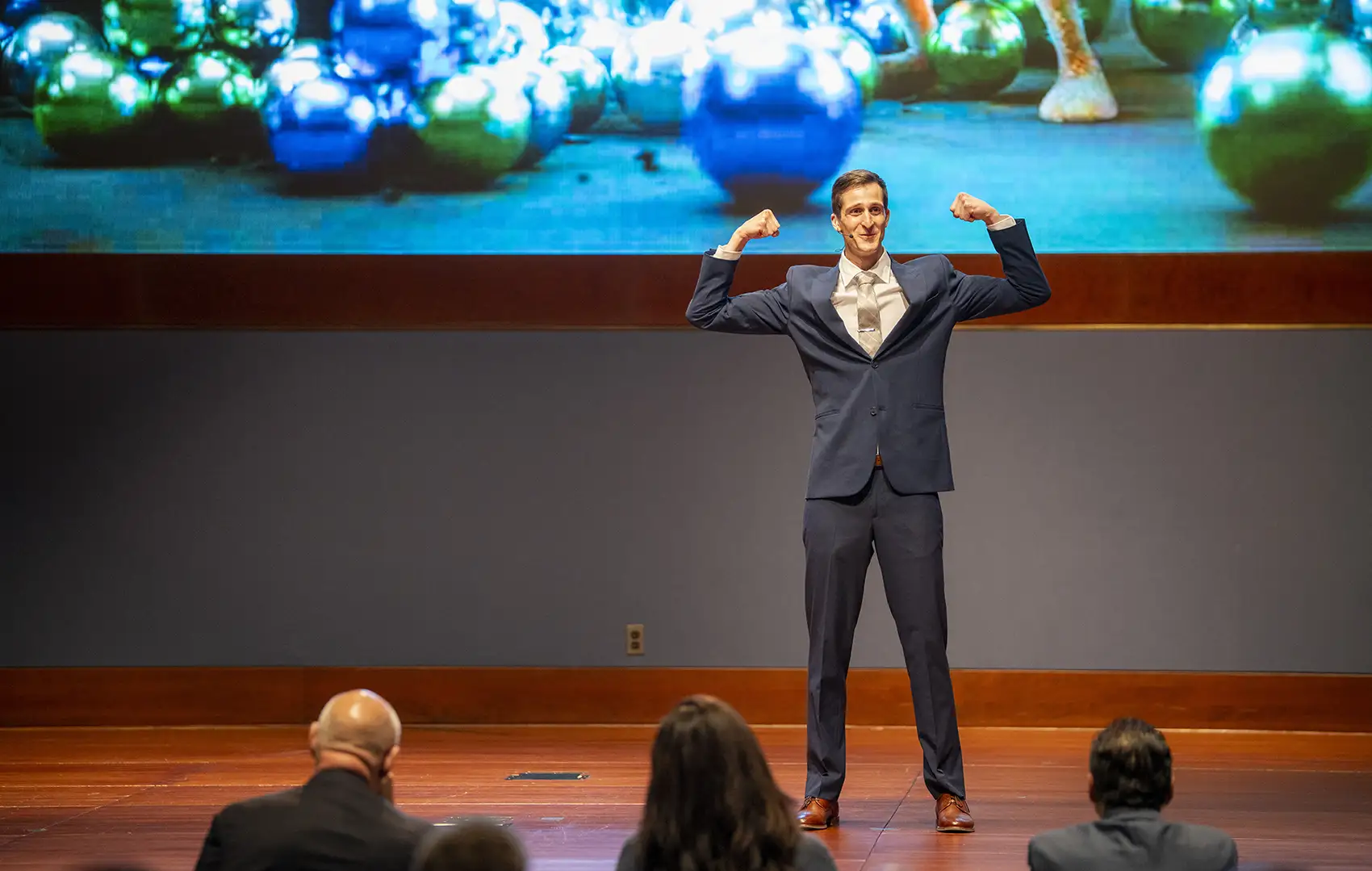
On April 15, 2026, Kalen Rasmussen, a postdoctoral researcher at the National Laboratory of the Rockies (NLR), competed with 16 other early-career researchers at the National Lab Research SLAM.
Participants had just three minutes and one slide to present their research to an audience of more than 200 policymakers, congressional staffers, and laboratory representatives in the Congressional Auditorium on Capitol Hill in Washington, D.C. More than 2,150 additional viewers tuned in to watch the livestream of the event, with laboratories hosting watch parties across the country.
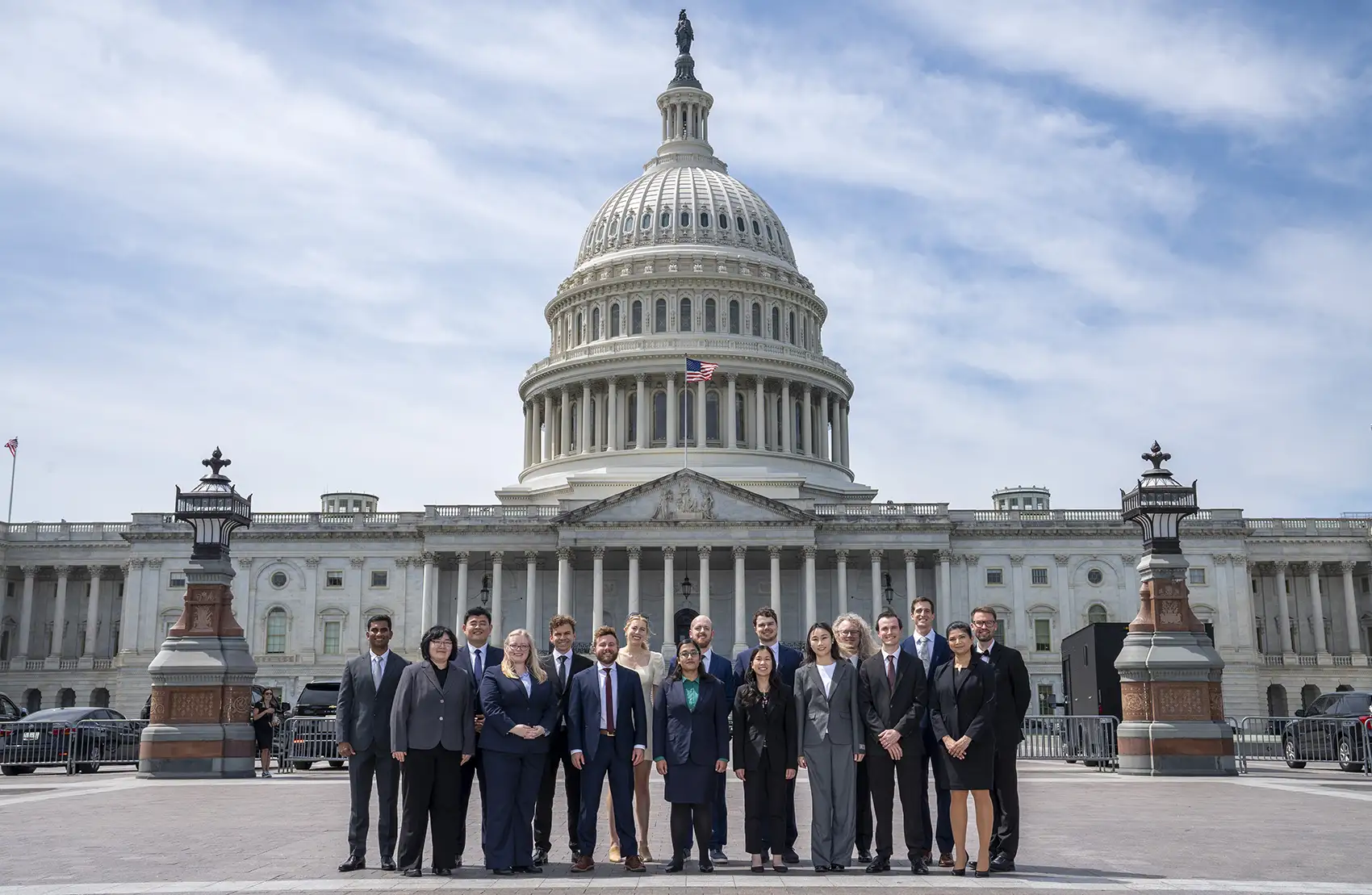
A panel of esteemed judges evaluated the scientists on their comprehension, content, engagement, and communication. Finalists vied for awards in five categories: Energy Security, National Security, Scientific Discovery, Advanced Materials, and People’s Choice.
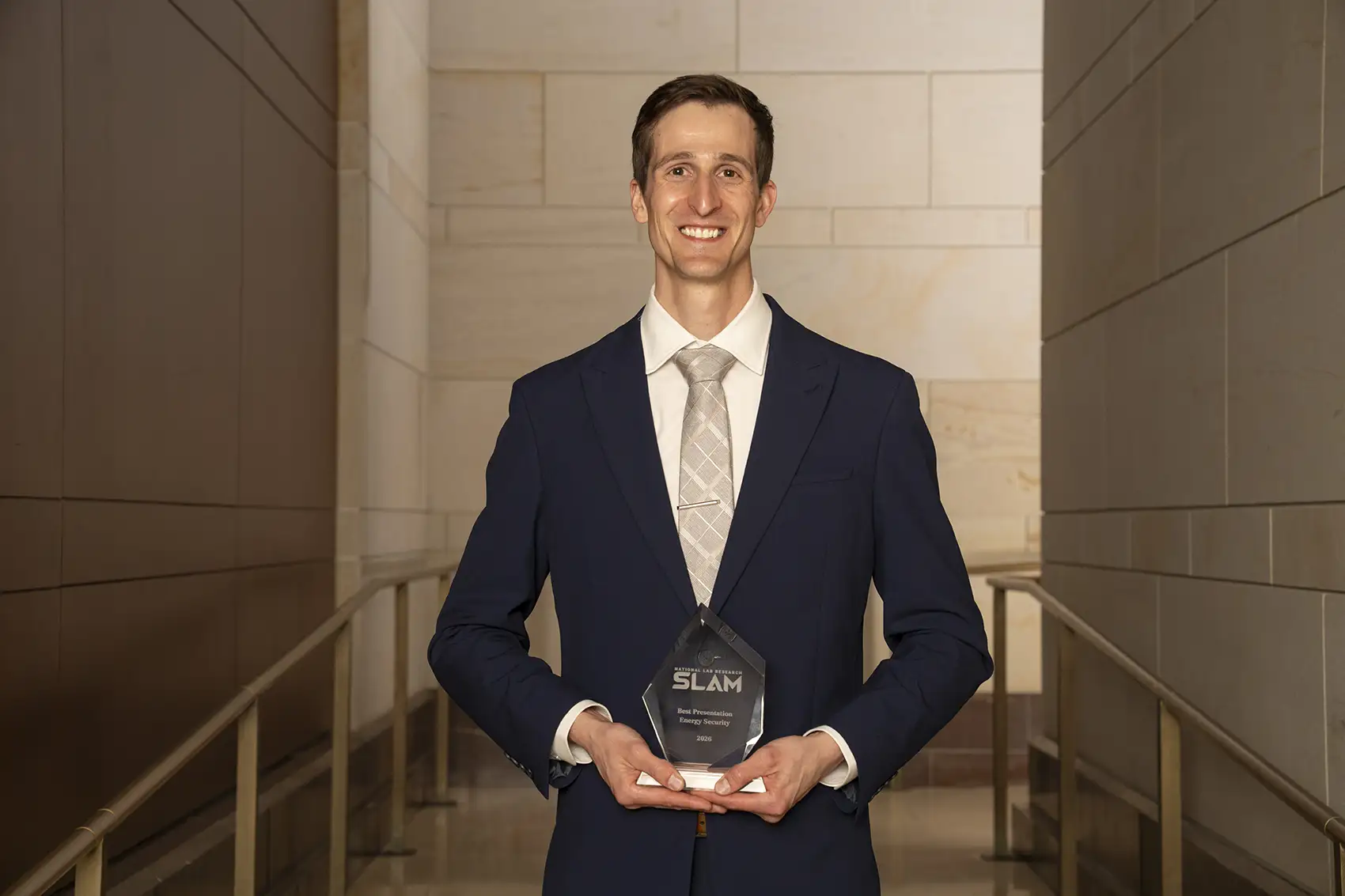
Rasmussen won the Energy Security award for his talk, “From Microbes to Metals: Powering Energy Security.” His work at NLR leverages spent batteries—a steady waste stream—to bolster the domestic critical metal supply chain and ensure U.S. energy security and independence.
He began his presentation by describing how the batteries that power the modern world depend on critical metals. When these batteries reach the end of their life, they often end up in a landfill—removing them from the supply and forcing the United States to continue buying more, often from geopolitical rivals.
“We go through roughly 250,000 tons of batteries every year,” Rasmussen said. “For context, it would take 7,000 fully loaded semitrucks to haul away just one year’s worth of spent batteries [in the United States].”
Current battery recycling, he explained, is inefficient or involves harsh chemicals and generates toxic waste. Instead, Rasmussen and his team look toward a tiny microbial hero: Acidithiobacillus ferrooxidans.
Through a process called bioleaching, these microbes create an environment that dissolves battery metals, allowing them to be purified and remanufactured. Within that process, however, the dissolved metals are toxic, even to A. ferrooxidans.
Rasmussen’s research aims to increase A. ferrooxidans’ resistance to these toxic metals, turning the microbe from a hero into a superhero when it comes to battery recycling. The result can help recover metals that already exist in the United States.
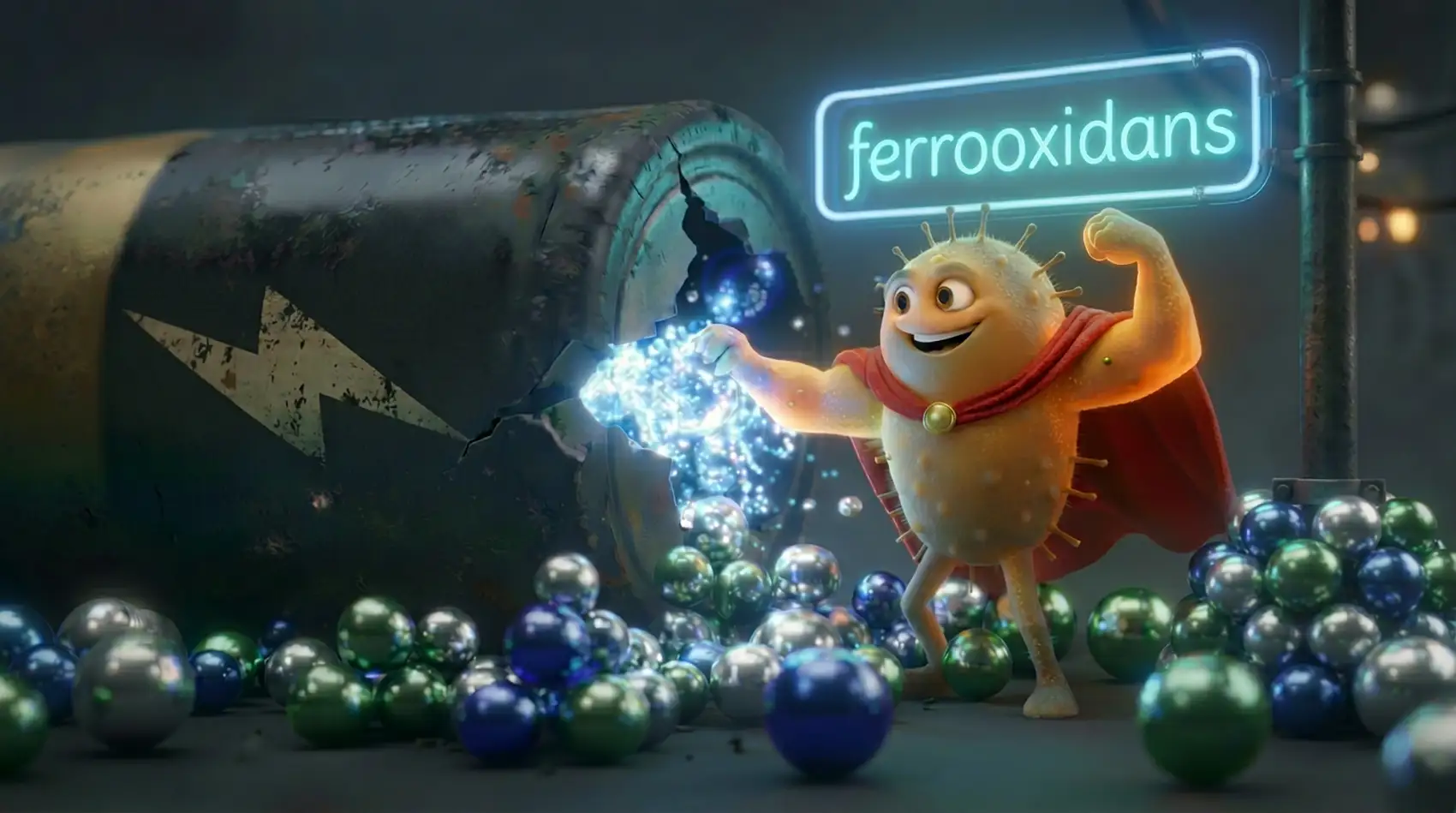
“While batteries power the modern world, microbes allow us to power the U.S. independently,” he said.
Rasmussen said the biggest takeaway from the SLAM was the power of distilling complex science into something anyone can enjoy and learn from.
“You can have macro-sized science, and you can present it in a micro-sized three-minute talk, and you can do it very clearly to a very broad audience and even to people who may not be subject experts or even scientists,” he said. “And hopefully, especially being in a place like here in D.C., we can convey a message that really inspires them.”
For Rasmussen, winning was about more than himself.
“Winning means—not to be a little cliché—but I think it means a tremendous amount, not just to me but also to the people that helped get me here,” he said. “It's really the culmination of a village to be here. The entire process wouldn't have been possible without them, and it makes it a little bit more sweet that some of them were here to join me.”
Sponsored by the House Science and National Labs Caucus and the Senate National Laboratory Caucus, the National Lab Research SLAM aims to highlight the key role and impact of U.S. Department of Energy laboratories in the nation’s innovation ecosystem.
Learn more about NLR’s bioenergy and bioeconomy research and explore NLR’s critical minerals research. Read about the event and finalists at the National Lab Research SLAM site.
Last Updated April 28, 2026