
New Partnerships With State of Alaska and University of Alaska Fairbanks Expand on Critical Minerals and Energy Innovation
NLR Laboratory Director Jud Virden Signs Partnership Agreements at Alaska Sustainable Energy Conference in Anchorage

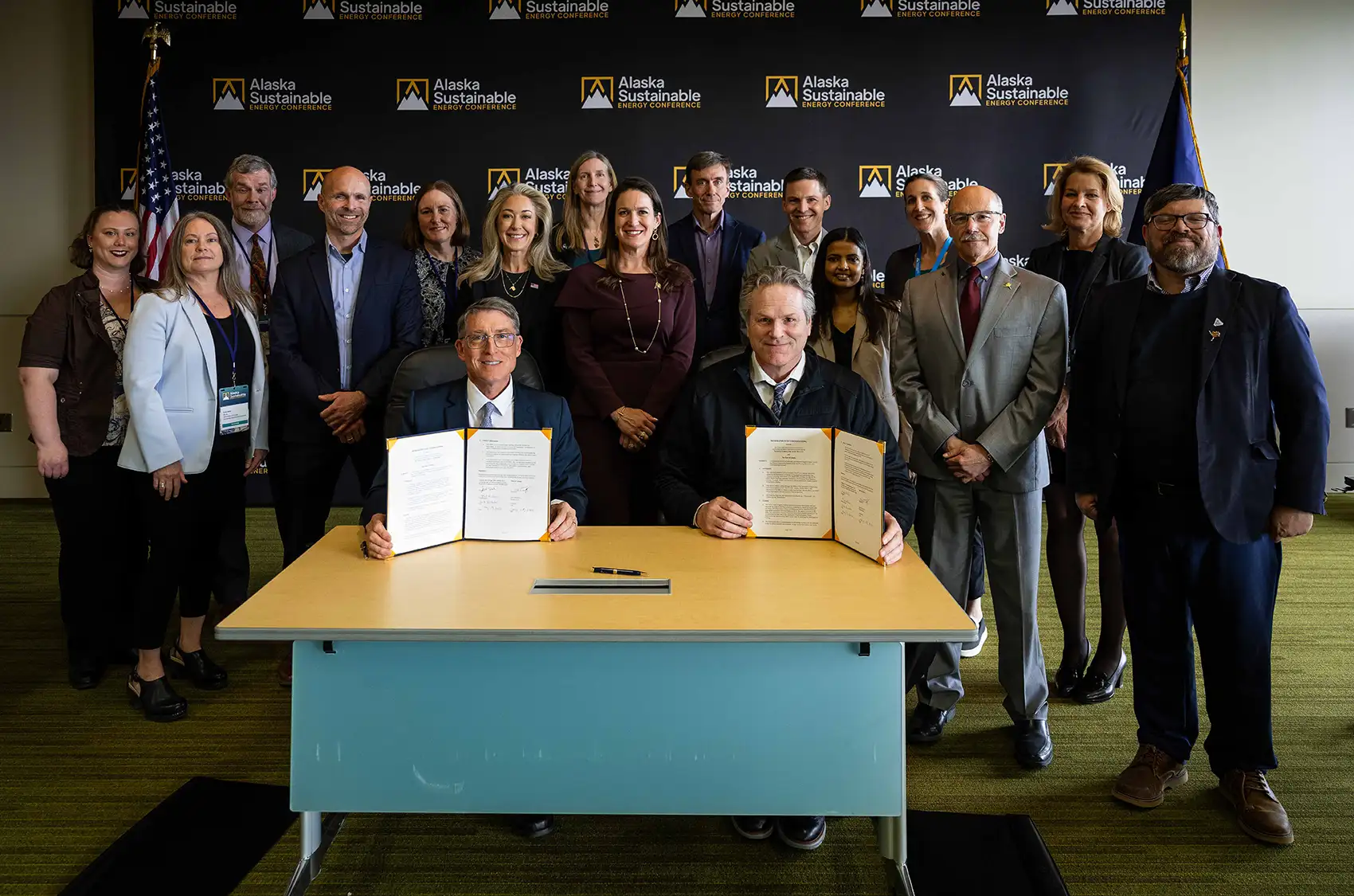
The National Laboratory of the Rockies (NLR) signed two new memorandums of understanding (MOUs) on May 19 that aim to increase research and innovation in critical minerals, energy, and buildings in Alaska and the Arctic. These partnerships build on longstanding collaborations and are designed to tap into Alaska’s resources in a way that benefits both the state and the nation.
“Alaska faces unique challenges,” NLR Director Jud Virden said. “NLR is proud to partner with the state and its flagship university to develop and accelerate innovative solutions to Alaskan challenges and address our nation’s pressing needs in critical minerals, energy, and buildings.”
At the Alaska Sustainable Energy Conference, joined by U.S. Department of Energy (DOE) Assistant Secretary Audrey Robertson, Alaska’s governor Mike Dunleavy, and University of Alaska Fairbanks (UAF) leadership, Virden signed agreements that will make it easier for NLR to work with these key partners to scale solutions for the real world.
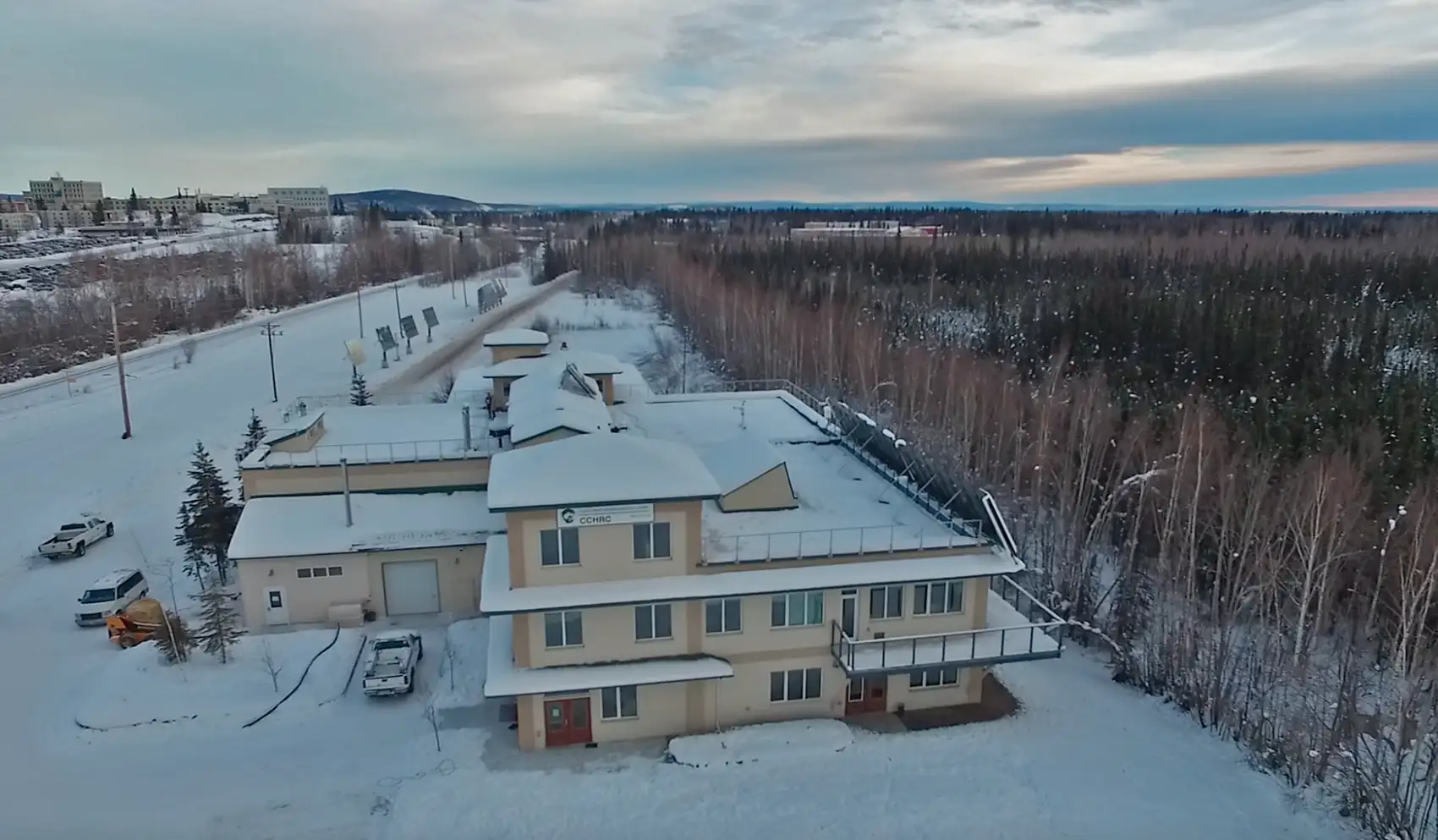
NLR is the only DOE national laboratory with a physical presence in Alaska, located adjacent to the University of Alaska Fairbanks campus. NLR’s Alaska research focuses on energy and building technologies in extreme climates and remote locations, as well as support for military, government, and communities in decreasing energy costs and improving reliability. Recent projects include an analysis of the state’s power grid to address declining natural gas supply within Alaska, an evaluation of methods to stabilize permafrost on military sites, and support for designing a secure, resilient facility on the Alaska-Canada border.
Through the MOU with the university, NLR gains access to UAF expertise in microgrids, engineering, and critical minerals—such as the Alaska Critical Minerals Collaborative, a research unit at UAF connecting government, industry, and researchers to advance critical mineral development across Alaska. The laboratory may also host students and fellows from UAF’s College of Engineering and School of Mines, Arctic engineering, geosciences, and other relevant programs, offering a training ground for the critical mineral workforce of the future.
On the flip side, NLR can provide access to advanced analysis tools, such as the ability to create digital twins of mines and microgrids with its Advanced Research on Integrated Energy Systems (ARIES) platform, and a wide range of capabilities in its new Energy Materials and Processing at Scale (EMAPS) facility that offers partners an entirely new model for “market-first” research: the ability to grow laboratory-scale innovations into scalable and validated market-relevant prototypes under a single roof.
“This partnership leverages the unique strengths of each of our organizations to create something that is greater than the sum of two parts,” UAF Interim Chancellor Mike Sfraga said.
NLR’s agreement with the state is complementary in approach, paving the way for NLR and the state to coordinate resources, share research, and boost Alaska energy and critical mineral production.
“This agreement helps turn Alaska’s resources and know-how into practical solutions,” Gov. Dunleavy said. “By formally partnering with federal researchers who are already based in Alaska, we can lower energy costs, build infrastructure that works in Arctic conditions, strengthen domestic supply chains, and create good-paying jobs, especially in rural and remote communities. It puts Alaska at the center of solutions that matter to both our state and the nation.”
Learn more about NLR critical minerals research and collaborations.
Last Updated April 28, 2026