
New Material Sprouts From Fast-Growing Crop
How a Startup, Farmers, and a National Laboratory Are Growing a More Durable, Recyclable Epoxy for Snowboards, Energy Infrastructure, and More

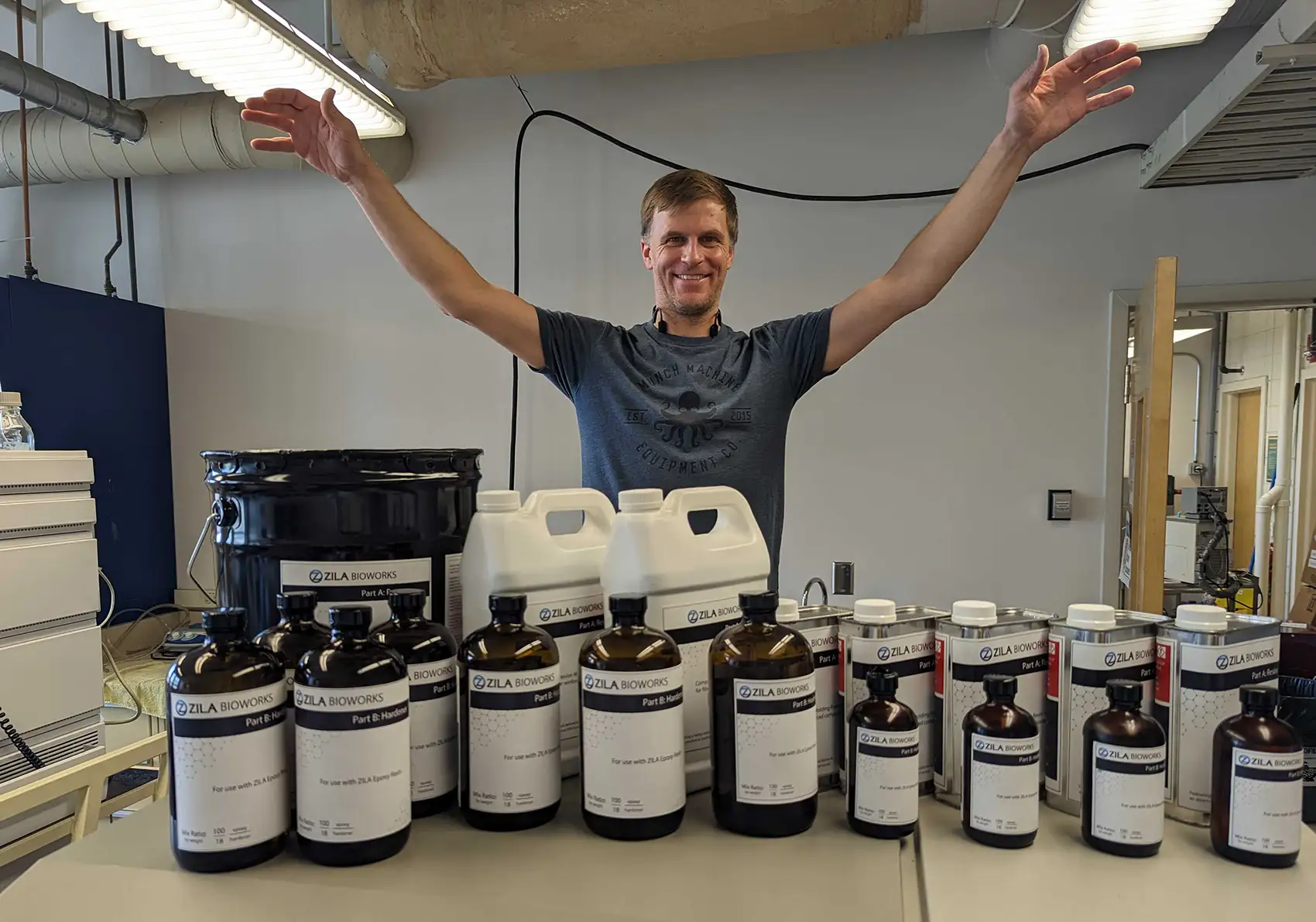
It all started with the farmers.
“We wanted to build something that could enhance crop value,” said Jason Puracal, CEO of the materials startup Zila BioWorks.
So, they did.
They built a new kind of material using hemp seed oil, a byproduct of the not-so-common but soil-friendly crop hemp. Farmers grow hemp for its fibrous stalk (used to make rope and other goods), seeds (used in food, paints, and more), and flower. Now, they could also sell hemp seed oil to Zila BioWorks to make a new type of bioplastic—or plant-based plastic—for use in a range of products, including snowboards, concrete floor coatings, and energy infrastructure.
Not all bioplastics look, feel, flex, or break down in the same way. Those used to make compostable utensils, for example, disintegrate easily but are not the best option for companies like those in the outdoor or energy industries that need their materials to endure heavy rains, high winds, or extreme athletes. Zila’s new material, an epoxy resin, could combine two coveted features: durability and recyclability.
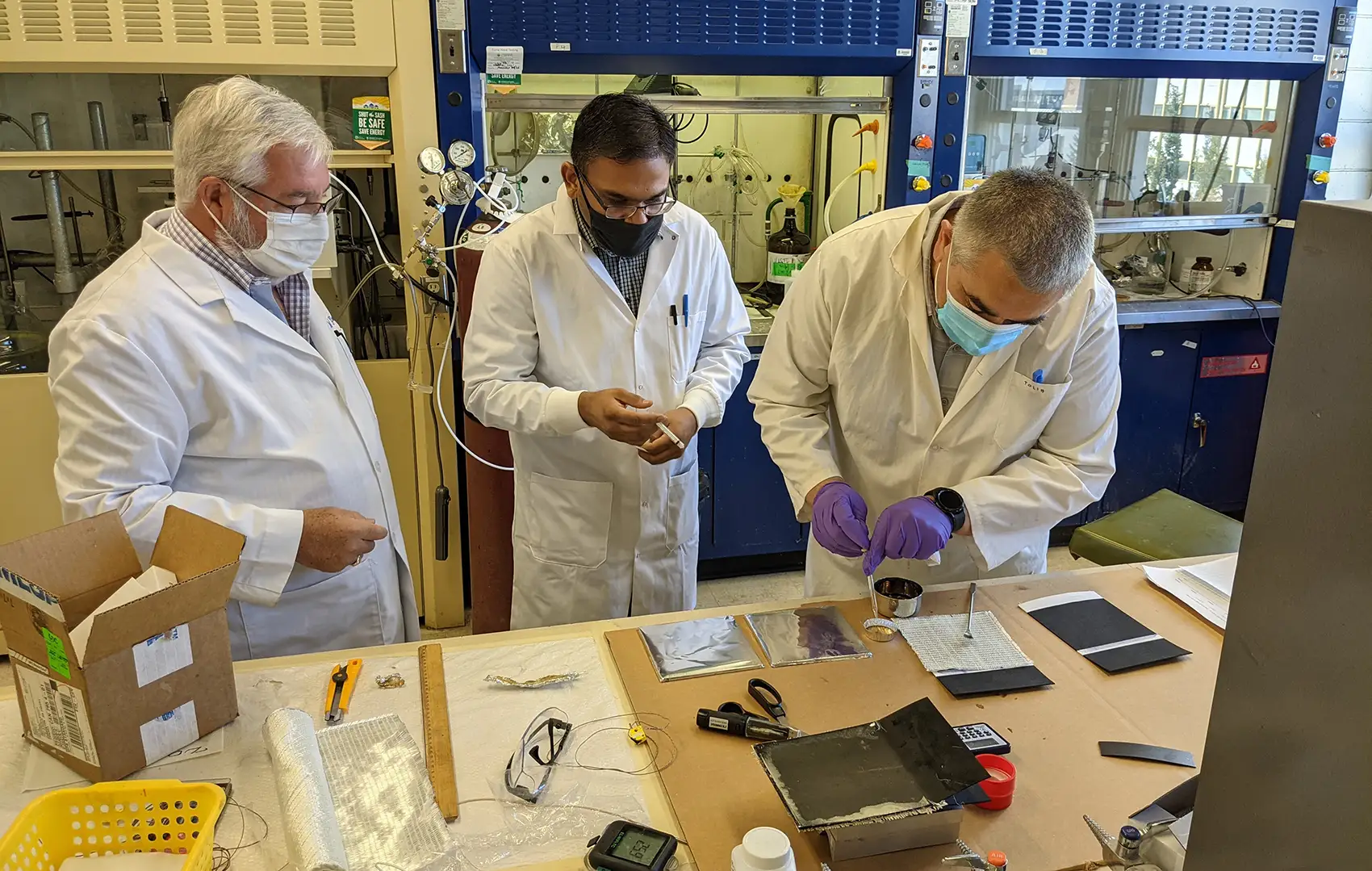
But, even if the material is already zooming around slopes and roads in skis, bicycles, and other extreme sports equipment, it is unclear how strong of an option it might be for other larger industries like transportation, computing, and energy. That is where the National Laboratory of the Rockies (NLR) and the Shell GameChanger Accelerator Powered by NLR (GCxN) come in. Thanks to support from the GCxN program, Zila is partnering with NLR experts who are analyzing the new material’s properties, strengths, and weaknesses.
“It’s really exciting to help a company make that step between the beaker and the tangible product,” said Robynne Murray, a mechanical engineer at NLR and one of the experts analyzing the bioplastic’s potential.
A Multimillion-Dollar Program and Robust Test Bed
GCxN, a multimillion-dollar program developed in collaboration between Shell and NLR, connects promising startups with national laboratory resources, industry expertise, and nondilutive funding to help companies accelerate the jump from, as Murray put it, beaker to tangible product.
In 2023, Zila received $250,000 from Shell for a two-year technical assistance project with NLR. Through the project, laboratory experts will evaluate how the epoxy resin performs in larger structures and assess if it is easy to manufacture—relative to alternatives—as well as durable and scalable enough to be used in modern energy systems and beyond.
“We have a robust test bed for validating these types of systems,” said Nicholas Rorrer, a polymer science research manager with NLR’s bioenergy and bioeconomy program.
Puracal agreed. “NLR is a talent resource we wouldn’t have otherwise had access to if not for GCxN,” he said.
From Snowboards to Energy Infrastructure
Plant-based epoxy resins, like Zila’s, come with properties that traditional epoxies may lack. Some can, for example, be manufactured using repurposed waste and less energy. That also means they can cost less to manufacture.
In lab tests so far, Zila’s epoxy has also demonstrated that, compared to traditional epoxies, it could be just as—or potentially more—flexible, adhesive, and better able to resist forces that might squeeze, compress, or otherwise manipulate its shape and size. Now, NLR experts are building and testing larger composite structures fortified with Zila’s epoxy to understand how well it holds up—the kind of testing Zila simply cannot do in house.
“Through GCxN, we gain access to experts in formulation testing and manufacturing who can play with our technology to better understand how it performs,” Puracal said.
They also gain speed. Because Zila’s team cannot perform the same kinds of tests in house—and NLR’s experts have deep experience in evaluating materials’ strengths and weaknesses—this partnership offers a faster route to understanding where the material excels or fails, how Zila’s engineers could improve it, and which industries might benefit. “We’re working toward the same goal,” Murray said. Both teams hope to understand the material better, so industries that could benefit could access the product sooner rather than later.
GCxN has a track record of helping startups achieve exactly that. Since 2018, 30 companies have collectively raised more than $1 billion after joining the program. For every dollar Shell awards through GCxN, participating companies raise more than $140 in follow-on funding.
On average, startups enter the program at a 4.1 on the Technology Readiness Level scale—a measure of how close a technology is to a successful deployment—and graduate at a 5.9 (on a scale of 1–9). Portfolio companies have also created 954 jobs, just like Zila hopes to do in farm country.
“Validating Zila’s technology lets us benefit a small business while figuring out what their key next steps are,” Rorrer said. “It shows the strength of our capabilities and could support new manufacturing.”
A Domestic Option for American Industry
Zila’s technology could also enable new domestic supply chains for epoxy resins.
“Of the 4 million tons of epoxy resin we use globally every year, 60% are produced in Asia,” Puracal said. Without a strong domestic supply, manufacturers must navigate volatile prices, supply chain disruptions, and expensive shipping. “We are focused on addressing those issues through a locally produced technology that mitigates both health and environmental impacts.”
Puracal hopes that Zila’s homegrown material can help U.S. aerospace, automotive, battery, construction materials, and other industries reduce dependence on foreign goods, cut costs and waste, and build durable technologies.
“In the long run, it’s a more secure and less economically volatile epoxy supply chain produced right here at home,” Puracel said.
Learn more about the GCxN program, the Composites Manufacturing Education and Technology Facility, and NLR’s Bioenergy and Bioeconomy research.
Last Updated April 28, 2026