
In Alaska, a Data Center Inside a Power Plant, Inside a Microgrid
The U.S. Department of Energy Helped Cordova With Its Local Microgrid. Now the Remote City Is Localizing Its Data Too.

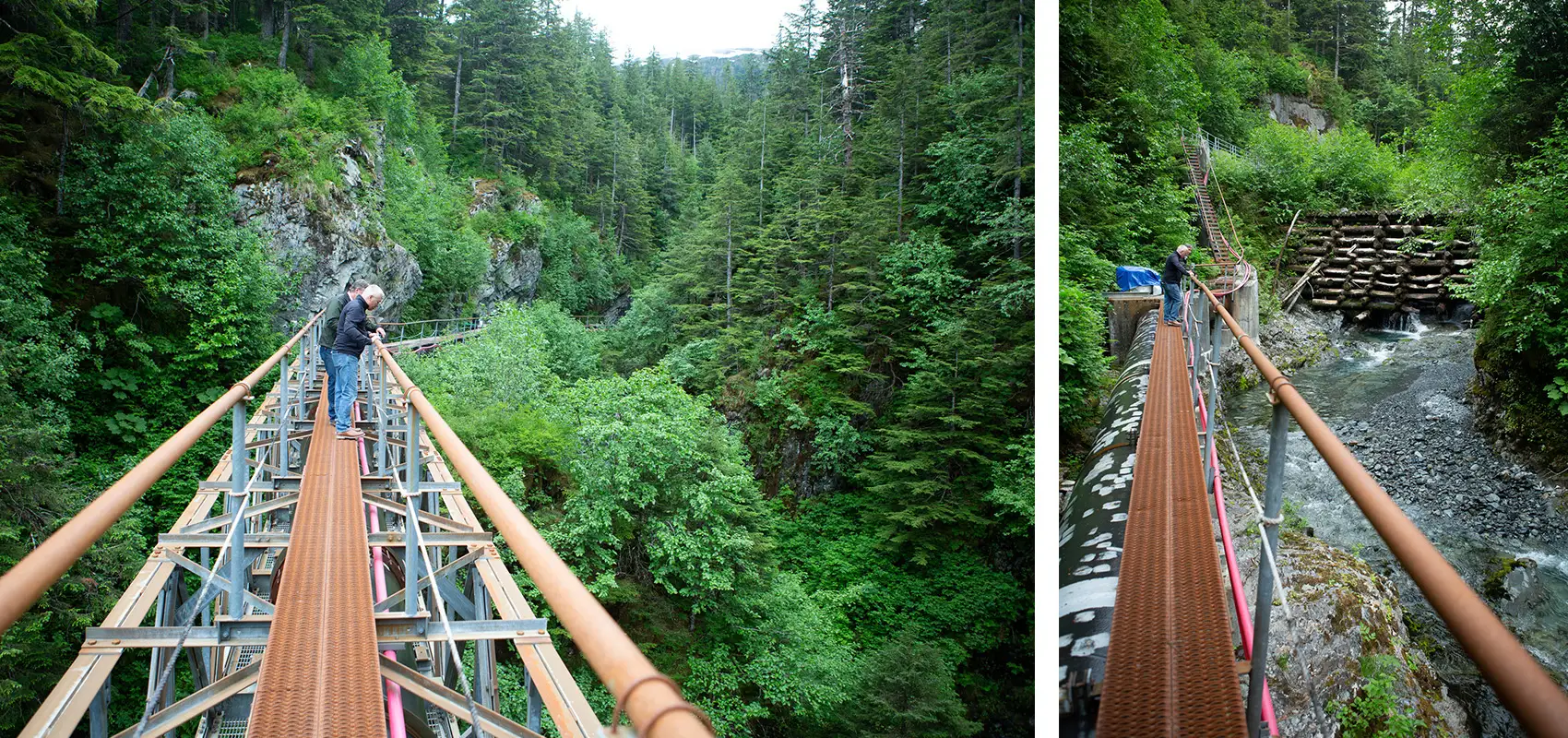
For years, the Cordova Electric Cooperative in Alaska has worked to source its energy closer to home. Hydropower and battery energy storage now supply Cordova’s highly seasonal electric demand. This has reduced spending on diesel imports and has increased local energy supply for its 2,600 remote residents and robust fishing industry.
Taking inspiration from its microgrid success, the Cordova Electric Cooperative tested the same concept with data: Can Cordova process and keep data closer to home?
From Microgrid to Micro Data Center
From 2017 to 2023, the U.S. Department of Energy (DOE) and Cordova incrementally developed a smart microgrid that serves the city’s unique energy demands. The microgrid enhances reliability and balances supply and demand through advanced features, such as time-stamped phasor measurement, underground cabling, automated load management, and an updated metering network.
To validate the microgrid’s configuration, the team used a digital twin of Cordova’s microgrid built by the National Laboratory of the Rockies (NLR) alongside Idaho National Laboratory, Pacific Northwest National Laboratory, and Sandia National Laboratories. The centerpiece of this effort was NLR’s Advanced Research on Integrated Energy Systems (ARIES) platform, which emulates energy systems with unmatched realism.
“ARIES allowed us to model Cordova’s microgrid with a high level of detail, and it can do the same for concepts like data center–microgrid integration,” said Murali Baggu, NLR’s program manager for Grid Integration. “Data centers have unique requirements pertaining to uninterrupted power, and ARIES is well suited to discovering and validating solutions that meet those requirements.”
As ARIES supports industry partners in the data energy space, Cordova is characteristically diving straight into the matter, once again piloting technology to support remote populations. This time, their focus is on localized data processing and storage powered by localized energy.
“We are thinking about energy for data in a more modular, micro, scalable fashion,” said Sam Enoka, CEO of Greensparc, a provider of edge-based data centers that worked with Cordova on its pilot. “Resilience at the edge means that data is designed into the distribution of assets and spread out around geography. Our mission at Greensparc is to bridge the digital divide, and this is a great opportunity to demonstrate our capabilities.”
Pilot on the Creek
Like Cordova’s microgrid, the modular data center began with the rollout of new hardware. Greensparc delivered a 170-kilowatt computing capacity directly inside Cordova’s run-of-river Humpback Creek hydroelectric facility, several miles north of town. The chilly flow of mountain meltwater helps efficiently cool the server racks.
“They wanted to get their PUE [power usage effectiveness] as close to 1 as possible,” said Clay Koplin, CEO of Cordova Electric Cooperative. “The server was literally 20 feet from the generators. It’s designed as a super-energy-efficient deployment.”
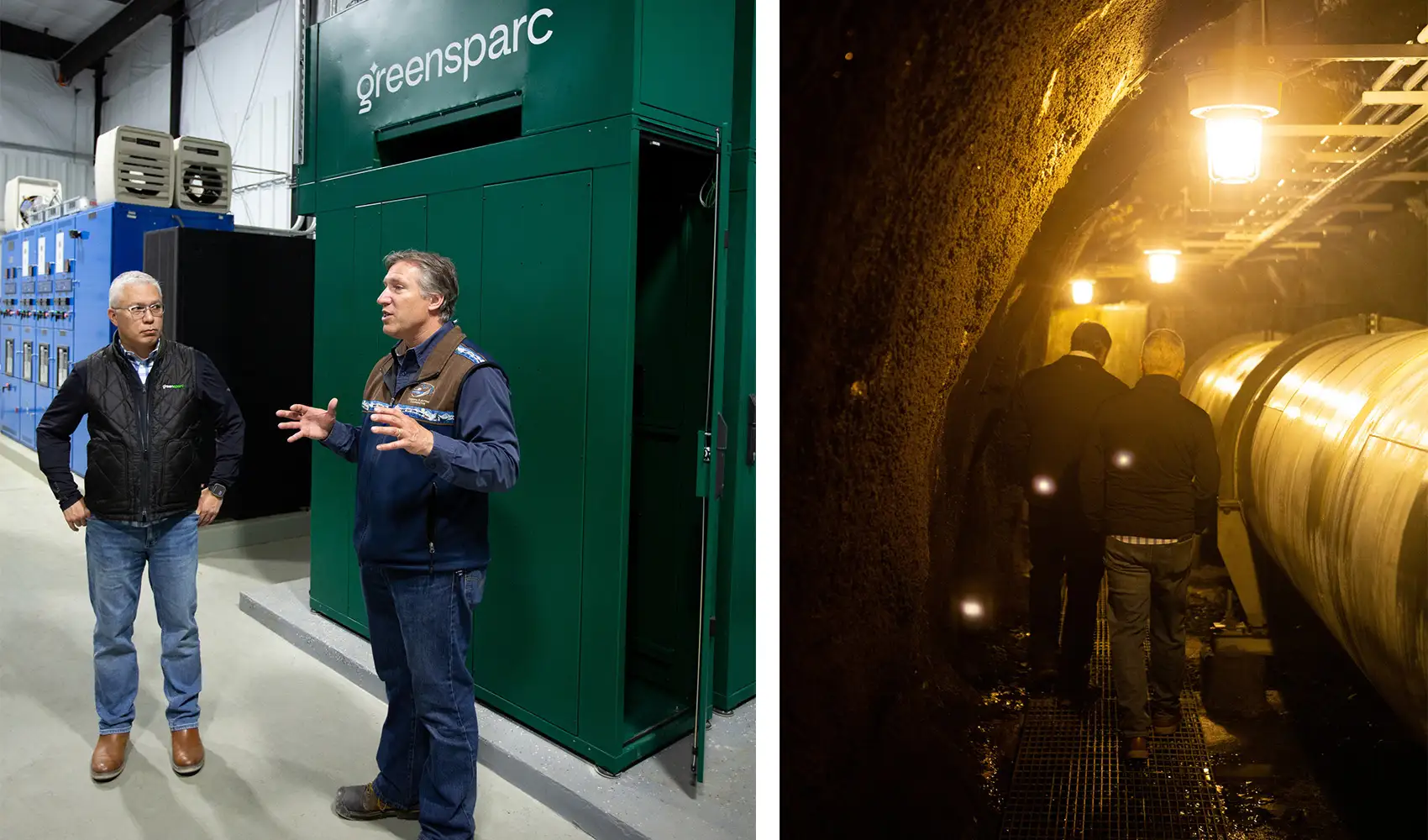
While Greensparc gets an early trial of their modular “GPU-as-a-service” business model, Cordova gets computing capacity for local purposes, powered by surplus energy.
“We’re spilling gigawatt-hours of excess hydropower,” Koplin explained. “This data center can put the excess to use.”
In 2025, hydropower provided more than 83% of Cordova’s overall electrical demand, but Koplin estimates that 20%–25% of hydropower goes unused annually. That surplus, with some probable diesel in the winter when the river levels drop, will power the local data center.
Like electricity, internet access in Alaska is often more expensive and less reliable than in other states. Also, like electricity, data in Alaska are often “imported.” Data arrive via satellites, microwave transmission, or multi-thousand-mile fiber lines from data centers far away. Greensparc’s data center is a step toward bringing data “inside the fence,” where the datacan be used for business, artificial intelligence, and more.
There are many other applications for off-grid data centers, such as remote medical facilities, far-flung research outposts, autonomous transportation, and defense installations where data privacy is imperative.
From Kilowatts to Megawatts
As U.S. companies and utilities develop energy projects to meet the artificial intelligence boom, the scale of their projects could be many times the size of Cordova’s. Microgrids could be just as useful to those larger projects, especially as off-grid solutions gain interest as a faster-to-power option. A DOE office is conducting research in that direction.
“The OE Microgrid Program is exploring advanced microgrid technologies that strengthen grid stability and remove barriers to data center development while facilitating affordable and reliable electricity delivery,” said Dan Ton, the microgrid program manager at the DOE Office of Electricity.
The Office of Electricity recently demonstrated a microgrid–data center setup using ARIES. They showed how a combination of energy resources can seamlessly power the large, changing loads seen in data centers. Because ARIES can connect data center simulations to real hardware, the researchers could see how the power equipment responded in real time, including the wear on spinning generators. Lessons like these can help industry avoid excessive costs while streamlining their data center investments.
Whether in Cordova, Alaska, or in hyperscale projects, ARIES analysis can answer key questions for connecting computers to power.
Learn more about using ARIES for high-fidelity emulations, or contact us at ARIES@nlr.gov.
Last Updated April 28, 2026