
HERO’s Mission: Building a Blueprint for Wave Energy Components
Latest HERO WEC Mission Status Update Examines How New Charge Controller Design Addresses Critical Challenge in Wave Energy Industry
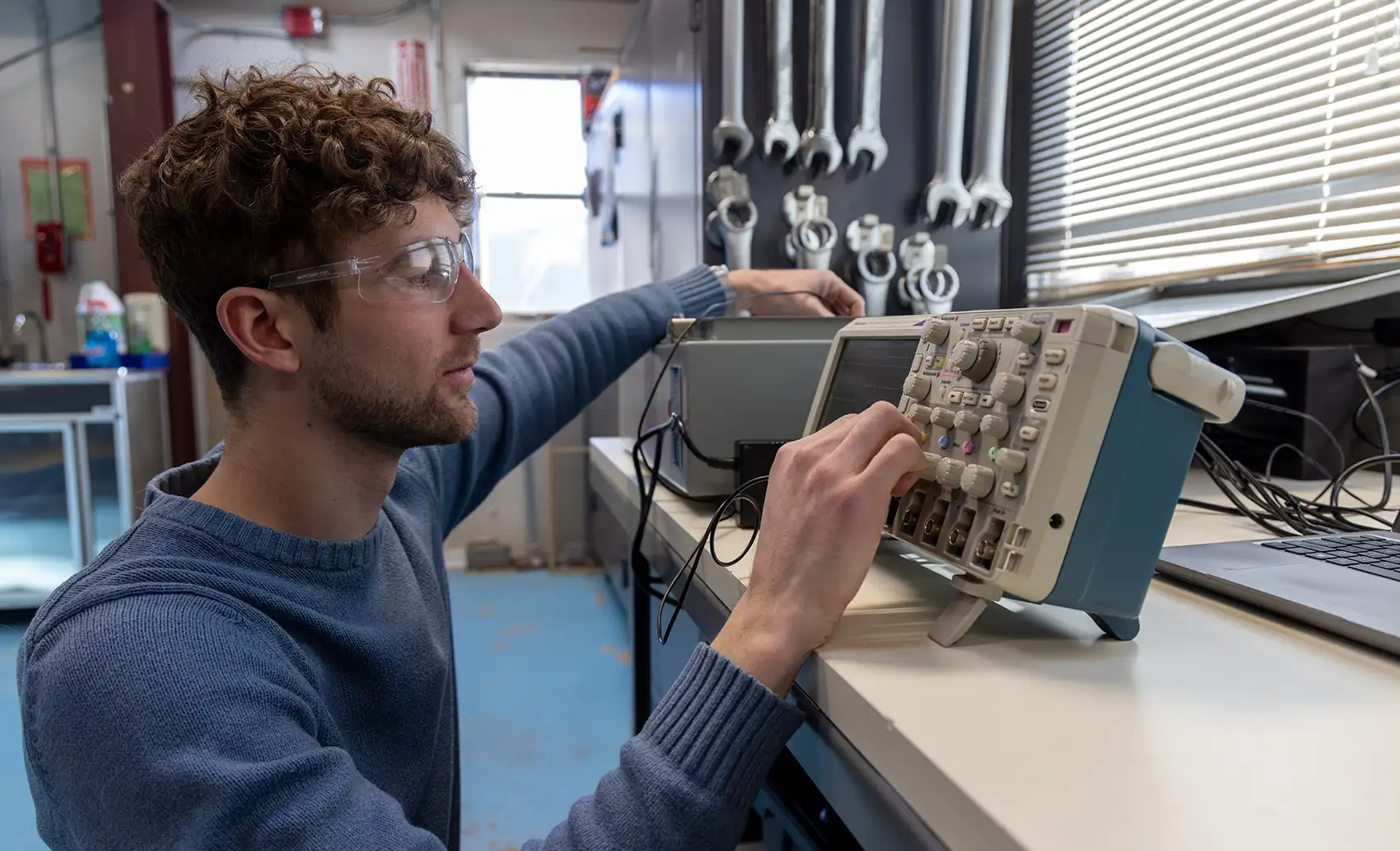
Since 2024, researchers at the National Laboratory of the Rockies (NLR) have been improving the overall design of NLR’s hydraulic and electric reverse osmosis wave energy converter—or HERO WEC. Their work aims to fill vital data gaps that pave the way for more reliable and deployable wave energy technologies.
The HERO WEC, which is funded by the U.S. Department of Energy’s Hydropower and Hydrokinetic Office (H2O), uses energy from waves to desalinate seawater. The prototype can operate using either a hydraulic or an electrical configuration to pump seawater through an onshore reverse osmosis system to produce fresh drinking water. NLR researchers began designing the HERO WEC in 2020, and after hundreds of hours of testing across three in-lab programs and five ocean installations, the team is retiring version one (V1) and drawing on lessons learned to design version two (V2).
Researchers first modified the WEC’s winch system and outer body and are now focusing on the charge controller, which is part of the device’s electrical configuration. A charge controller regulates the voltage and current that travels from an energy source (in this case, a wave energy converter) to the battery bank. Its primary goal is to protect battery health by preventing the battery from overcharging.
The original V1 charge controller used off-the-shelf components designed for other variable energy technologies. But wave energy is irregular, and ocean testing revealed that these standard parts struggled to regulate the erratic surges of wave energy. The team’s solution? Design and build a custom charge controller meant for wave energy.
The team developed their initial concept for a new charge controller in winter 2024. They sketched out a design, plugged it into computer-aided design software, and then built the physical component. The next—and most important—step was to confirm the viability of this new technology.
Two questions guided testing of the prototype component: (1) Does this device work? and (2) How does the performance of the V2 design compare to the V1 design?
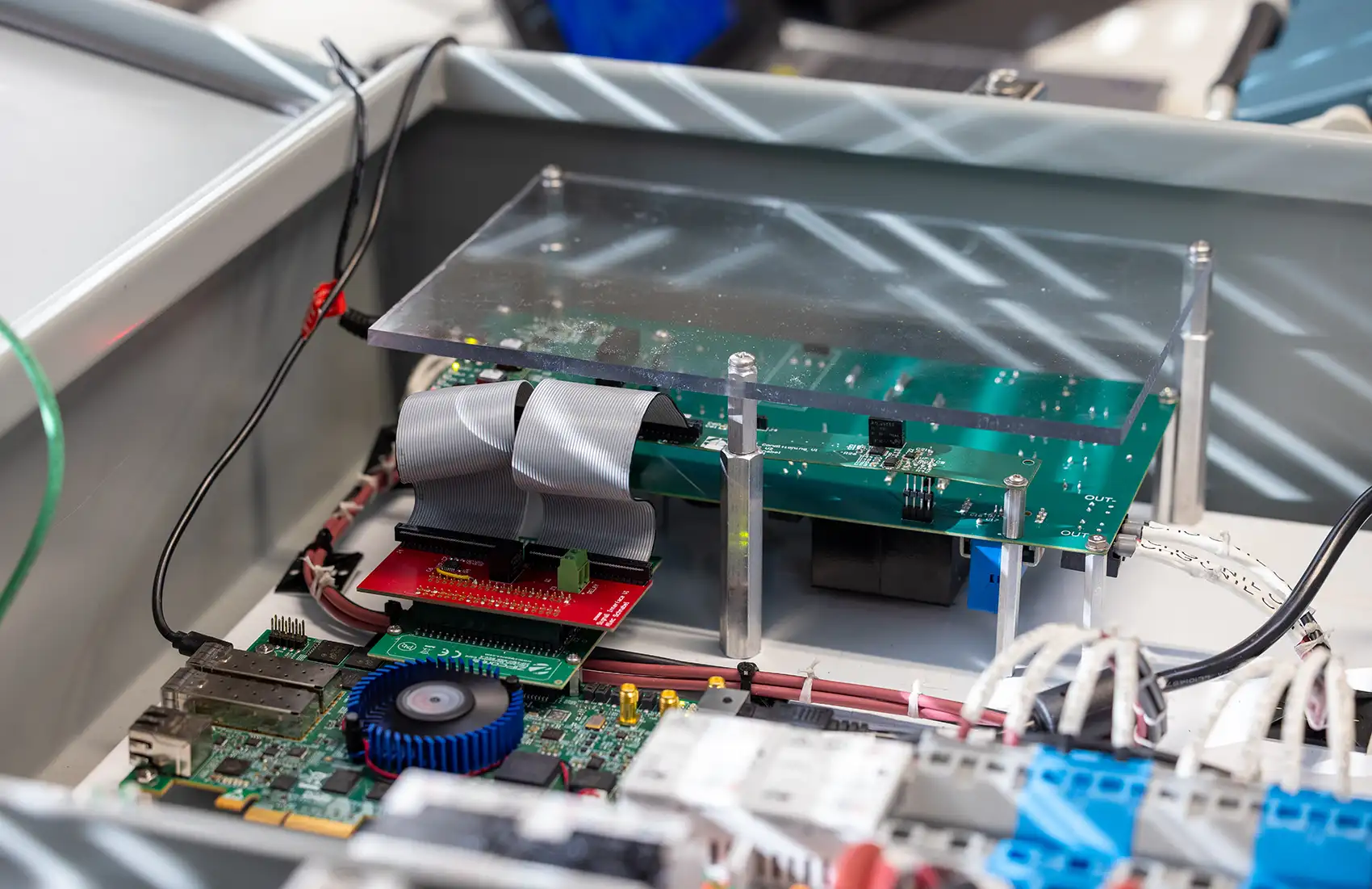
The research team first used benchtop equipment to validate and debug the system’s basic functionality. After debugging, the team connected the new charge controller to the HERO WEC’s generator and a simulated battery to evaluate its performance using one of the laboratory’s simulation systems to emulate an ocean environment. This stage of testing offers a safer, lower risk, and less costly way to study and improve these power systems.
Now that testing is complete and results are in, the team has determined that the V2 charge controller performs better than expected. It can handle irregular states of energy and capture up to eight times more power than the original charge controller during in-lab testing. This means the HERO WEC can produce significantly more usable power, consistently charge the battery bank, reliably power the reverse osmosis system, and ultimately desalinate more seawater.
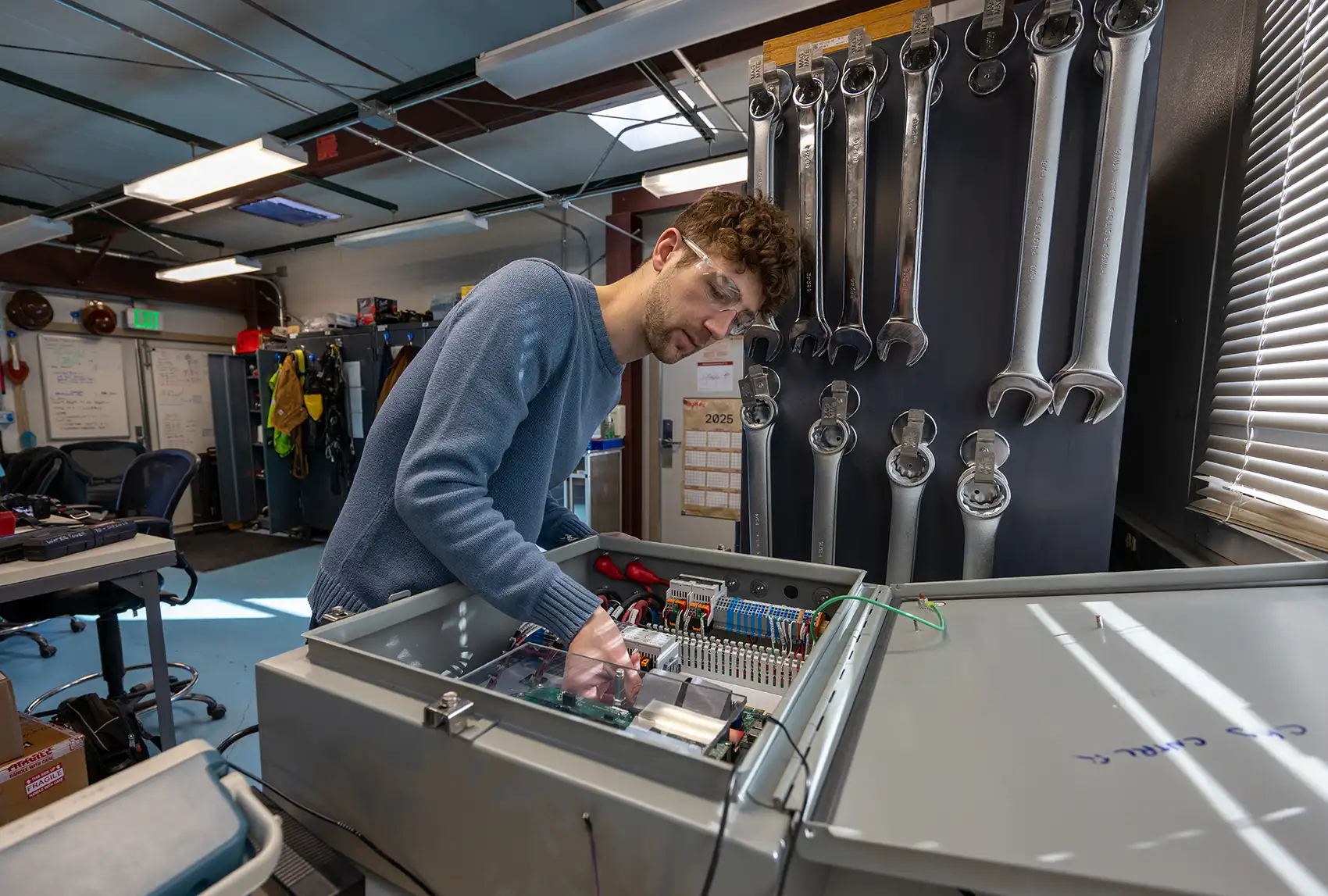
This custom charge controller serves as more than just a project-specific solution—it provides a much-needed blueprint for the wave energy industry.
NLR’s wave-specific charge controller can be adapted for a wide range of WEC technologies, as both the hardware and software can be modified to meet a device’s power and operational needs. By providing this proven foundation, the charge controller can cut development time and accelerate new WEC designs. NLR’s wave-powered desalination team is interested in collaborating with technology developers to integrate this customized architecture with their systems through programs like Testing Expertise and Access for Marine Energy Research and other cooperative research agreements.
Next, the team will evaluate the charge controller as part of a system-wide test on NLR’s large-amplitude motion platform. It will be the first time the team tests the new electrical system (generator, charge controller, and batteries) to see how it responds to simulated wave conditions. The system-wide test will also help the team identify any final adjustments needed to improve the charge controller’s reliability before the electrical system undergoes ocean testing.
The HERO WEC project at large aims to improve access to data, components, and findings that can help advance wave energy technologies. Stay tuned for more HERO WEC design updates, test results, and project milestones.
Learn more about NLR's research in marine energy and the HERO WEC device and its open-source data. Then, subscribe to The Current—NLR's water power newsletter—to stay up to date on the latest research.
Last Updated April 28, 2026