
Could a New Kind of Power Supply Help Make Data Centers Grid-Friendly?
Inside the First Data Center–Grid Simulator Built To Test the Promising New Technology

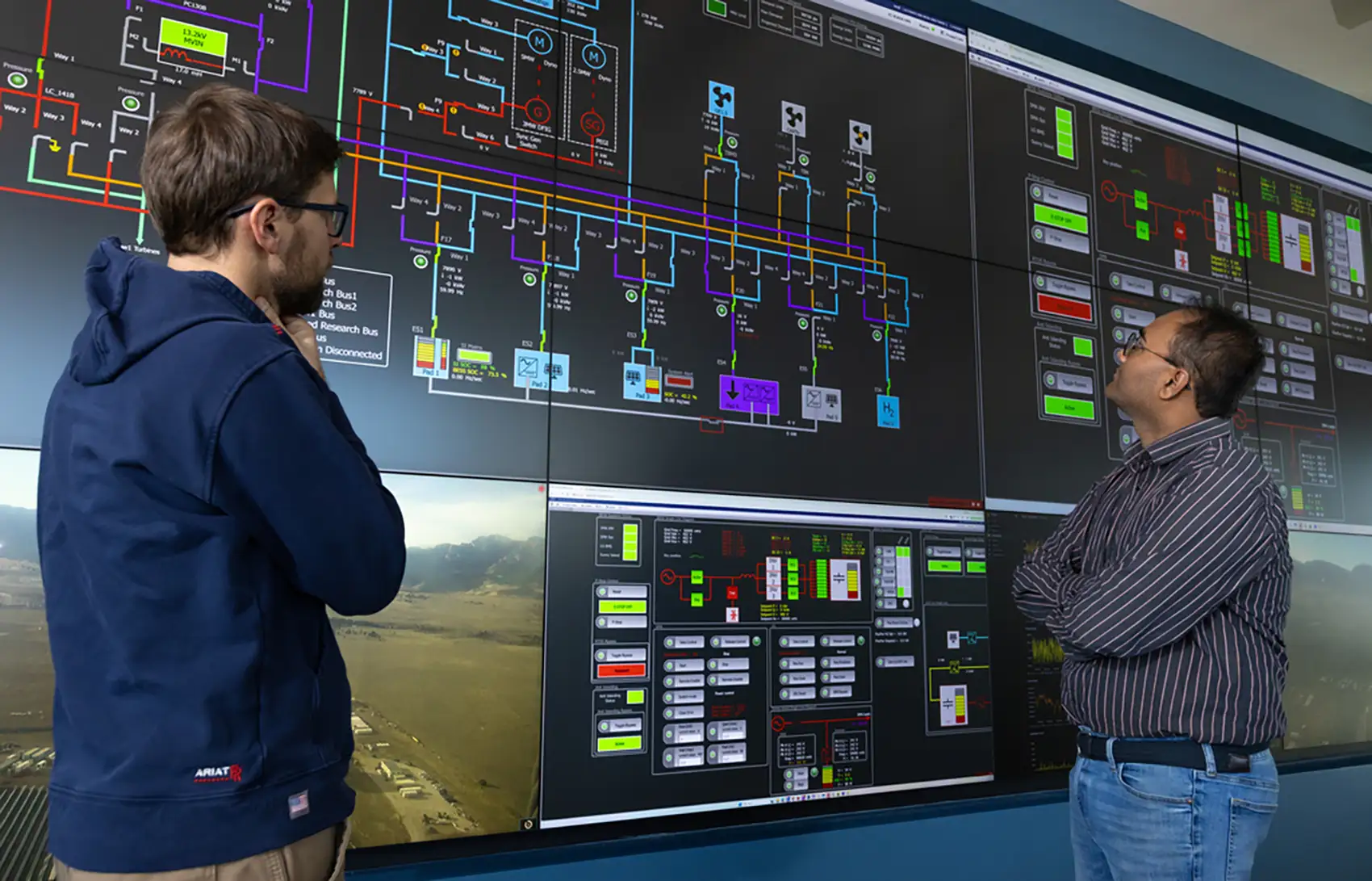
As demand for data centers continues to rise, many center operators, utilities, and American communities are asking: Can the U.S. power grid handle these energy elephants?
The answer depends on just how many elephants the country adopts. But in the meantime, companies like ON.energy are developing technologies that could help the grid handle the influx of data centers. Their uninterruptible power supply (called AI UPS) can store and manage energy to protect grids from data center power spikes, help facilities ride through grid disturbances, and keep facilities running during blackouts and other disruptions.
But ON.energy’s AI UPS is an entirely novel design. To demonstrate its potential in a safe, low-cost, low-risk environment, the company is partnering with the National Laboratory of the Rockies (NLR).
NLR recently built a one-of-a-kind testing platform that can simulate a data center and a power grid. Now, the laboratory’s experts have connected the AI UPS to both simulators to explore how well the tech mediates spikes, powers through grid anomalies (including voltage hiccups), and more—and it can do all that without interfering with actual grids and data centers that people rely on for everything from lights and artificial intelligence to military operations and air traffic control.
“With our new capability, ON.energy can test a variety of scenarios that they can’t do on the live grid,” said Andrew Hudgins, the acting program manager for NLR’s Advanced Research on Integrated Energy Systems (or ARIES) testing platform.
And, Hudgins continued, “NLR is the only place you can do this type of work.”
How To Soften Data Center Power Spikes
A single data center can consume as much energy as a small U.S. city, like Boulder, Colorado, or as much as 30 airplanes in flight or 1.5 million laptops charging simultaneously. And yet, unlike Boulder, airplanes, or laptops, a data center’s energy consumption can spike or plummet in less than a second, ping-pong from one extreme to another multiple times in under a minute, or zero-out without warning.
And that is just a single data center.
About 70% of future demand will be for hyperscale data centers, which are hyper-massive. Their potent computing power is necessary for artificial intelligence, machine learning, and data processing for financial transactions, healthcare, defense, and more. If these gigawatt-scale centers lose power, that would affect lots of people and systems—from casual cloud users to emergency services.
But not to worry.
“AI UPS is designed to help hyperscale data centers be good grid citizens,” said Dax Kepshire, the president of ON.energy’s data center division. “The goal is to smooth out those fast, compute-driven swings so the grid sees a steady, reliable load, even at gigawatt scale.”
As of 2025, NLR’s ARIES platform can simulate those hyperscale data center clusters. ARIES can virtually replicate single-energy technologies (such as a battery), industrial campuses (such as an airport), and even global energy systems containing millions of technologies, including nuclear facilities, hydropower plants, and smartphones. ON.energy only needs a simulated data center and simulated power grid—but that is still difficult to come by.
“I don’t know anyone in the Western Hemisphere that has two big grid simulators and such a high level of controllability where you can just reconfigure them for various types of test conditions,” said Shahil Shah, a principal engineer at NLR who is leading the project with ON.energy.
Just six months after NLR’s experts built the new data center simulator, ON.energy brought an AI UPS tailored specifically for data centers to the NLR campus. In early 2026, NLR technicians installed the hardware and began to subject the device to simulated spikes in energy demand to evaluate how well it responds. So far, ON.energy’s AI UPS has weathered surges from 30% to 100% of its energy capacity that occur in 10-millisecond to 1-second intervals—as rapid as a blink of an eye. The NLR team will also explore how well AI UPS handles grid disturbances like faults, storms, or a blackout.
“If the grid is going to have some fault, we want to test the capability of this equipment to manage highly dynamic data center loads,” Shah said. That is why NLR’s two-simulator approach is so valuable—it can demonstrate both sides of a potential blip and reassure grid operators that a new data center is unlikely to disrupt service to other nearby grid technologies, businesses, hospitals, and homes.
“Grid operators are coming up with a lot of requirements on data centers before they can connect to the grid,” Shah said. If NLR can help ON.energy demonstrate how their technology could meet those requirements, more data centers could potentially come online sooner.
And, Shah added, “it helps make data centers more friendly to the grid.”
A Model for Utilities, Data Centers, and Beyond
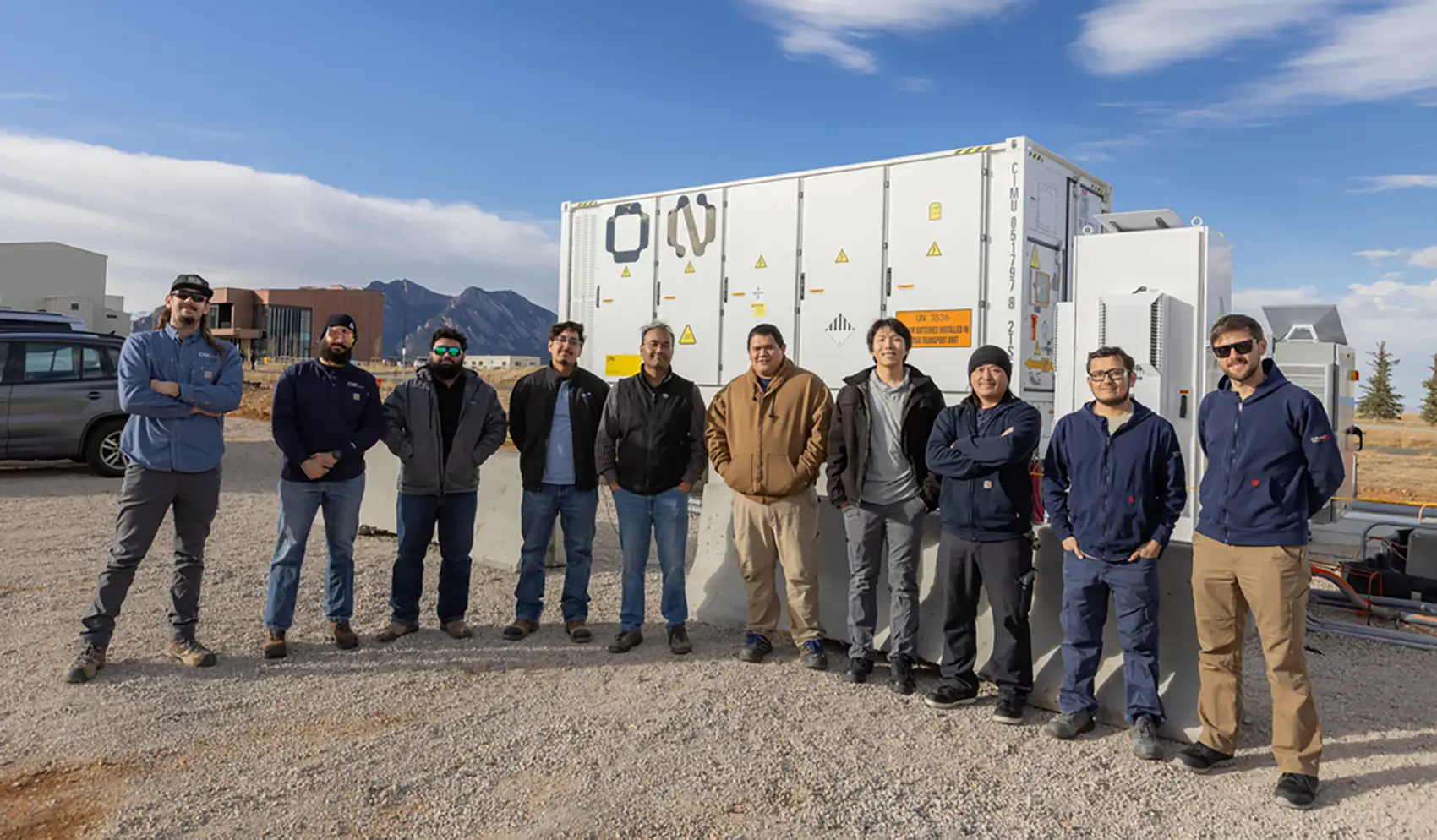
For at least a couple years, starting in January 2026, the AI UPS will live just inside the gate at NLR’s Flatirons Campus. It is one of the first things visitors see. And this installation is just the start of the ON.energy/NLR partnership.
Even after the company’s testing period ends, if the developers have a question about how their technology reacted to a specific grid disturbance or fluctuation, the NLR team can replicate that exact scenario on campus in real time and identify ways to mitigate, prevent, or improve the device’s functionality.
“This longer partnership allows us to dive into even more research questions,” Hudgins said. “We can tackle existing issues and provide an efficient way to identify and implement solutions for anyone.”
The partnership is also likely to broaden to include utilities and data center operators who might want to explore how AI UPS could support their operations. The NLR team is ready to field questions both granular and grand.
“The advantage of having both this testing platform and the digital modeling capabilities is that these are like building blocks,” Shah said.
For example, Shah can build a computational model (or a “building block”) that simulates a specific technology, like ON.energy’s AI UPS. He then tests that model against the actual hardware to confirm accuracy. Finally, he plugs those simulated building blocks into bigger systems to test how the tech performs in various energy architectures, reacts to other technologies, or serves different customers, like utilities.
NLR’s testing platform also includes the laboratory’s Grid Impedance Scan Tool, which assesses risk for potential adverse interactions between data centers and power grids.
“We’re not just saying, ‘Hey, look at this cool thing,’” Hudgins said. “We’re addressing real research for real-time concerns.”
In other words, NLR’s experts are not just simulating grids and data centers—they are also finding ways to protect them.
Want to test your technology’s prowess in our fast, low-risk virtual sandbox? NLR has the expertise, facilities, and data-driven insights to help move your company forward. Discover how we can help.
Last Updated April 28, 2026