
Amped To Shape the Future of Water Power?
Enter DOE’s 2027 Collegiate Hydropower and Marine Energy Competitions for a Chance To Make a Splash and Win Some Cash!

Interested in exploring how hydropower and marine energy can solve real-world energy challenges? Whether your background is in engineering, business, environmental studies, communications, policy, or beyond, the chance to bring your ideas and innovations to the surface has arrived.
Funded by the U.S. Department of Energy’s (DOE’s) Hydropower and Hydrokinetic Office (H2O), the Hydropower Collegiate Competition (HCC) and the Marine Energy Collegiate Competition (MECC) are open for applications now through May 1, 2026.
Interdisciplinary teams of postsecondary, undergraduate, and graduate students from a variety of academic programs are encouraged to apply for the opportunity to earn industry recognition and win cash prizes from combined prize pools totaling up to $715,000. Teams need not be complete to apply.
Both annual competitions provide students from varied academic disciplines with an immersive experience in two water power fields that offer ample opportunity for growth. Administered by the National Laboratory of the Rockies (NLR) and designed to maximize educational and networking opportunities, the HCC and MECC challenge participants to solve complex hydropower and marine energy challenges while competing for cash prizes.
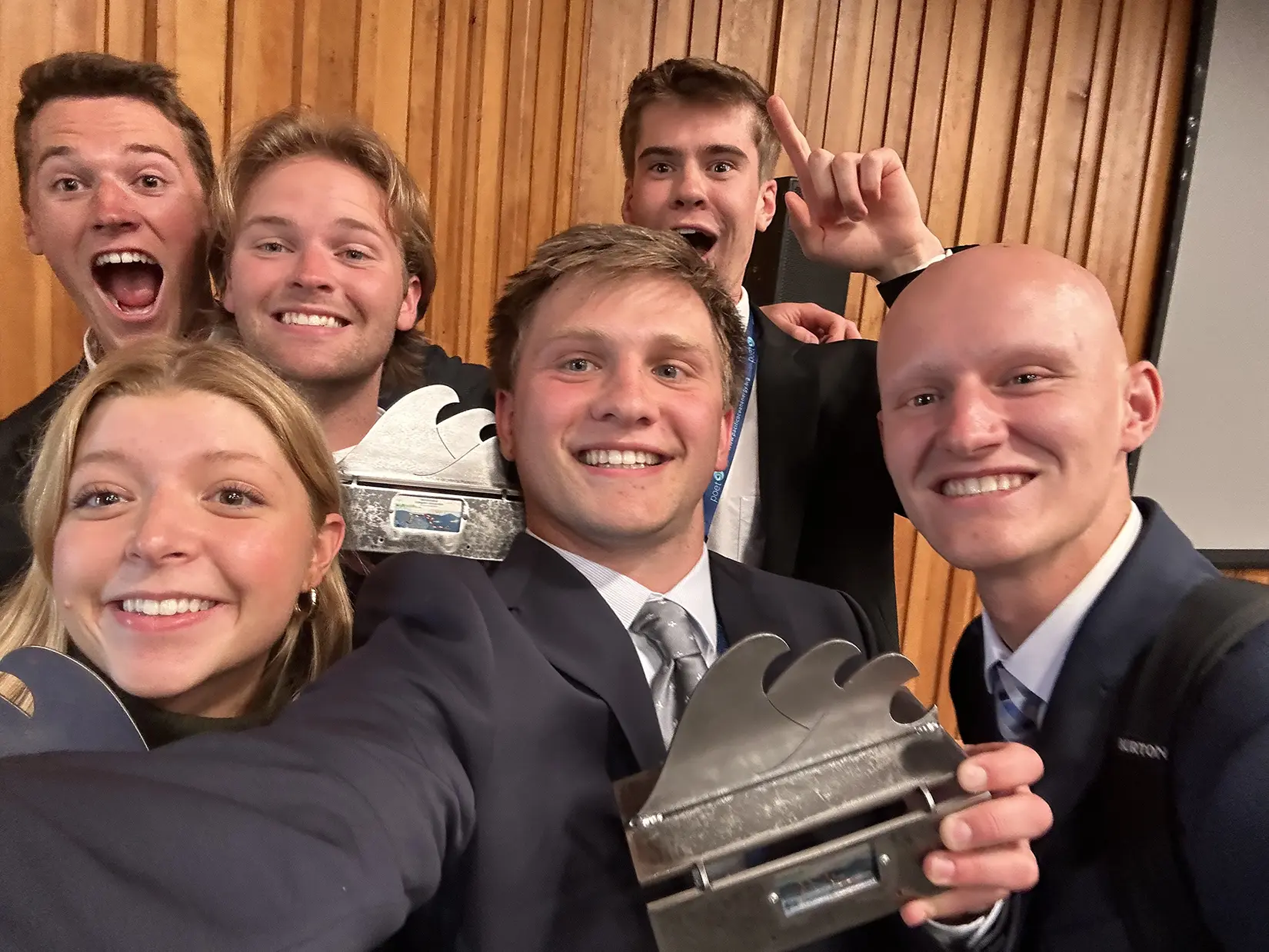
“Through these exciting competitions, NLR and H2O aim to inspire innovation in marine energy and hydropower by providing college students with direct industry experience, valuable exposure to career pathways, and experiential knowledge of the potential for hydropower and marine energy to contribute to a U.S. energy future.” —NLR Project Lead Arielle Cardinal.
HCC Solicits Bold Ideas To Meet Deluge of New Demand
Hydropower provides affordable, reliable, and secure electricity and energy storage as well as good-paying jobs across the United States. DOE, along with NLR and the Hydropower Foundation, established the HCC in 2022 to pave the way for next-generation hydropower professionals.
“Given the industry’s focus on expansion and upgrades to meet the nation’s surging energy demand, there is significant potential for continued growth in this sector,” said HCC Competition Manager Elise DeGeorge. “With its theme ‘Innovations in Hydropower,’ the fourth annual HCC is all about seeding next-level solutions that will support growth and expand career opportunities.”
Within this broad theme, the competition invites teams of students to submit entries that either enhance existing hydropower technologies or develop new approaches to key industry challenges, including converting non-powered dams (NPDs) to hydroelectric dams, developing in-conduit hydropower, and adding pumped storage hydropower (PSH) to existing hydropower reservoirs.
The HCC will select and award up to 15 student teams to participate in the competition over an 8-month period and compete for a total cash prize pool of up to $245,000. Each selected team will be assigned an industry mentor who will support the team throughout the main competition. The HCC requires teams to tackle five challenges:
- Siting: Identify a site for an NPD, PSH, or in-conduit hydropower system and develop a feasibility assessment.
- Design: Create a conceptual design for the selected hydropower site from the Siting Challenge OR complete a final design package for an individual component or system related to the development of the selected hydropower site.
- Community Connections: Engage with industry and community stakeholders to develop solutions to a specific challenge and take action toward implementing one of the solutions.
- Design and Siting Poster: Visually summarize design and siting activities for the Final Event of the competition.
- Quick Pitch: Prepare a 90-second project pitch to communicate the biggest takeaways from the yearlong effort.
In addition to completing the required challenges, teams may opt to compete in a Build and Test Challenge. Those who accept this optional challenge, which is evaluated separately and does not affect overall team rankings, will build a scaled prototype of their hydropower concept or powerhouse and perform a series of tests.
After completing their challenges and submitting final reports, the teams will take the stage to present their results at a Final Event in the spring of 2027. Each team has a chance to win up to $15,000 in prizes—$12,000 in the main competition plus $3,000 for the optional Build and Test Challenge—as well as compete for a Grand Prize cash pool totaling up to $20,000.
Throughout the multistage competition, teams will have opportunities to engage in networking events with hydropower experts during an industry event.
“This kind of face-to-face engagement is arguably as valuable as the competition itself,” DeGeorge said. “Part of laying the groundwork for future growth is cultivating connections among competitors and professionals to inform students about career prospects in the hydropower industry.”
MECC Seeks Solutions To Tap Marine Energy’s Vast Potential
America’s marine energy resources hold significant potential to deliver reliable electricity in a range of applications that harness the power of waves, currents, and tides. With an eye toward realizing that largely untapped potential, DOE launched the MECC in 2020 to create an entryway for future innovators in the marine energy and ocean economy sectors.
The MECC, administered by NLR, aims to spark student innovation in the emerging marine energy industry, develop a skilled workforce, and support the commercialization of marine energy technologies. Teams selected to participate will be assigned an industry mentor to support them throughout the competition with real-world experience, technical insight, and other critical support.
Up to 30 student teams will be selected and awarded the opportunity to participate in the MECC over approximately 10 to 12 months and compete for a total cash prize pool of up to $470,000. Competitors are encouraged to explore opportunities for marine energy technologies that can benefit other existing maritime industries via real-world concept development experiences.
“Marine energy technologies are at a pivotal stage of development, and NLR research underscores the significant resource potential available across the nation’s coastlines and waterways,” Cardinal said. “The MECC gives students hands-on experience addressing real industry challenges, preparing them to contribute meaningfully to the marine energy sector.”
The MECC was designed to expose teams of students from multiple disciplines and backgrounds to a wide range of existing marine energy opportunities and provide a foundation for innovation that drives future opportunities. With a theme of “Powering the Blue Economy,” the 2027 MECC comprises six challenges, the first four of which are core to the competition and are scored:
- Business Plan: Identify a promising market within the blue economy, determine the best marine energy system to serve the market’s needs, evaluate system performance requirements for end users, and develop a business plan.
- Technical Design: Interview at least three potential end users in their chosen market to evaluate system performance requirements.
- Build and Test: Build a scaled prototype of the team’s concept and perform a series of lab tests to meet their defined build and test objectives.
- Community Connections: Engage with industry and community stakeholders to explore an industry challenge, develop innovative solutions to address it, and take meaningful action toward implementing a solution.
- Poster: Visually summarize actions taken in at least the first three challenges (inclusion of the Community Connections challenge is optional) for the Final Event.
- Quick Pitch: Develop a 90-second overview of the team’s concept and findings from the challenges to present at the Final Event.
The MECC offers two distinct participation leagues, each of which has different submission requirements and prizes. This structure allows teams to participate at a level that matches their experience, capacity, and academic focus. The Kilowatt League (Foundational Level) is designed for teams that are new to the competition or seek a scaled-down/flexible experience. The Megawatt League (Advanced Level) targets teams prepared to participate in all challenges.
Kilowatt League teams must participate in the Community Connections Challenge and at least one of two additional challenges (Business Plan and Technical Design). Teams at this level must submit midyear and final reports for their selected challenges and deliver two presentations at the Final Event. Teams in the Megawatt League must participate in all four core challenges.
Regardless of league, teams must submit midyear and final reports for each of their challenges and deliver two presentations at the Final Event. All teams that participate in either league are eligible for up to $15,000 per team as well as Grand Prize awards.
As a part of MECC, competitors may have the opportunity to engage in networking events with marine energy industry experts during the Final Event. This engagement is intended to encourage connections between competitors and industry professionals and help prepare students for the job market in this industry.
“The MECC will enable students to network with marine energy professionals, learn about marine energy careers, and gain insights into marine energy’s potential to contribute to a reliable and secure energy future,” Cardinal said.
Channeling Innovation for the Future of Water Power
The HCC and MECC are key pillars in H2O’s broader strategy to develop a skilled and adaptable water power workforce. To learn more about competition eligibility, requirements, and key dates, interested students and faculty are encouraged to view the competition overview presentations:
To apply for the HCC, submit an application in PDF format on the HeroX platform by 11:59 p.m. MT on May 1, 2026.
To apply for the MECC, submit an application in PDF format on the HeroX platform by 11:59 p.m. MT on May 1, 2026.
To stay informed of other marine energy and hydropower research and developments, subscribe to NLR’s water science, technology, engineering, and math (STEM) newsletter, The SPLASH.
Last Updated April 28, 2026