
Rising Above the Tide: Strategic Energy Planning on Tangier Island
National Laboratory of the Rockies Researchers Explore Energy-Saving Strategies on Tangier Island Through the Energy Technology Innovation Partnership Project

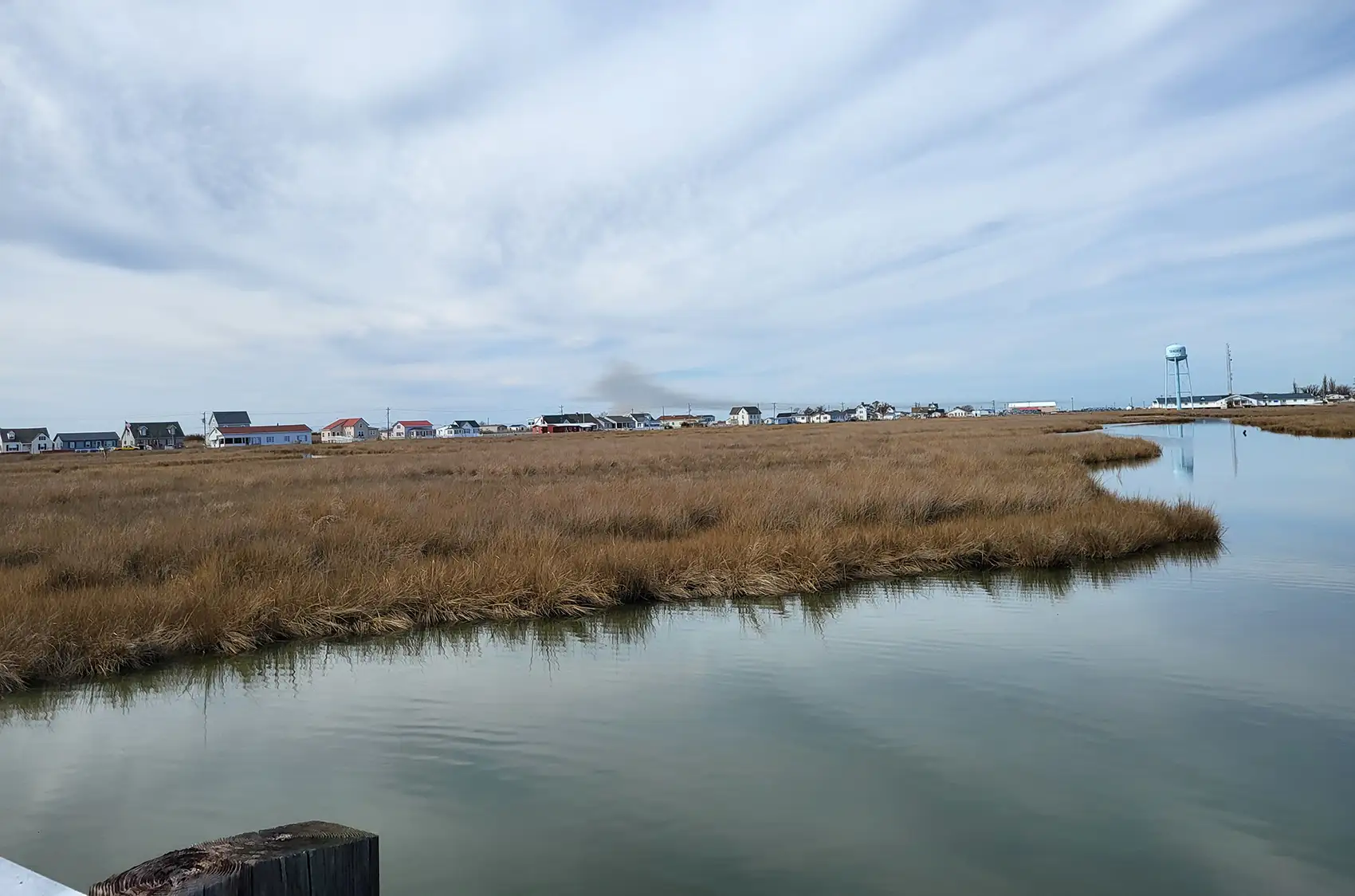
“This place is worth saving.” That was National Laboratory of the Rockies (NLR) researcher Allison Smith’s first impression after arriving on Tangier Island in the Chesapeake Bay, 12 miles off Virginia’s Eastern Shore.
Tangier Island is sinking. With erosion steadily eating away at its edges, around two-thirds of the island has submerged in the last century and a half.
Rows of headstones that dot Tangier Island’s graveyards bear the names of families who still live there today, though the population of the island, inhabited since the 1600s, has dwindled from over a thousand at its peak to about 400 people.
The island has aging infrastructure, little protection from severe weather, and limited transportation options—residents can be completely isolated from the mainland in a winter freeze. There is a single transmission line that stretches from mainland Virginia to supply the island’s power, and primary outside access to the island is via a 45-minute ferry ride.
The community is determined to face these challenges head on, working with the Energy Technology Innovation Partnership Project (ETIPP) to enhance energy reliability and generate energy-bill savings for the town and its residents.
“Tangier Island is a magical place. It is beautiful, and the people are so friendly,” said Smith, the technical lead for the island’s ETIPP project. “They want to ensure their system can withstand the challenges ahead.”
ETIPP is a U.S. Department of Energy (DOE) technical assistance program that helps remote island and coastal communities strengthen their energy systems through energy planning and deep-dive technical projects. The program combines the support of DOE, regional organizations, and national laboratory expertise to support communities across the country. Since its inception six years ago, ETIPP has worked with more than 80 communities, including several on the Outer Banks of North Carolina, to find community-led solutions to local energy challenges ranging from emergency preparedness to transportation.
“ETIPP recognizes that these remote and island communities need support and is able to provide it regardless of what the population is,” Smith said.
NLR researchers helped Tangier Island develop a strategic energy plan to bolster its systems in the face of severe weather, consider new strategies and technologies to reduce energy usage, and advance energy education for younger generations. The project will inform ongoing technical support for priorities identified through the energy planning process.
“They know that there are resources available, but they need support in understanding how to pair those to their challenges and develop a plan to address them,” Smith said.
NLR and Regional Partner Organization Lead Community-Informed Energy Planning
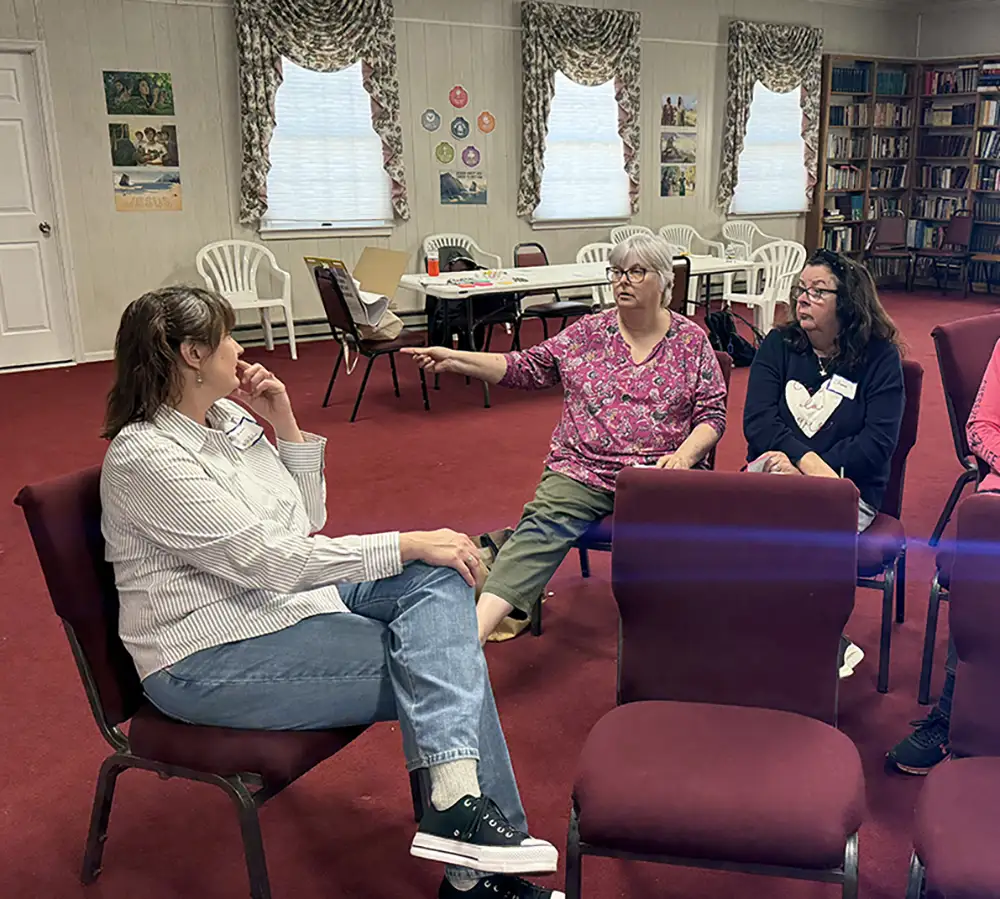
After Tangier Island was selected for ETIPP in the fall of 2024, ETIPP’s regional partner for the southeastern seaboard, Groundswell, and NLR planned two in-person energy planning workshops on the island. The first workshop, held in March 2025, offered the ETIPP team a window into the history of the island, its challenges, and community priorities.
The March gathering focused on defining the island’s energy vision: a high-level aspiration for the island to strive toward. To develop this vision, researchers walked community participants through an asset-based community development activity, which considers the strengths of the community and existing community resources that can be leveraged.
“Strengths might be a strong town council, recent grants or funding, or sometimes even individual people—because they are champions of projects and care about the community,” Smith said.
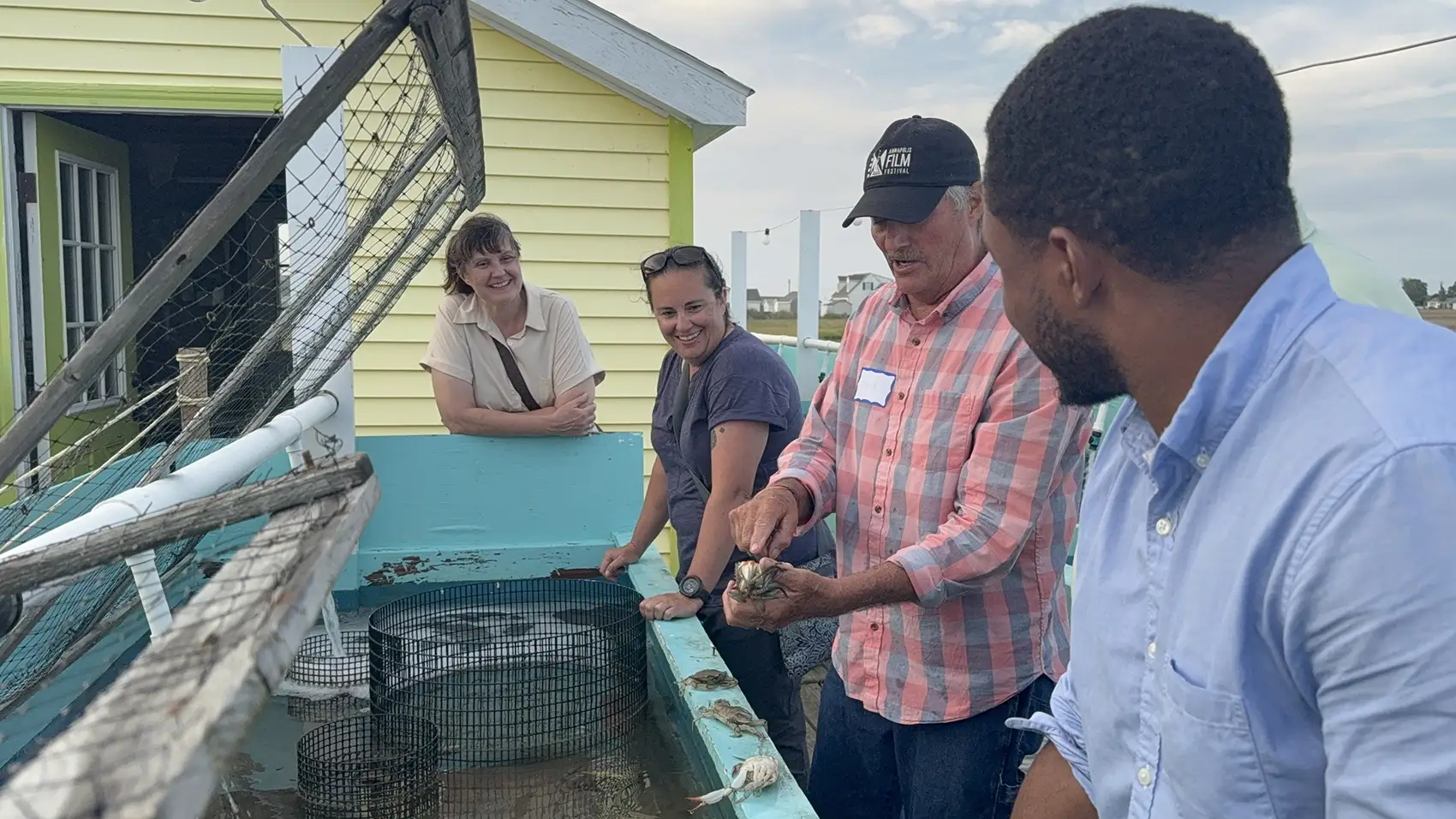
Tangier Mayor James “Ooker” Eskridge is one such individual. He starts his day around 3:00 a.m. during the crabbing season, preparing and packaging crabs to ship to the mainland. Early mornings and long days are the norm for those in Tangier Island’s fishing industry—the town’s main economic activity. Despite a grueling schedule, the mayor prioritized attending and participating in these energy planning workshops, along with Tangier Island’s town council and energy steering committee.
“We appreciated the ETIPP team and their willingness to visit the island and communicate with us,” Eskridge said. “They were very interested in listening to us and helping the community.”
Tangier Island’s resulting energy vision emphasizes developing new economic opportunities while maintaining a reliable energy system and preserving the island’s unique culture. From the workshop, the community came away with six draft goals to consider, including developing a comprehensive energy plan within three years, with a risk assessment in case of emergency outages.
“I’m from the small town of Guyton, Georgia, and we experienced long-term power outages all the time,” said Groundswell’s community resilience manager John Roberts Jr., who helped plan the workshops. “I now get the opportunity to engage similar communities and help give them a plan and resources that I didn’t have growing up.”
National Laboratory Expertise Identifies Potential Energy Opportunities
At almost 50 years old, Tangier Island’s single underwater transmission line has exceeded its expected useful life. Though it shows no signs of failure, according to the local utility, it will need to be replaced in the near future.
To help the island think through potential solutions to complement the energy provided by the transmission line, reduce energy usage, and lower energy costs, NLR analyzed energy data provided by the island’s utility, including data for all of the government-owned buildings and monthly load data for the entire island over several years. Equipped with this information, researchers pored over the island’s energy usage and presented the results of their analysis at a second in-person workshop in June.
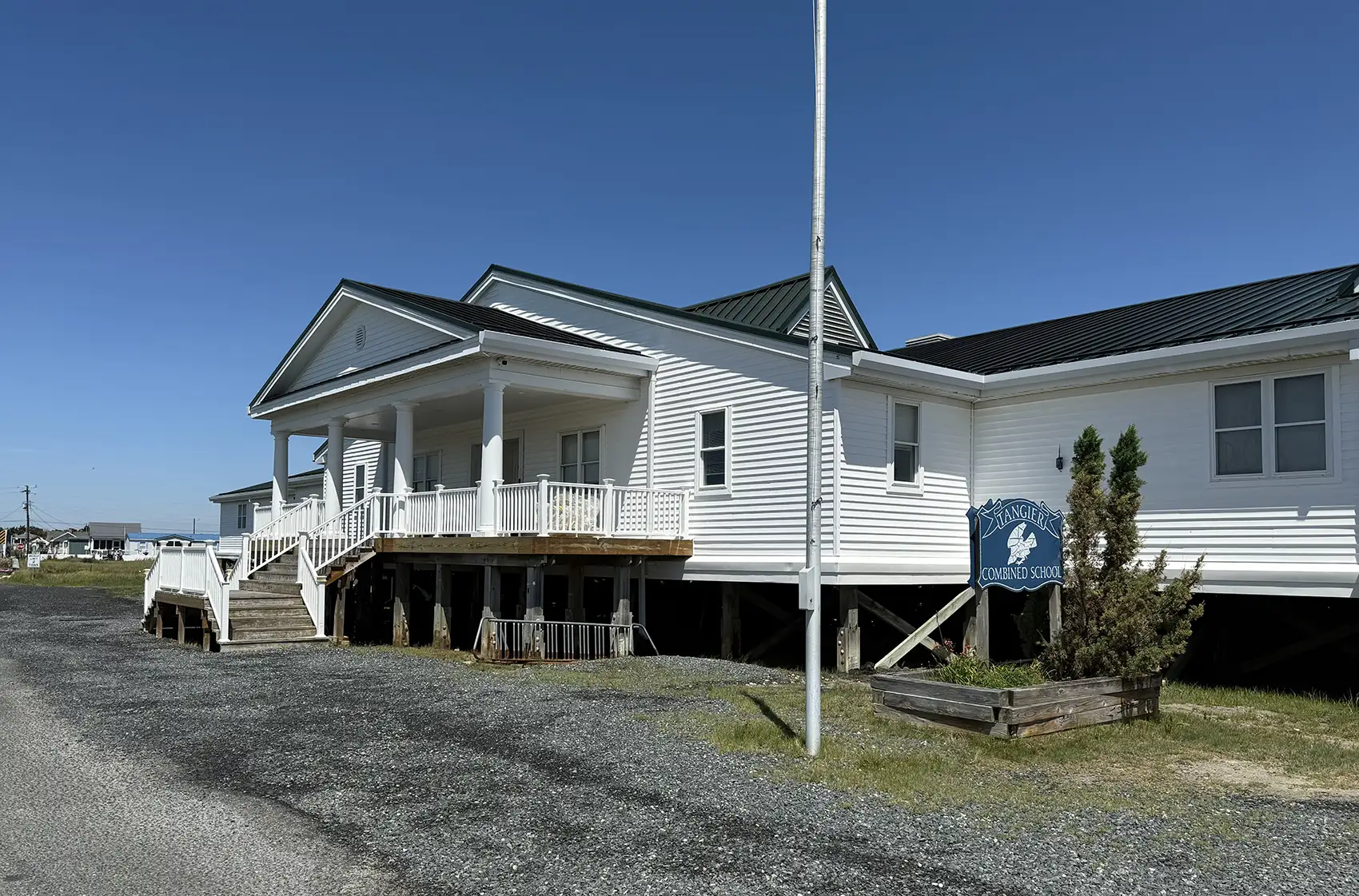
Senior Adviser for DOE’s Office of Critical Minerals and Energy Innovation Lou Hrkman also made the journey to Tangier Island for this workshop and was encouraged by the active participation from community members.
“Hearing directly from Tangier residents on their energy goals and infrastructure challenges underscored the value of programs like ETIPP,” Hrkman said. “Through ETIPP, DOE is proud to support energy reliability and affordability in communities across America, including beautiful Tangier Island.”
NLR researcher and ETIPP’s Southeastern Seaboard regional lead Rory McIlmoil analyzed hourly and seasonal consumption by the island as a whole, breaking it down into monthly patterns over multiple years. McIlmoil provided graphs to the community to illustrate which buildings were the highest energy users, when seasonal peaks occur, and what potential opportunities there may be to save energy and money for the island. The school and community center were shown to be large energy consumers, driving both winter and summer peak demands for noninfrastructure buildings.
“A lot of that led to some really good insights and discussion,” McIlmoil said. “For example, why does the school use so much energy in the summer, when school is not in session? It could be the school is not zoning their cooling controls, which would save energy.”
A key finding of the analysis showed that a storm in 2020 appeared to have severely damaged the island’s distributed power generation system for its water treatment plant, and the system was no longer making a significant contribution to reducing the town’s water treatment costs.
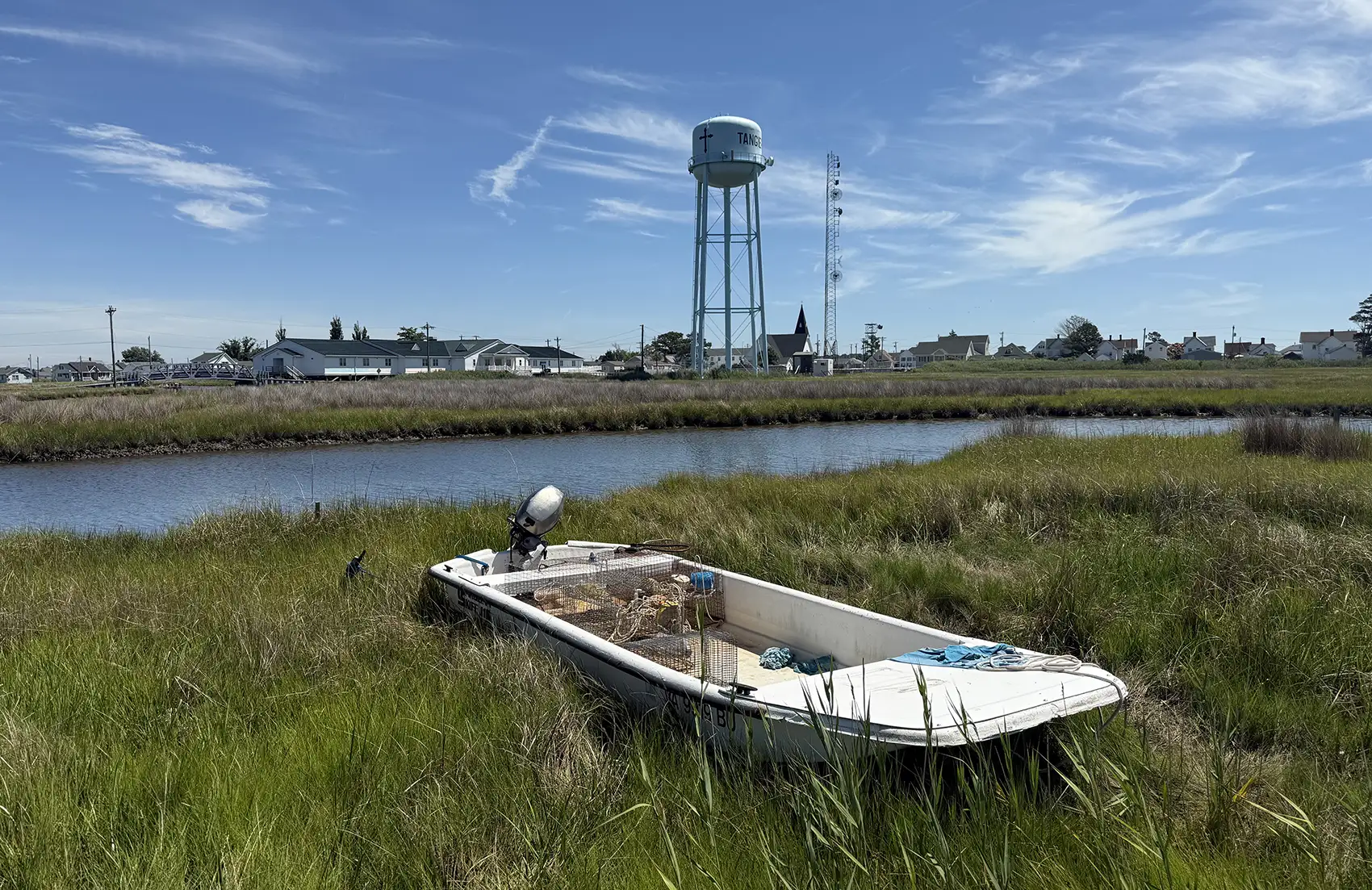
Analyses also considered the island’s population and workforce and what economic opportunities may be available to them. In combination, the two workshops helped the community better understand its energy usage, define its challenges, and outline achievable goals to tackle them.
Solutions that emerged for consideration included new distributed generation, weatherization of buildings, and even tangential connections the community may not have considered before, like repairing water leaks in its freshwater system. Because the system is manned by electrical pumps, repairing any leaks could potentially help lower residential energy use.
“Though communities often have big challenges, they can be broken down into smaller tasks to be able to address them,” Smith said. “There are often solutions or community assets they haven’t thought of before that are connected to energy.”
ETIPP Leverages Similarities To Address Unique Challenges
While Tangier faces obstacles unique to its circumstances, many of the challenges are common to other island and remote communities across the Southeastern Seaboard region, which spans from Florida to Virginia.
Hurricanes can cause widespread flooding and power outages, which are difficult to address for communities without an established emergency plan in place. Roberts sees a lack of data as a major concern for these communities: If they do not have analysis on what their electric grid can withstand based on the severity of the storm, they cannot predict if they will have an outage or for how long it will last.
“My outlook on the Southeast region is one of faith, hope, and optimism. The constant threat from storms and disruption provides a unique landscape to look at many different opportunities to enhance energy resilience,” Roberts said.
With Tangier Island’s goals defined, the ETIPP team worked with the island to prioritize potential energy- and cost-saving opportunities to explore. Top priorities include addressing high energy use at its wastewater treatment plant, fixing residential water leaks, and establishing weatherization training programs for residents. NLR will perform additional technical analysis to support the town in its pursuit of those opportunities.
“It’s encouraging because some of the fixes are pretty simple,” Eskridge said, “but they are going to save folks a lot of money down the road.”
Learn More
Visit the ETIPP page to learn more about the program, eligibility, and the application process.
The U.S. Department of Energy’s Energy Technology Innovation Partnership Project (ETIPP) is a community-led technical support program for coastal, remote, and island communities to access unique solutions and increase energy affordability and reliability. By uniting federal agencies, national laboratories, regional organizations, and community stakeholders, ETIPP provides tailored technical support to help communities achieve affordable reliable solutions to their energy system challenges. This collaborative model leverages the combined expertise and resources of its partners to deliver comprehensive, practical solutions that align with local needs. ETIPP is managed by NLR and funded and supported by the U.S. Department of Energy's Office of Critical Minerals and Energy Innovation.
Last Updated April 28, 2026