
How To Climb a Critical Mineral Mountain? Come Together, Right Now
At 2026 Partner Forum, Industry, Academia, Government, and Researchers Convene To Talk U.S. Supply Strangleholds, Modern Mining, and Optimism

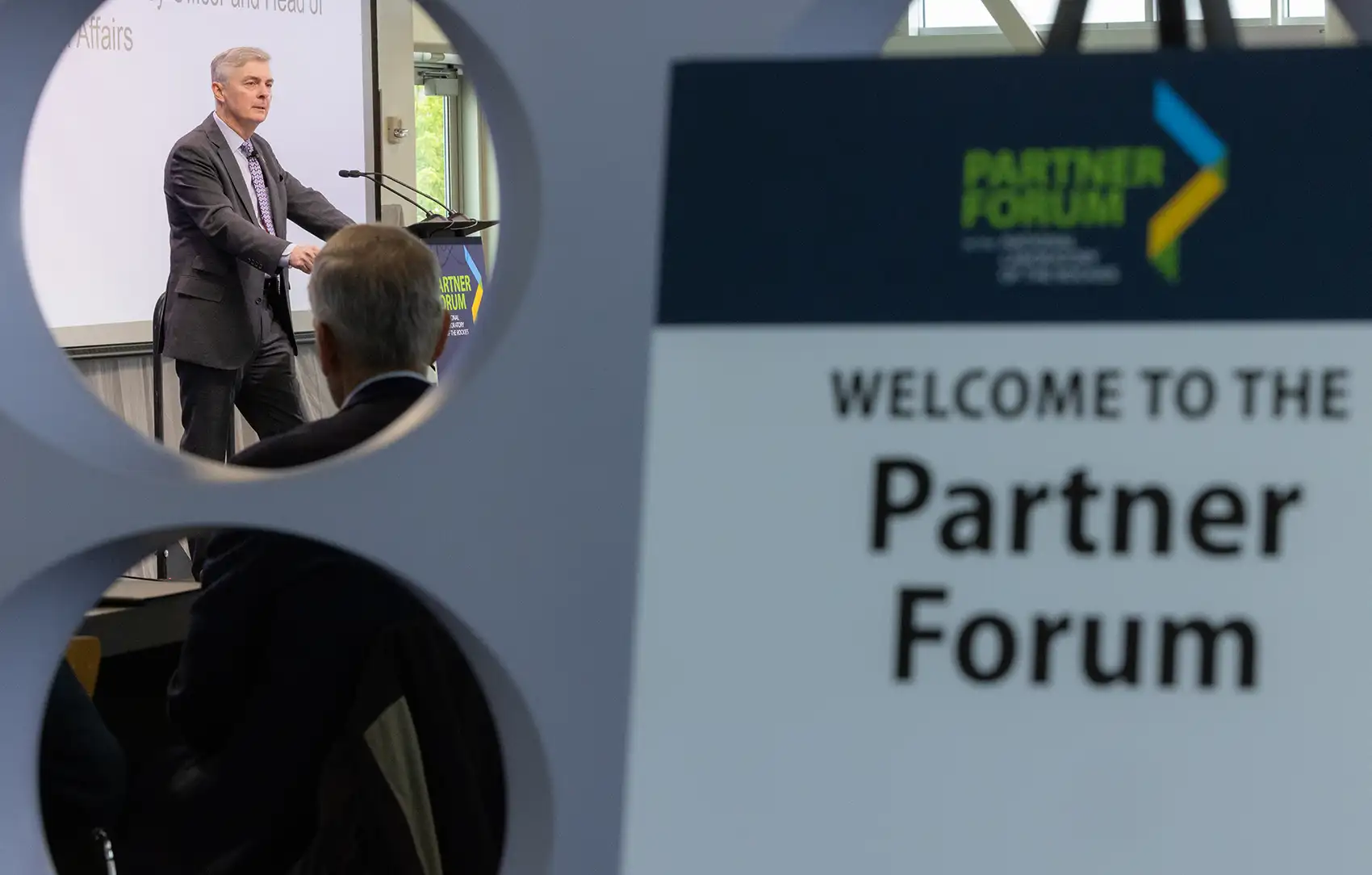
If you drive through one of the western-most points of West Texas—about 85 miles east of El Paso County—you might spot a rounded brown mountain in the empty dust sprawl alongside Interstate 10. But even if you did note the humdrum mound, chances are your brain would shrug off the memory. Who cares about a bald hump of dirt in a desert?
Greg Bowman does.
Bowman is the chief global policy officer and head of external affairs for USA Rare Earth Inc., which recently bought an 80% stake in that mound, known as Round Top Mountain. Why?
Beneath that nondescript surface lies the largest known U.S. deposit of rare earth elements—minerals that, along with their critical-mineral cousins, are necessary for almost all modern electronics, including those used in our energy systems, cell phones and laptops, medical imaging and defense technologies, cars and airplanes, and even data centers and artificial intelligence. More than an eighth of the U.S. economy depends on companies that cannot function without critical minerals.
“It’s ensuring our very way of life,” Bowman said in a keynote address at the U.S. Department of Energy (DOE) National Laboratory of the Rockies’ (NLR's) 2026 Partner Forum.
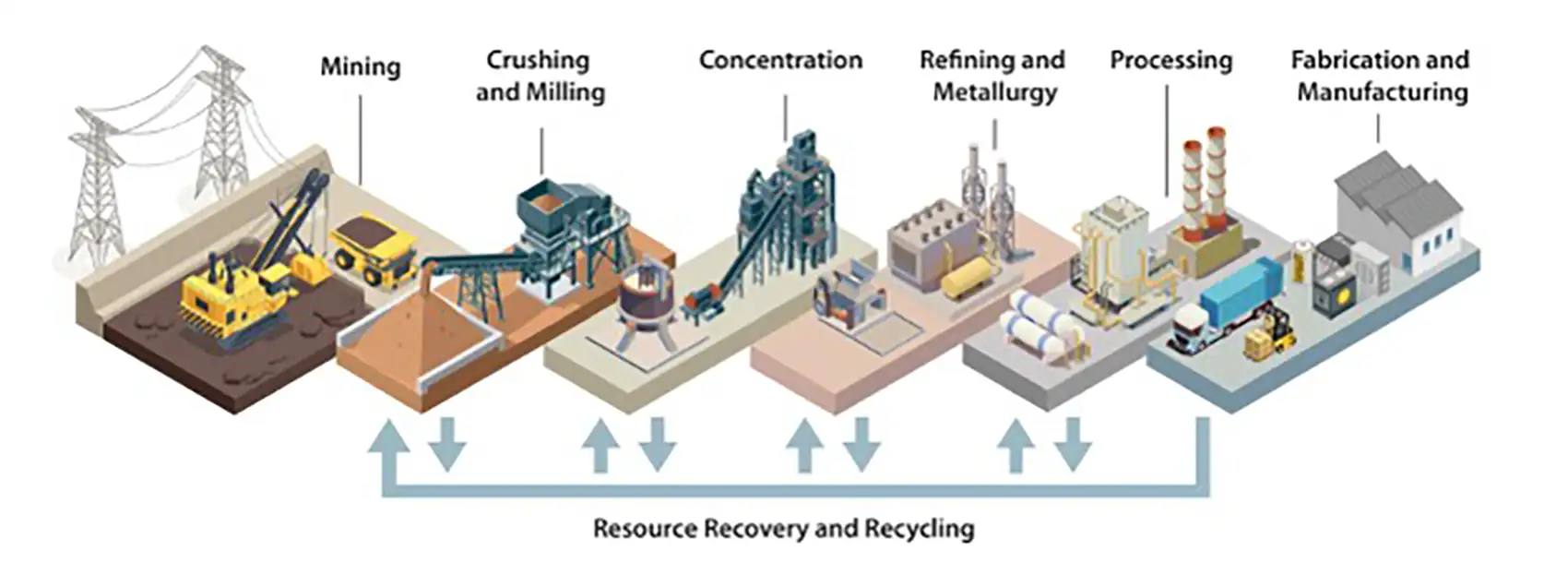
But today, our “very way of life” depends on imports. More than 80% of the country’s critical minerals come from foreign sources, which control both supplies and prices. A domestic supply chain could help cut both supply uncertainty and costs. But constructing that new chain, largely from scratch, is a craggy task (far craggier than that smooth Texas mound). Hidden fragments of dirty rock can only come together to form MRIs, batteries, or vehicles if people come together. Geoscientists find deposits, miners unearth ore, metallurgists and chemical engineers turn raw rock into high-purity metals, manufacturers forge those metals into goods, and recyclers recover minerals that would otherwise get lost in landfills.
“We know how complex this is,” Bowman said. “To be globally competitive, it takes all of us.”
That type of cross-industry complexity—which extends from the lab bench to the market—is the exact kind of challenge the Partner Forum is designed to tackle.
This year’s event—whose theme was “From Mine to Market: Critical Minerals and Supply Chains for Energy Systems”—brought together people from national and academic laboratories, established industries, startups, government agencies, and accelerators. From May 4 to 6, they gathered at the laboratory’s Golden, Colorado, campus and joined talks, panels, workshops, side chats, and receptions.
Attendees talked U.S. mining bottlenecks, red mud and uranium, artificial intelligence, microbes and membranes, workforce gaps, energy consumption, recycling, and much more. Above all, they tried to answer one, big question: Can the United States build up its domestic supply of critical minerals?
“The time is right now. The need is absolutely urgent,” Bowman said. “The question is: How fast can we move and how fast can we do it, together?”
Come Together: To Recover a Rare Lead
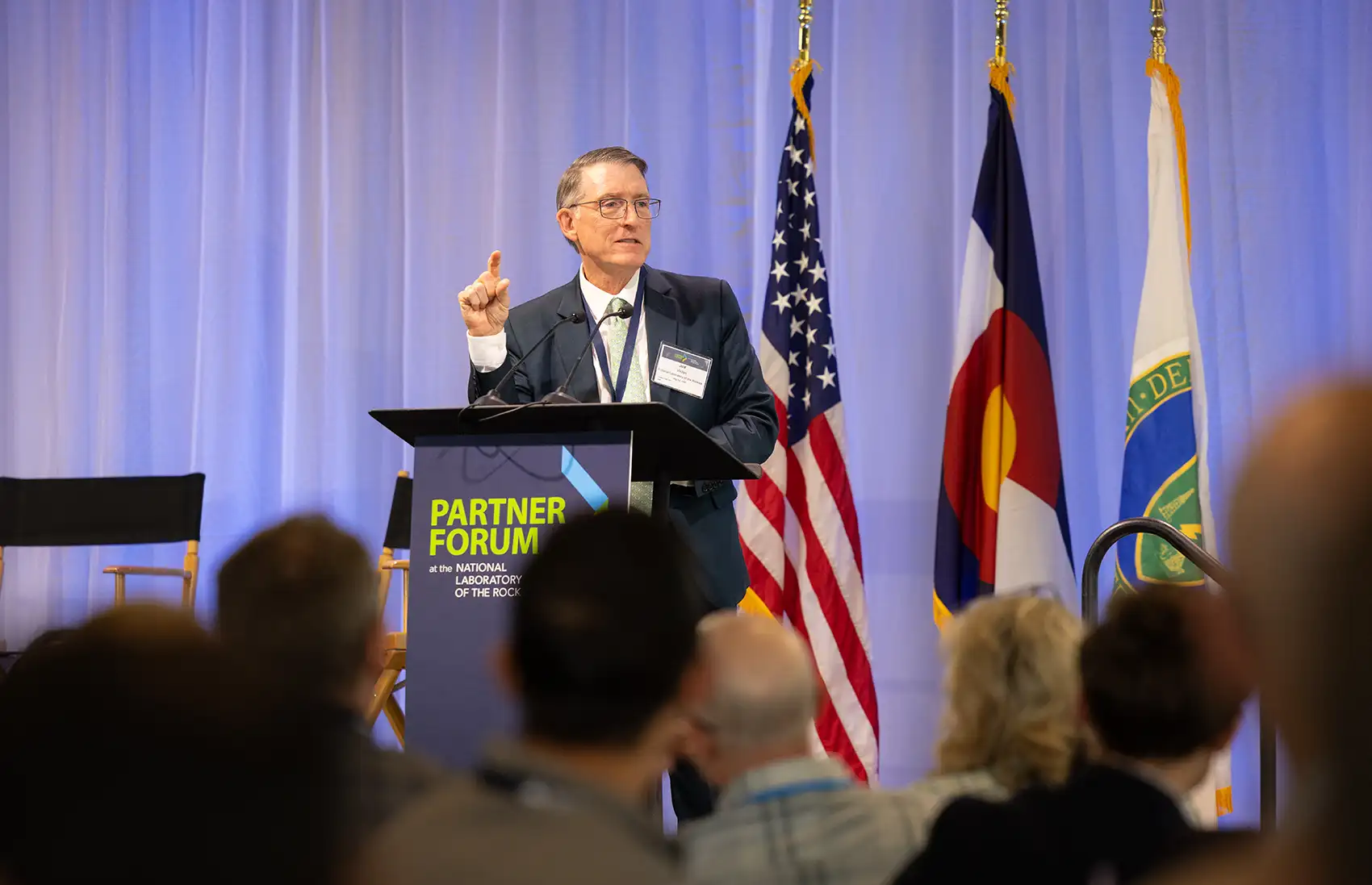
In his welcome remarks, Jud Virden, director of the National Laboratory of the Rockies, echoed Bowman’s call: “The only way we can do it fast,” he said, “is to do it together.”
The “it” we need to do is create a dependable domestic pipeline for critical minerals, the 60 minerals or materials the United States’ Department of the Interior consider “vital to the U.S. economy and national security” but whose supplies depend on international—and potentially vulnerable or volatile—supply chains. Supply chains might sound dull. But so is life without smartphones, farms without fertilizer, energy systems without semiconductors, and a country without a strong economy.
As of 2024, China mines the most critical minerals and refines the most. (Minerals do not come out of the ground ready to be fused into computer chips: Raw rocks need processing before they are pure enough for products.)
And yet, from the mid-1960s to the 1980s, the United States led the production of rare earths, one subset of critical minerals. So, what happened? In the 1990s, new regulations upped operating costs. The U.S. Bureau of Mines, which oversaw scientific research on mineral extraction, processing, and safety was shut down. After that, the U.S. mining industry receded while other countries raced ahead.
But today, the DOE Office of Critical Minerals and Energy Innovation’s mission is focused on rebuilding a U.S. mining and refining industry and a domestic supply chain for critical minerals to support the development of both energy and defense technologies.
If the country cannot build these technologies without global supply chains, it risks paying exorbitant prices to import what it needs—or, worse, not building them at all.
Come Together: To Launch a Critical Comeback
Critical minerals production requires more than a few new warehouses. The 2026 Partner Forum speakers and panelists discussed a host of hurdles. For one, the industry consumes lots of water and energy (one Minnesota mine, a panelist shared, runs on as much energy as Minneapolis).
More energy means higher costs (imagine paying the energy bills for every Minneapolis resident and company). As one panelist put it: “Energy cost is really the name of the game.” Newer technologies may be more energy efficient, but they are often more expensive and can be seen as a riskier choice for established mining companies with tight profit margins.
“The first of anything is never tried and true,” said Steve Wilson, the chief technology officer of ReThink Milling, during a panel called “Emerging Processing and Precision Mining.” The mining industry tends to prefer tried and true. The work can be hazardous (even if, as another panelist said, “We do things better in the United States than anywhere else in the world”). Sometimes change can cost more than capital.
Another industry hurdle is separations: Critical minerals must be separated from unwanted sand, mud, quartz, silicon, sulfur, and whatever else comes with them. And different minerals—and even different mineral sources, like hard rock, clay, saltwater brine, or mining waste—typically require different processing steps and equipment, which can be expensive to incorporate into an operating refinery.
Even after refiners isolate enough of the desired mineral—achieving, say, 90% purity, which might be fine for some products—they do not always disclose what makes up the last 10%. A little arsenic might not muck up a computer chip, but even a trace of iron could.
For both reasons, companies tend to opt for mineral sources they know and trust—the tried and true. They are often hesitant to invest in new formulas even if it could benefit them long term.
And separations are not the only challenge separating the United States from global competition. U.S. mineral deposits are scattered across the country. Researchers, miners, refiners, and manufacturers can be just as scattered (the industry has not been set up to sync up). U.S.-produced minerals must compete with low-cost imports. And even if companies could be enticed to pay a bit more for “Made In America,” the United States is not making enough mineral experts to keep up.
“There’s a big brain drain happening in the minerals workspace,” said Peter Luthiger, the senior advisor for water and science in the U.S. Department of Interior, who delivered a Lightning Talk at this year’s Partner Forum. One industry panelist said three of his five process engineers got their training overseas.
That means expertise is also scattered—and scarce.
Come Together: To Capitalize on Red Mud, Algae, and Mineral Substitutes
But this year’s Partner Forum brought those scattered experts together in one room. About 264 people drove or flew in; they included university professors, CEOs and startup founders, supply chain specialists, researchers, trade commissioners, and federal strategists.
And they all came with ideas.
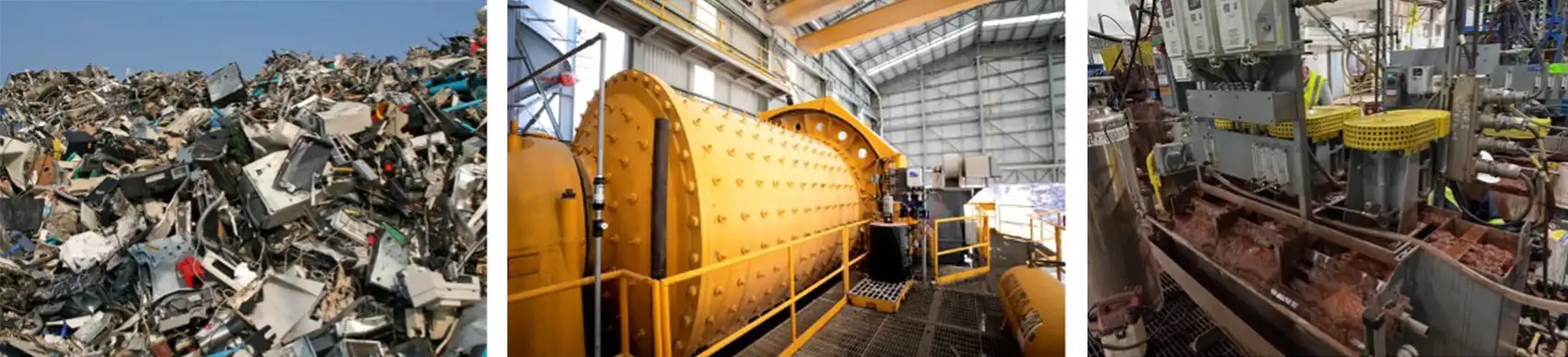
For example, the United States does not need to outmine its competitors. The country could get critical minerals from other sources, like electronic waste, seawater, and red mud (an industrial byproduct).
About “25% of material that industry partners take out of the ground ends up in a waste pile,” said one panelist. There is value in that waste—if we can extract it. Luthiger and his colleagues at the Department of the Interior created a map of minable waste resources across the United States (“Map, baby, map,” Luthiger said, repeating a message the Secretary of the Interior Doug Burgum coined in February 2025). More than half of the 60 critical minerals could be pulled from those resources, which needs to be cleaned up either way. Why not glean and clean?
Partner Forum participants discussed how to do just that: For example, Abhishek Roy and other National Laboratory of the Rockies researchers are building better membranes—minifilters that can separate critical from not—that could help industries recover critical minerals while cutting energy and costs.
Others at the laboratory and elsewhere are searching for materials that can sub in for hard-to-get critical minerals without compromising product quality. One company, Niron Magnetics, is working on iron-nitride-based permanent magnets—which are necessary for energy technologies, military hardware, and data centers—to bypass the need for internationally controlled neodymium, praseodymium, and dysprosium.
And still other researchers are engineering algae to separate and extract minerals from seawater and microbes to mine for copper (both types of so-called biomining). “Any time you deploy our technology, you’re getting more copper on site,” said Liz Dennett, founder and CEO of Endolith, which uses biology and machine learning to improve copper recovery from heap leach operations (mining practices that traditionally use chemicals to dissolve and collect minerals from piles of raw mined rock).
But perhaps the biggest hurdle the United States’ critical minerals industry faces right now is disconnection. If lab work never escapes the lab, it is a bit like the proverbial tree falling in a forest: Would anyone even notice?
Luckily, NLR is building a bridge from lab to industry. Partner Forum attendees got a rare chance to tour the laboratory’s Energy Materials and Processing at Scale (EMAPS) facility. The building, which is currently under construction, will be a 60,000-square-foot space designed for collaboration. Both researchers and industry partners can bring new technologies—from early-stage novelties to well-vetted tech that is ready for scaling—to the facility’s high-hazard high bays, membrane center, biosafety lab for biomining, and electronics labs and try them out until they are tried and true.
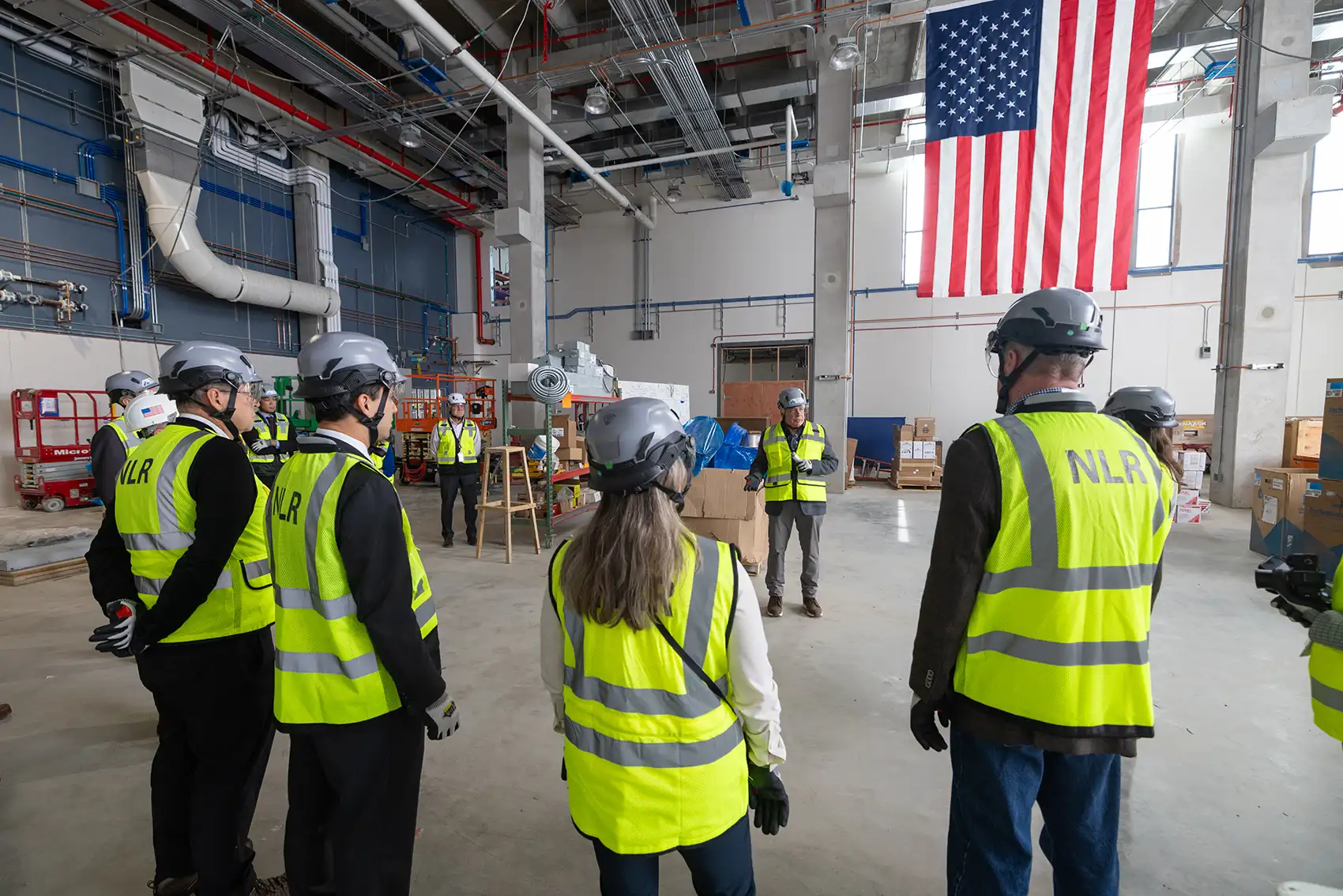
“There are going to be amazing things coming out of that building,” Luthiger said.
Another amazing thing, digital twins, could also help researchers and industry partners integrate novel technologies into well-loved processes. Digital twins replicate real-world operations, like mines and processing plants, in a virtual sandbox so users can swap novelties in and out to find which ones could cut their energy or water consumption, costs, and uncertainty. “Faster, cheaper, less risky scale up,” said Josh Schaidle, a laboratory program manager at NLR.
This so-called “compute first” approach could lend speed to the U.S. critical minerals industry growth—a way to sprint, rather than jog, before leapfrogging the competition.
The DOE’s Genesis Mission could also help support cross-institution teams that use artificial intelligence to identify optimal ways to mine and refine. One team at NLR has already used robotics and machine learning to hunt for proteins that can bind to critical minerals and pull them out of messy feedstocks. AI and the laboratory’s supercomputer helped them analyze hundreds of thousands of proteins to target 30 different types of metals—all in just an hour.
“That’s what we need: speed and scale,” keynote speaker Bowman said.
Scale also comes from, yes, partnerships. In his opening remarks, Laboratory Director Virden announced two new partnerships, made official through two memorandums of understanding between the National Laboratory of the Rockies and the Colorado School of Mines and the University of Utah, respectively. The institutions plan to share facilities, faculty, and more to help the country build a stronger supply chain and workforce.

Come Together: And Don’t Stop Believing
As Virden walked onto the Partner Forum stage to welcome this year’s attendees, “Don’t Stop Believing” played over the café’s sound system.
“We’re at an incredibly important moment in time right now,” Virden said. Scaling an international mineral mountain might be daunting, but the Partner Forum convened the right people for that task—the people who could build new experts (through new degree programs), new mines, new processes and technologies, new bridges, and new funding to bolster those bridges, too.
“Never before have we been in an era of so much support,” Bowman said. “And, quite frankly, optimism.”
Like Virden, Bowman is a believer. In his talk, the keynote speaker explained how USA Rare Earth Inc. turned the Round Table Mountain’s critical minerals repository into a viable operation—something that no one thought could be done. The company plans to mine and process in Texas, troubleshoot new technologies and processes in Colorado, and manufacture magnets (for everything from medical imaging to aerospace and defense applications) in Oklahoma.
USA Rare Earth is one of the first to build a mine-to-magnet pipeline within U.S. borders, and, Bowman said, this kind of success is only possible when science is paired with industrial purpose—when people from both worlds come together to build an entirely new one.
“That’s power,” Bowman said.
Last Updated April 28, 2026