
Genesis Mission's AI-Driven Research To Strengthen US Grid, Supply Chains, and Technological Leadership
Genesis Mission Brings Extensive National Laboratory Expertise Into a Comprehensive Platform To Accelerate Research

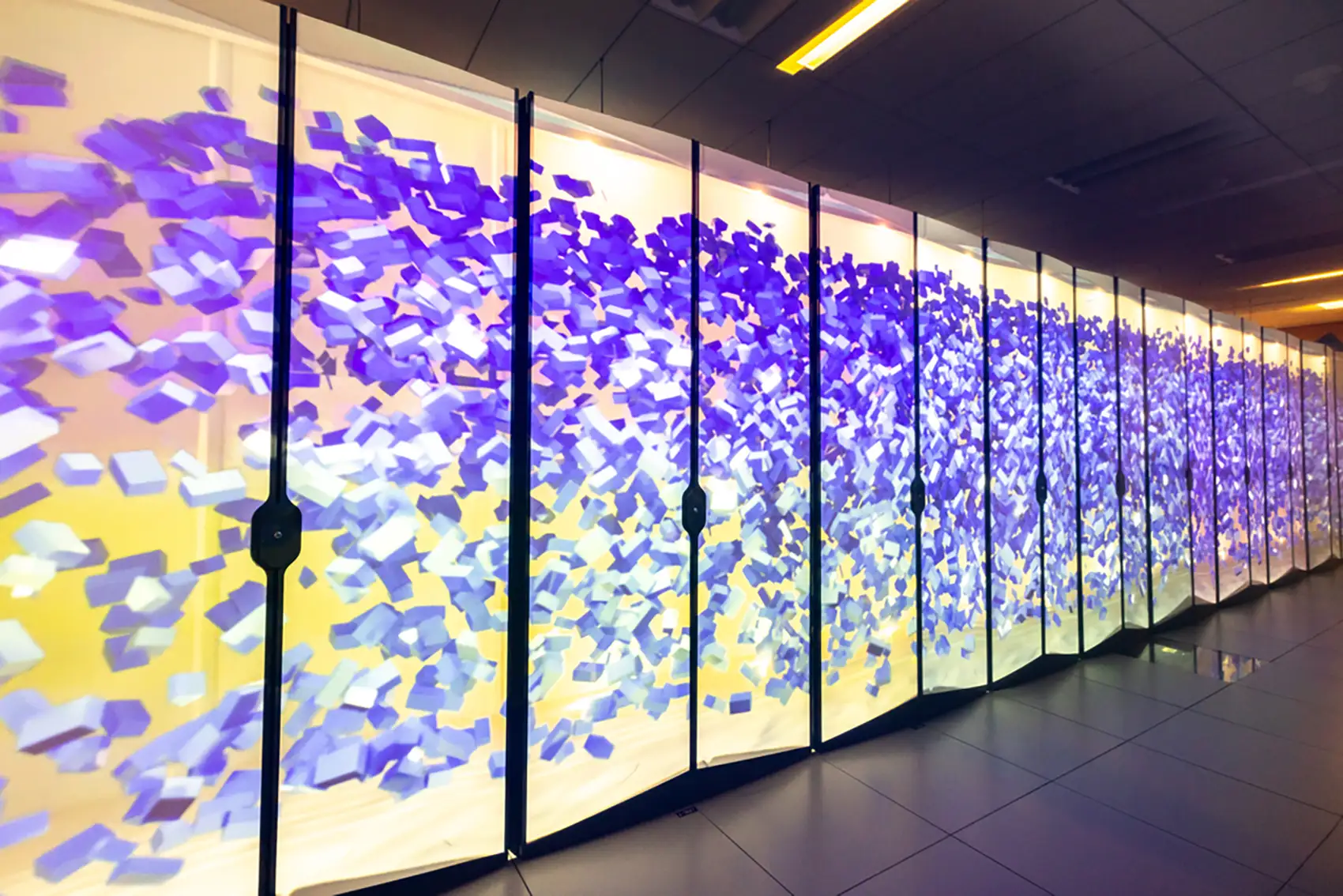
Research and capabilities from 17 national laboratories accessible in one place—that is the ambitious goal of the U.S. Department of Energy’s (DOE’s) Genesis Mission.
Genesis Mission is an initiative to develop an integrated, artificial intelligence (AI)-driven platform that connects the United States’ supercomputers, experimental facilities, models, and datasets across scientific domains. By combining expertise and housing it within an easy-to-access infrastructure for lab researchers, industry, and academia, this effort aims to drive energy innovation and strengthen the nation’s scientific leadership.
DOE’s National Laboratory of the Rockies (NLR) is leveraging years of expertise in AI research, wide-ranging data assets, and advanced experimental resources to contribute to building the Genesis Mission platform.
“Genesis Mission is exciting because this AI platform and capability will really change how science and research and development are done in this country in partnership with the private sector,” said Ray Grout, director of NLR’s Computational Science Center and NLR’s Genesis Mission lead. “It is a promising pathway to executing DOE’s mission for an affordable and secure energy future faster and more efficiently.”
NLR serves as an infrastructure partner for the platform, and dozens of NLR researchers are working on AI model teams to build out complex capabilities that will feed into the platform. These teams are tackling key national challenges that represent high-impact, technically ambitious focus areas that are critical for the United States, using the combined forces of the national laboratories to generate scientific breakthroughs.
Making the Puzzle Pieces Fit
How do you take the breadth of the U.S. national laboratories’ research and capabilities and make them fit together cohesively? It is a bit like taking apart multiple puzzles and trying to create one big four-dimensional puzzle out of the pieces. Brand new pieces may be needed, and new connections will need to be forged.
Such is the task of the infrastructure partners for American Science Cloud (AmSC). AmSC is a secure, federated, and science-optimized cloud environment that will combine national laboratory capabilities and resources into the Genesis Mission platform. AmSC will enable DOE scientists to create, access, and integrate high-quality, AI-ready datasets, run scalable model training on leadership-class systems, perform distributed simulations, control instruments, and move data efficiently across sites.
“We want to enable AI and productivity at a greater scale. Not every lab needs to build the infrastructure to do that,” said Monte Lunacek, NLR colead for AmSC. “The team is building capabilities that national leadership—every lab—could use, quickly.”
NLR’s ongoing demonstration of innovative capabilities that are being tested in the AmSC platform represents a significant contribution to the AmSC infrastructure. These capabilities cover a range of applications, including work in enhancing the user experience of AI agents. Multimodal large language models are the brain behind decision-making AI agents like ChatGPT. Through chat, users can ask agents for the task they want to be carried out. This feature is key to making resources within the Genesis Mission platform accessible to researchers.
“It is an incredible opportunity to be a part of this. A lot of the work that needs to happen in this platform is really the core of what we do at NLR in the applied science space,” said Kristi Potter, NLR colead for AmSC. “So, we are connecting things in a way that may not seem normal to others, but in our world are absolutely connected.”
Part of NLR’s involvement includes taking the specific work from the AI model teams and ensuring it can fit into the platform.
“These different teams have to deal with very complicated graphs, high-dimensional outputs of simulations, and time series. These are data types that are traditionally hard for AI to deal with,” said NLR researcher Patrick Emami, a contributor to the Genesis Mission multimodal foundation models team. “Our team is helping to create the ties that will bind all these different data types together in one unified platform.”
Envisioning a Smarter, More Reliable Grid
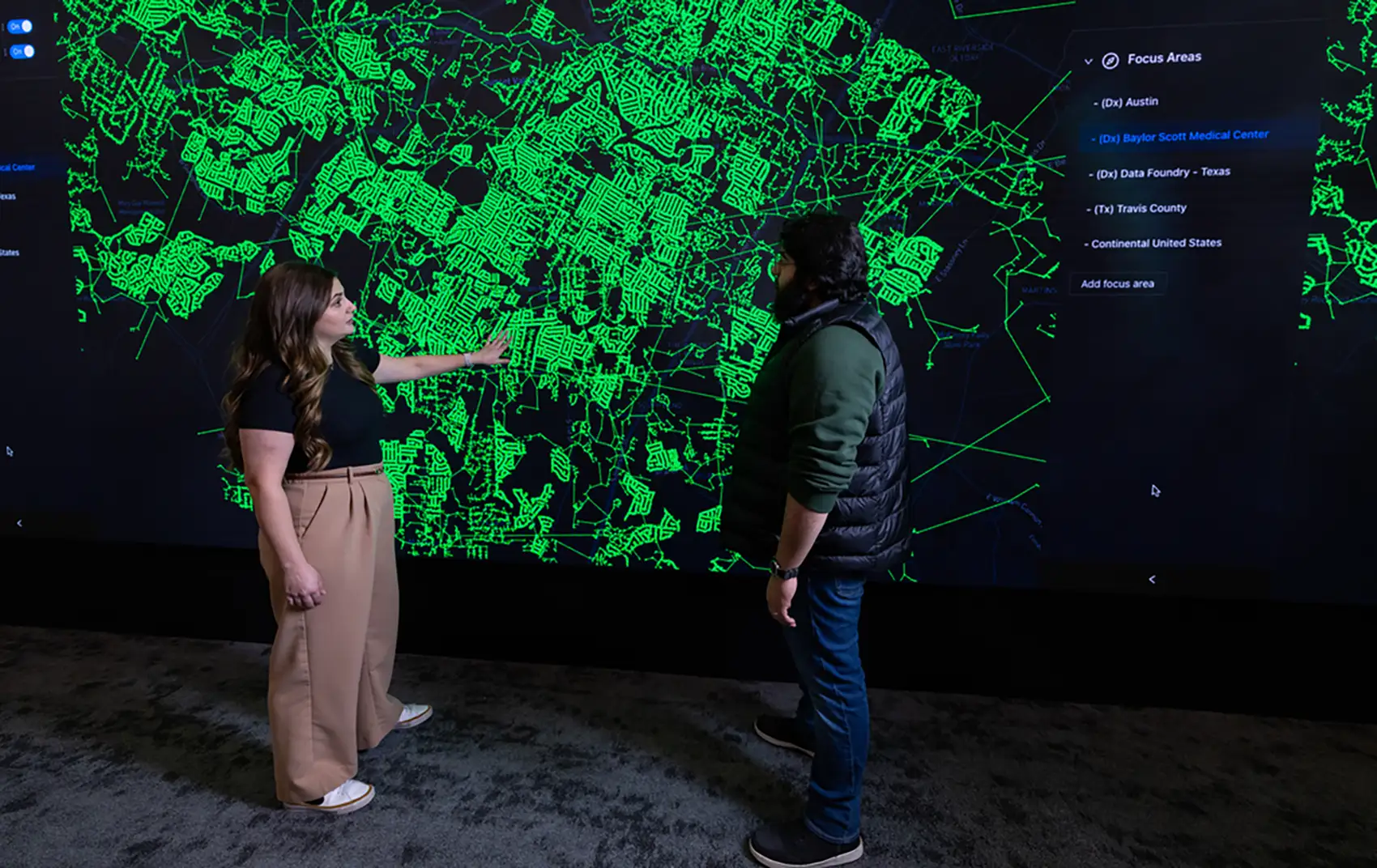
The precise impact of a natural disaster is hard to pin down in advance. It can be time-consuming to predict and calculate exactly how a storm will affect a city’s grid and how to respond when a grid component is knocked offline by severe weather.
The Genesis Mission GridAI model team is employing AI to work toward a grid that can react quickly to disruptions and make complex decisions that enhance grid stability and security.
“We’ve been using various versions of machine learning and AI and applying it to solving grid problems for many years,” said Ben Kroposki, NLR lead for the GridAI model team. “That’s our charter at the national lab: to stay at the forefront of technology developments and figure out how to apply them to electric power industry challenges.”
Currently, the team is collaborating with other national laboratories to develop an integrated AI platform that will help with many common grid analyses, including contingency analysis—which evaluates if the grid can stay stable when one component, such as a generator or transmission line, goes offline. However, for large storms, more complex analysis is needed to consider how the grid might react to multiple grid components going down at once. AI can potentially make those calculations at a much faster rate than current methods, enabling more advance preparation for disruptions.
NLR’s previous work on the eGridGPT large language model for system operators and grid foundation models trained on diverse grid data and topologies will help to not only demonstrate the success of AI in this space but also make the research accessible to utilities and grid operators that can benefit from it.
“If we can build this capability into this foundational platform for all labs to access, we no longer need to focus on creating the modeling infrastructures,” Kroposki said. “We can instead focus on solving these major challenges and problems.”
Accelerating Intelligent Manufacturing
There are many hurdles that can delay critical scientific advancements and send them to languish in the “valley of death”—the high-risk period between initial research and development and commercialization. Through the Accelerating Intelligent Manufacturing of Energy Materials (AIM-EM) model team, NLR researchers are collaborating with other laboratories and industry partners to help move products from small-scale lab experiments to industrial processes.
“NLR is really uniquely positioned because we develop solutions for that valley of death,” said Steven Spurgeon, NLR model team lead for AIM-EM. “We interact closely with industry and have experience helping them scale and move things up that technology readiness level ladder.”
The AIM-EM approach aims to integrate manufacturing considerations earlier on in the research process so that new materials and technologies can more readily move up that ladder.
NLR’s Energy Materials and Processing at Scale (EMAPS) facility is poised to serve as the anchor for this AI model team. Upon its completion in 2027, the facility’s experimental opportunities will be able to generate the extensive ground-truth data needed to train AI models that can help industry partners de-risk technologies with higher accuracy at earlier research stages.
“Our aim is to foster a seamless research continuum, uniting laboratories and industry under a shared vision of AI-driven materials innovation,” Spurgeon said.
Using AI To Shore Up US Supply Chains
The ore extraction process is notoriously slow. It takes years to identify the right location to mine, build the proper infrastructure, and operate it. At the same time, critical mineral and material supply chains are rapidly changing.
“Higher-grade materials have been used up, and geopolitical supply shocks impact the available feedstocks. We are also designing new materials that are more demanding of mineral processing workflows,” said Ryan King, NLR lead for the Critical Minerals and Materials To Unlock Supply AI model team. “How can we accommodate that variability and push the limits on what we can make?”
The Genesis Mission Critical Minerals and Materials To Unlock Supply team aims to use AI to take a comprehensive end-to-end approach to critical minerals and materials processes, scaling across all of the different elements that factor into identifying, extracting, and processing. The objective is to develop a dynamic national roadmap that de-risks domestic processing and optimizes the entire ecosystem to enhance economic resilience and national security.
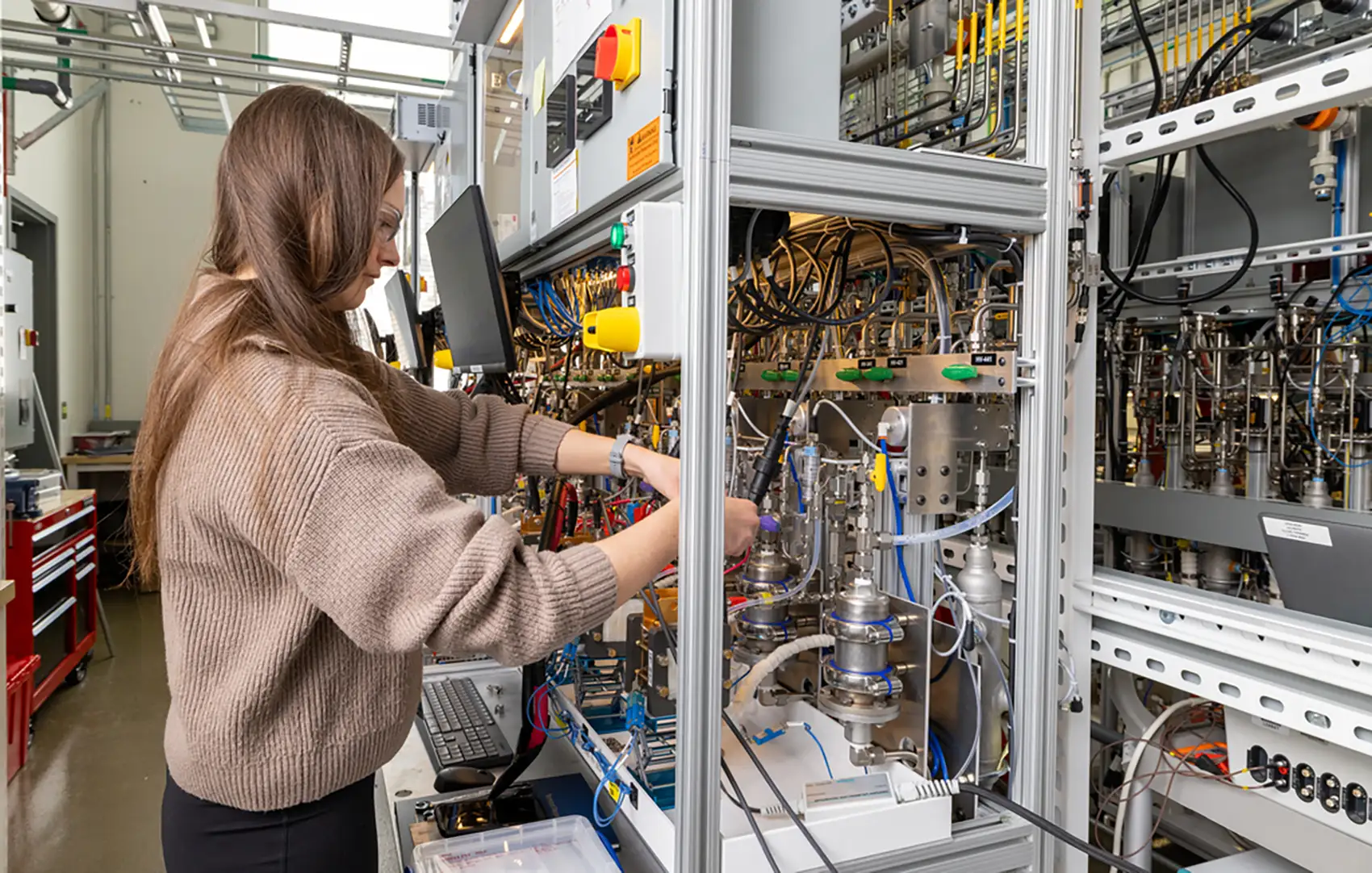
NLR brings capabilities and expertise in AI for the design and controls of key unit operations in processing, including grinding, crushing, and separations. NLR is contributing controls-oriented models and looking to incorporate NLR high-fidelity models funded through DOE’s Advanced Scientific Computing Research program, including Exagoop and BDEM, in the future.
“We not only want to support a stronger critical minerals and materials supply chain for the United States but use this as an opportunity to use AI to help drive innovation in processing that translates to improved materials,” King said.
Ushering in the New Age of AI-Driven Research
By uniting supercomputing and AI capabilities from the national laboratory complex and a variety of scientific domains, Genesis Mission aims to solidify U.S. national leadership in AI-driven research and development. The cross-lab collaboration is on track to enhance the speed and reliability of research across critical challenges and needs in the United States.
“When we use and adopt the Genesis Mission platform as a lab,” Grout said, “it could put a multiplier on every dollar invested and stewarded by DOE.”
Learn more about NLR’s Genesis Mission work.
Last Updated April 28, 2026