Beneath the Surface: Glorynel Ojeda Matos on Strengthening the Systems We Depend On
How a National Laboratory of the Rockies Researcher From Puerto Rico Is Turning Lived Experience Into Practical Solutions

This article is also available in Spanish. Read it here.
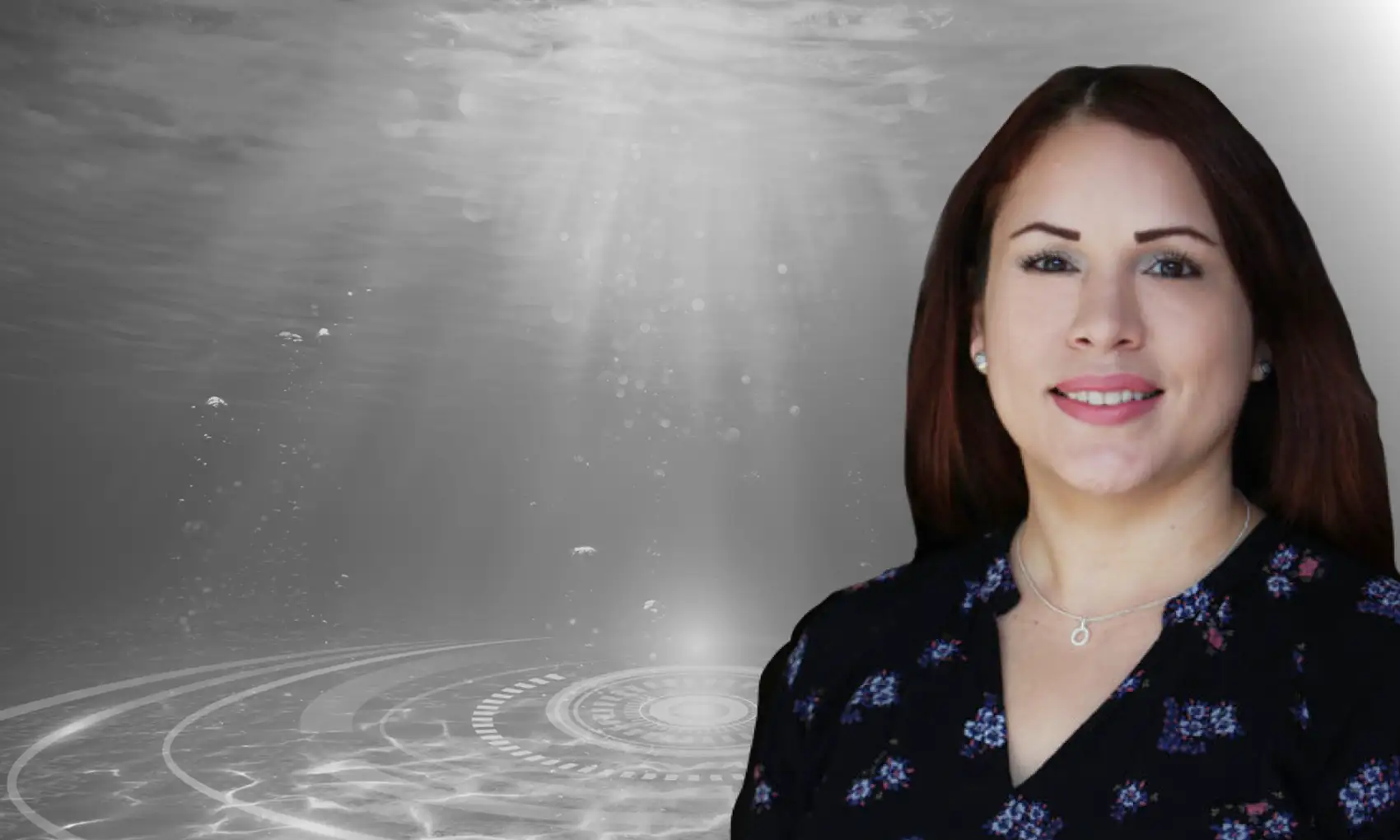
Growing up in a rural neighborhood in southeastern Puerto Rico, Glorynel Ojeda Matos lived through several major hurricanes. She witnessed the disruption and restoration of her island’s infrastructure countless times. These storms taught her early on how tightly connected critical systems like power and water truly are—and how quickly daily life can unravel when any of them fails.
“Living through hurricanes, I saw firsthand that because of the main island’s topography, when there’s no electricity, you cannot pump water,” Ojeda Matos said. “Everything is connected.”
Today, as a researcher at the National Laboratory of the Rockies (NLR), Ojeda Matos channels those lessons into her work helping local governments, utilities, and communities strengthen critical infrastructure and make informed decisions. Drawing on both her technical expertise and her lived experience, she focuses on practical solutions that help decision makers plan ahead to keep key systems running when it matters most.
A Career Rooted in Service and Systems Thinking
From an early age, Ojeda Matos felt deeply connected to nature. She remembers spending weekends swimming rivers, climbing trees, and eating what grew in the family’s and neighbors’ gardens.
Life in Puerto Rico—an archipelago rich in culture but limited in land and resources—taught her to adapt, prioritize, and make the most of what is available. That way of life instilled a natural sense of efficiency and a deep respect for the connection between people and place. In turn, those values evolved into a desire to serve others.

"I love science and innovation, but I also love public service,” Ojeda Matos said. “My role at NLR is the perfect intersection, where I can serve people through research.”
Early in her career, Ojeda Matos worked in local government in Puerto Rico. This is where she first discovered that public interest and technical expertise can work hand in hand.
At that time, she also became the youngest board member of the U.S. Green Building Council Caribbean Chapter, an experience that introduced her to the energy landscape. There, Ojeda Matos deepened her knowledge on water efficiency strategies and later conducted research at the watershed level, which led to her recognition for promoting the use of the water footprint as an indicator and producing the first estimation for Puerto Rico’s water planning. She has championed this topic as a water educator, presenting her work in publications, professional presentations, and a documentary that aired on Puerto Rico’s public TV channel.
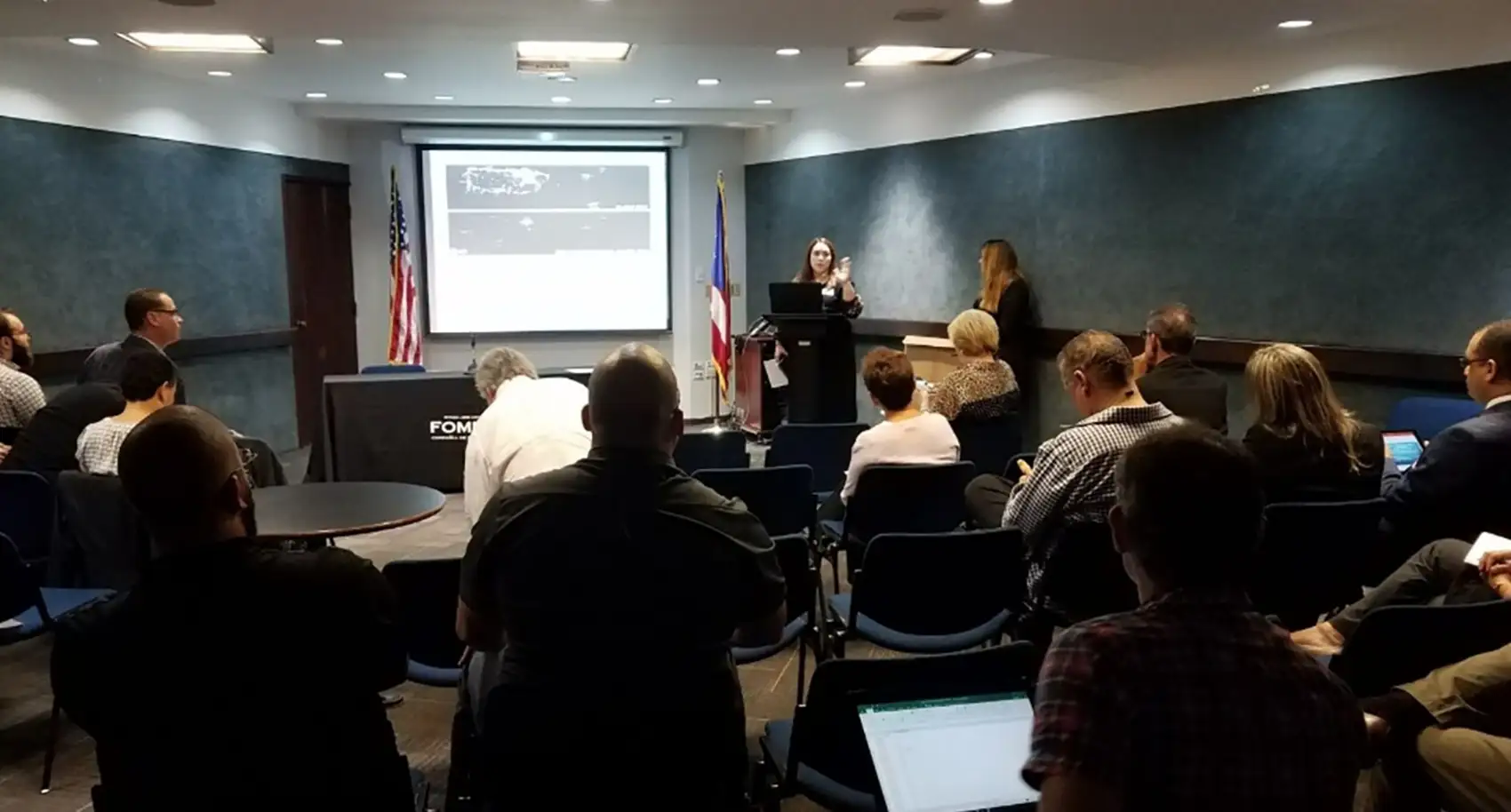
In 2015, Ojeda Matos became the founding research assistant at the National Institute of Energy and Island Sustainability at the University of Puerto Rico, where she facilitated a monthly stakeholder forum focused on addressing Puerto Rico’s energy affairs and research needs.
In September 2017, Category 5 Hurricane Maria hit Puerto Rico, devastating the region once again. The aftermath created enormous challenges for daily life in Puerto Rico, but it also opened unexpected opportunities. When her life partner’s work closed operations, they moved to Arizona with a relocation offer, and Ojeda Matos chose to pursue a Ph.D. there. The timing aligned, and she selected a program focused on examining how water, energy, and food systems interconnect.
She joined NLR in 2023, bringing that systems-thinking mindset to her work.
Her approach to research is shaped by what is called “post-normal science”—a recognition that technical analysis must consider broader perspectives, remain aware of values and local contexts, and acknowledge that uncertainty is unavoidable when dealing with complex problems.
“When you’re doing place-based research, you can’t just show up and say, ‘This is the work,’ without caring how people value it or recognizing the local knowledge that grounds the work,” Ojeda Matos said. “For me, it’s important to connect with the people and places my work serves.”
Bringing Experience Full Circle
Much of Ojeda Matos’s work today takes her back to the kinds of places that shaped her. She currently leads projects in both Puerto Rico and Texas that focus on helping the regions more efficiently manage resources and plan for more reliable infrastructure.
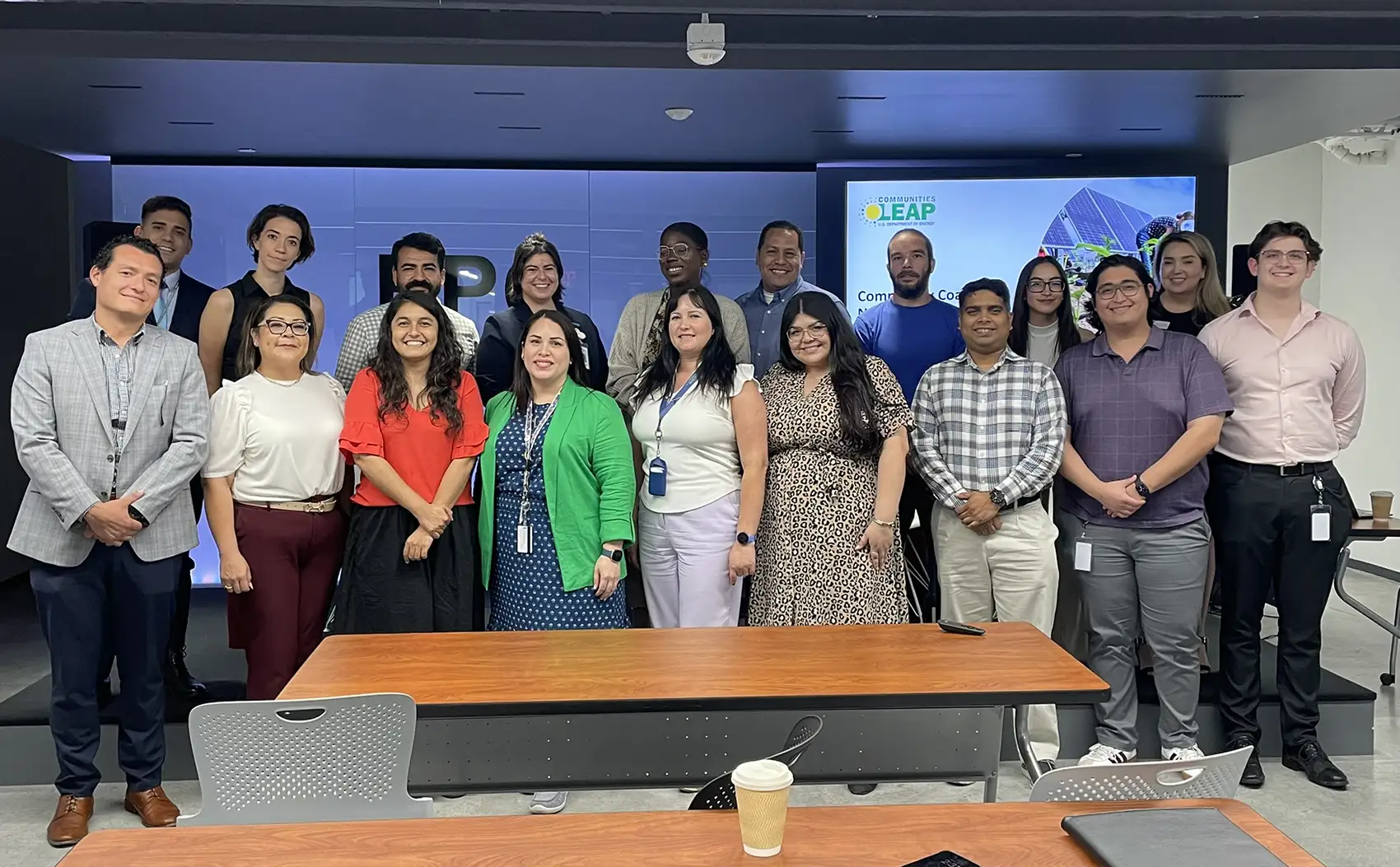
In El Paso, Texas, she works with a multisectoral coalition representing city officials, business leaders, academia, and local utilities to support strategies that strengthen energy reliability, workforce development, and economic growth.
“It’s exciting to see people from different sectors recognize that, to build long-term solutions, we need to work together,” she said. “And after almost two years, we’re starting to see the results.”
Through this effort, Ojeda Matos has brought together NLR’s subject matter experts to help the city of El Paso assess the feasibility of operating a community center as a central hub designed to help maintain daily services during short-term outages. As the city’s first microgrid case study, the results are poised to guide and inform El Paso’s broader disaster readiness plan.
Ojeda Matos is also leading an effort in Puerto Rico to identify suitable sites for new energy generation across the archipelago.
“There’s a shortage of energy generation in Puerto Rico,” she said. “But land and resources are limited, so we’re helping find feasible places to accelerate decision-making and add capacity.”
To ensure the analysis reflects real-world needs, the project employs a regional approach.
“Siting energy projects is a very local issue,” she said. “Even though Puerto Rico is small, what matters on one side of the archipelago can be very different from another.”
That is why Ojeda Matos and the project’s local subcontractor deployed six regional workshops that brought more than 90 stakeholders to talk through the local factors that need to be considered.
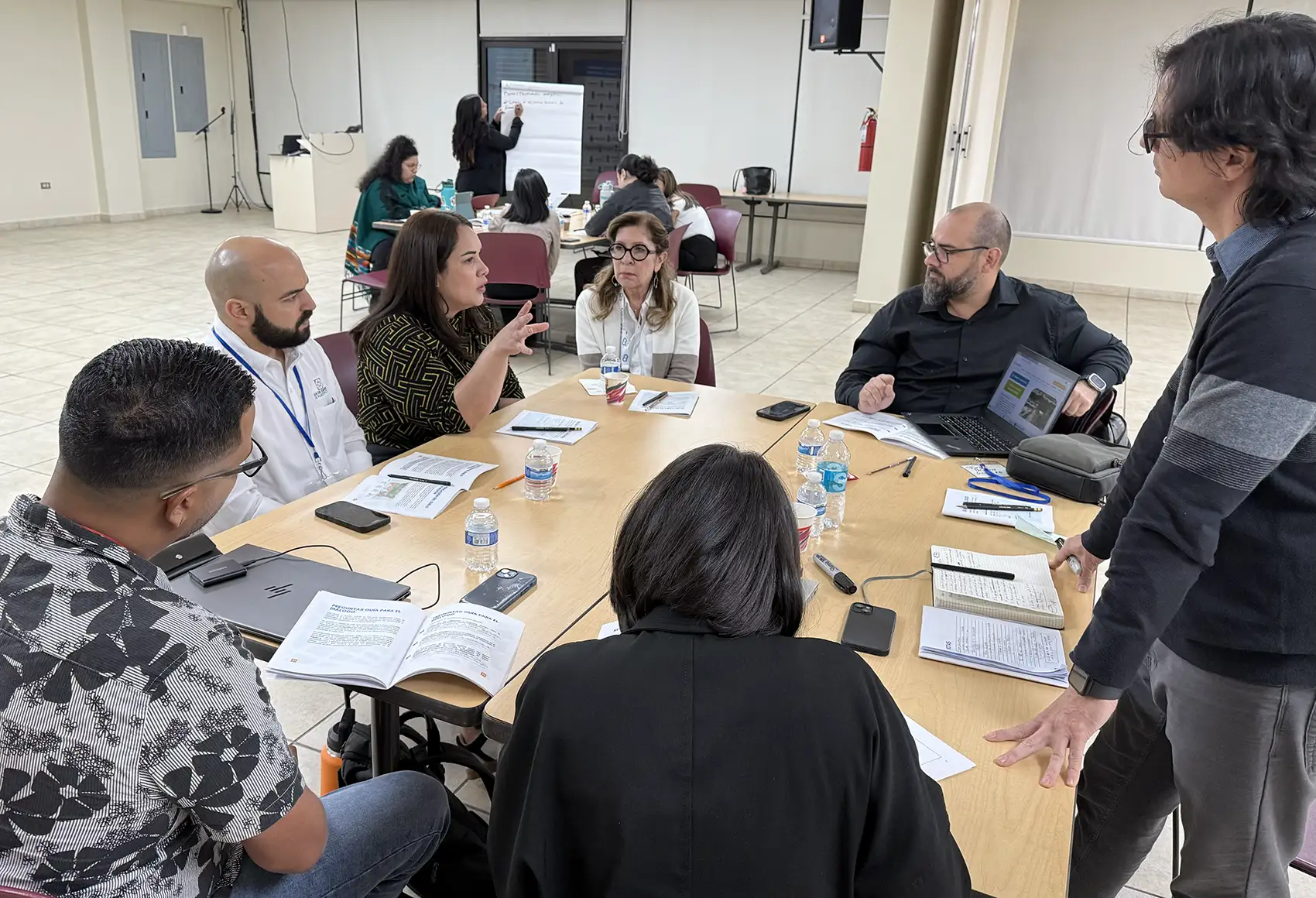
Another project in Puerto Rico is focused on helping a rural mountain community energy project remain viable for the long term.
“The energy project was built just eight months after Hurricane Maria, and the community has been running it for seven years,” Ojeda Matos said. “But now, they face a complex socio-technical challenge: rising operational costs, aging equipment, a declining population, community-leader burnout, and an unclear regulatory framework for microgrid interconnection and selling surplus energy.”
Ojeda Matos and her team are helping the community create an optimization plan that covers technical, economic, and operational needs.
“They operate like a mini-utility run by volunteers,” she said. “We’re supporting them by defining potential scenarios for the project moving forward. It’s about giving them the analysis they need to make informed decisions and plan for the future.”
A Passion for Practical Solutions
For Ojeda Matos, all of her projects tie back to her belief that systems—and people—should not be siloed.
“You can’t separate water, energy, food, and many other systems,” she said. “They depend on each other, and so do the people managing them.”
Ojeda Matos’ work is guided by her understanding that addressing one challenge in isolation often creates ripple effects elsewhere. And she sees an opportunity in connecting cross-sectoral perspectives and scientific practices to strengthen these systems. She strives to make technical findings practical and relevant to those implementing them on the ground.
At NLR, she is putting that vision to work.
Learn more about how NLR’s experts are partnering with state, local, and Tribal organizations and studying water and power systems integration, and subscribe to the NLR water power newsletter, The Current, for the latest news on NLR’s water power research.
Last Updated Jan. 22, 2026