
Artificial Intelligence and Machine Learning User Applications and Support Tools
NLR has developed general-purpose artificial intelligence (AI) and machine learning (ML) tools for various energy research applications.
AI and ML support a wide range of NLR scientific workflows. These include reduced-order modeling (compressing complex, high-fidelity physics or simulation models into lower-dimensional surrogates that preserve key dynamics for much faster computation), predictive modeling and forecasting, image and signal processing for instruments and remote sensing, anomaly and event detection in experiments, materials and chemical discovery, and optimization and control of energy and environmental systems. The field and ecosystem evolve rapidly, which makes it challenging for researchers to track new methods, assess reliability and uncertainty, and deploy fit-for-purpose tools in domain-specific pipelines. This work aims to tackle that challenge and bring updated tools to NLR researchers.
Predictive Atomistic Materials Simulations With Uncertainty Quantification
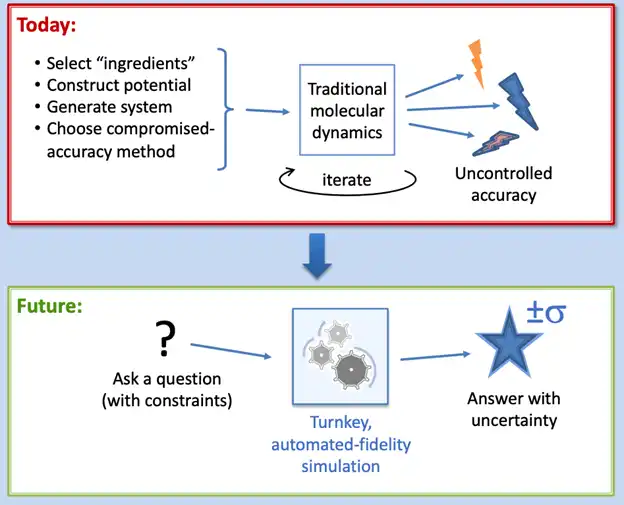
This project aims to enable a paradigm shift for at-scale atomistic materials simulations, with predictive accuracy and measured error bounds.
AI and ML user applications and support tools enable predictive large-scale atomistic materials simulations that approach quantum-level accuracy by developing an automated framework.
Quantum mechanics simulations are useful for a variety of problems involving materials science, but the underlying equations involved in the numerical simulations are practically impossible to solve on the scales relevant for predicting many physical and chemical properties of matter. The tool enables the acceleration of these simulations, allowing large-scale materials simulations with high levels of accuracy and well-developed uncertainty quantification.
Crosscutting Applications
Crosscutting applications include reduced order modeling of fundamental turbulence and chemistry dynamics, molecular dynamics, power grid operations, and hydrogen fuel cell production.
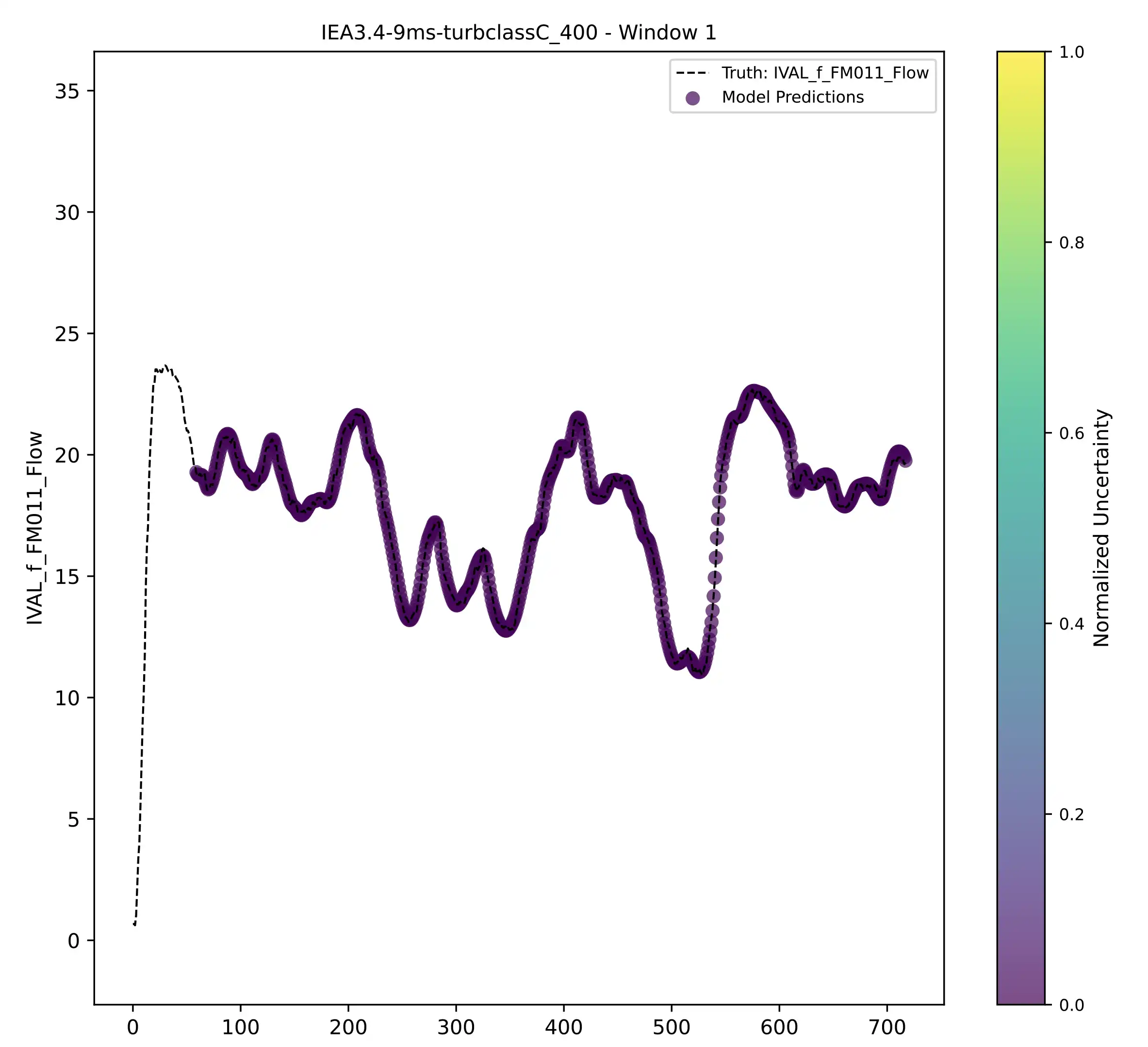
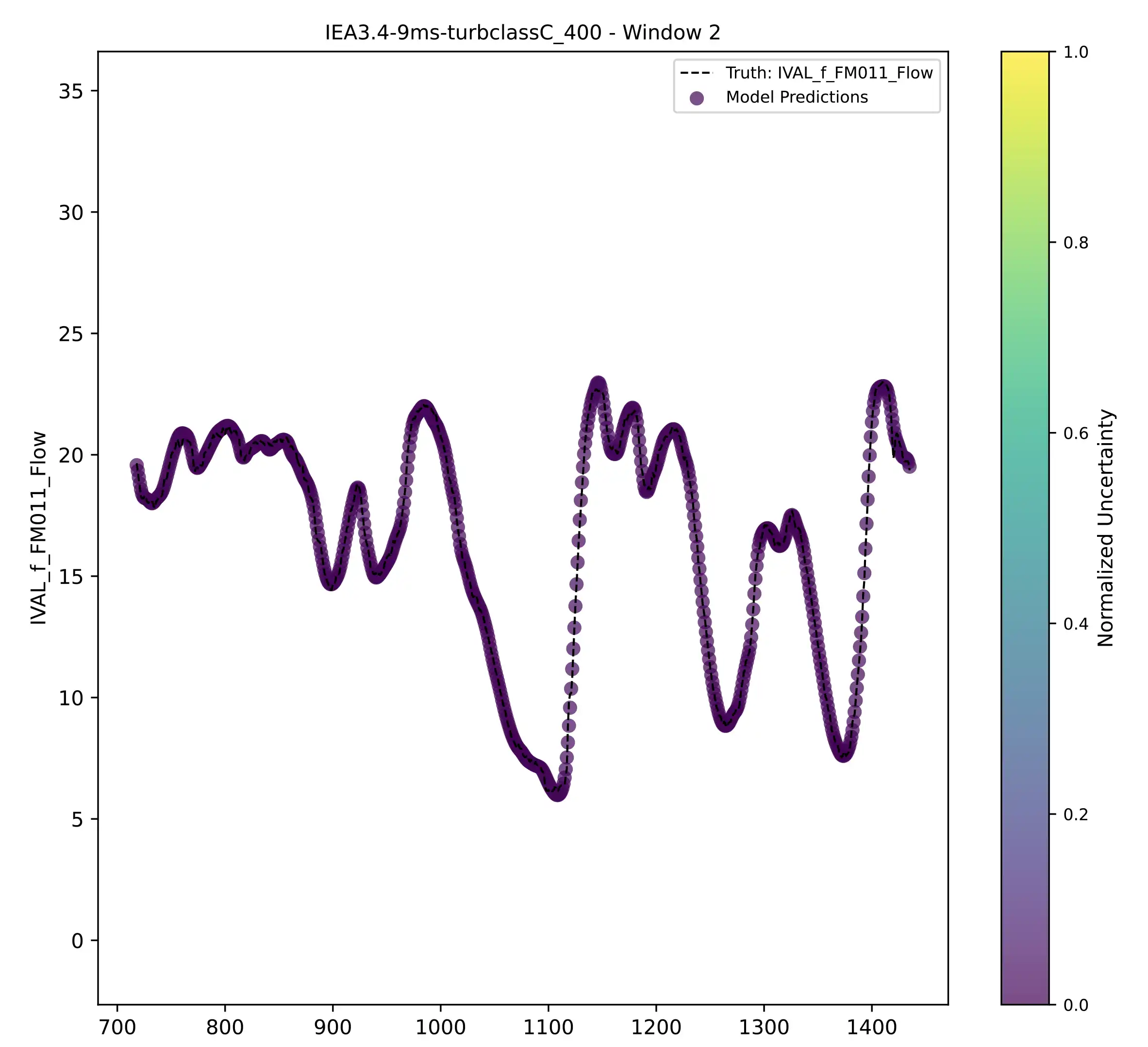
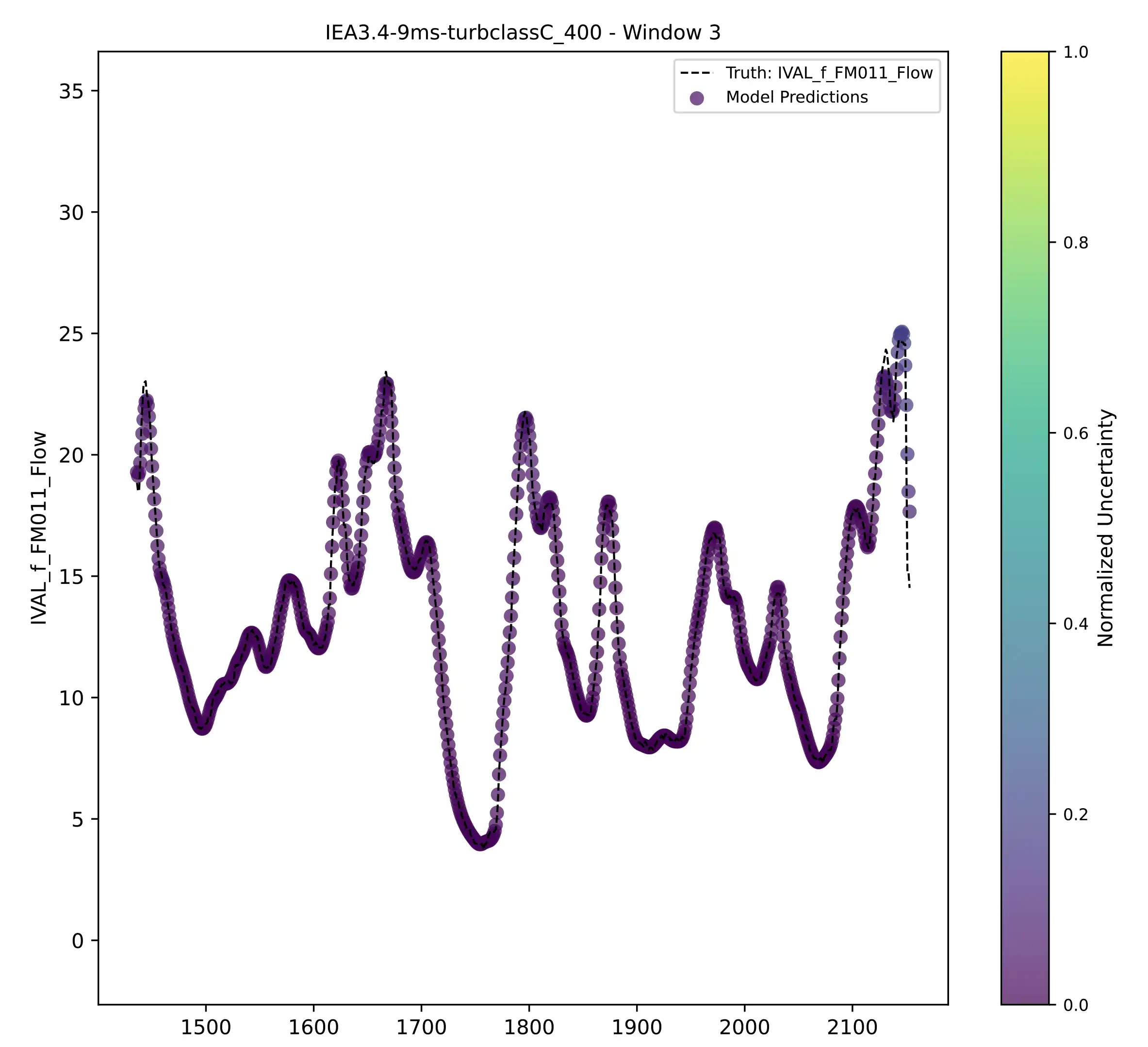
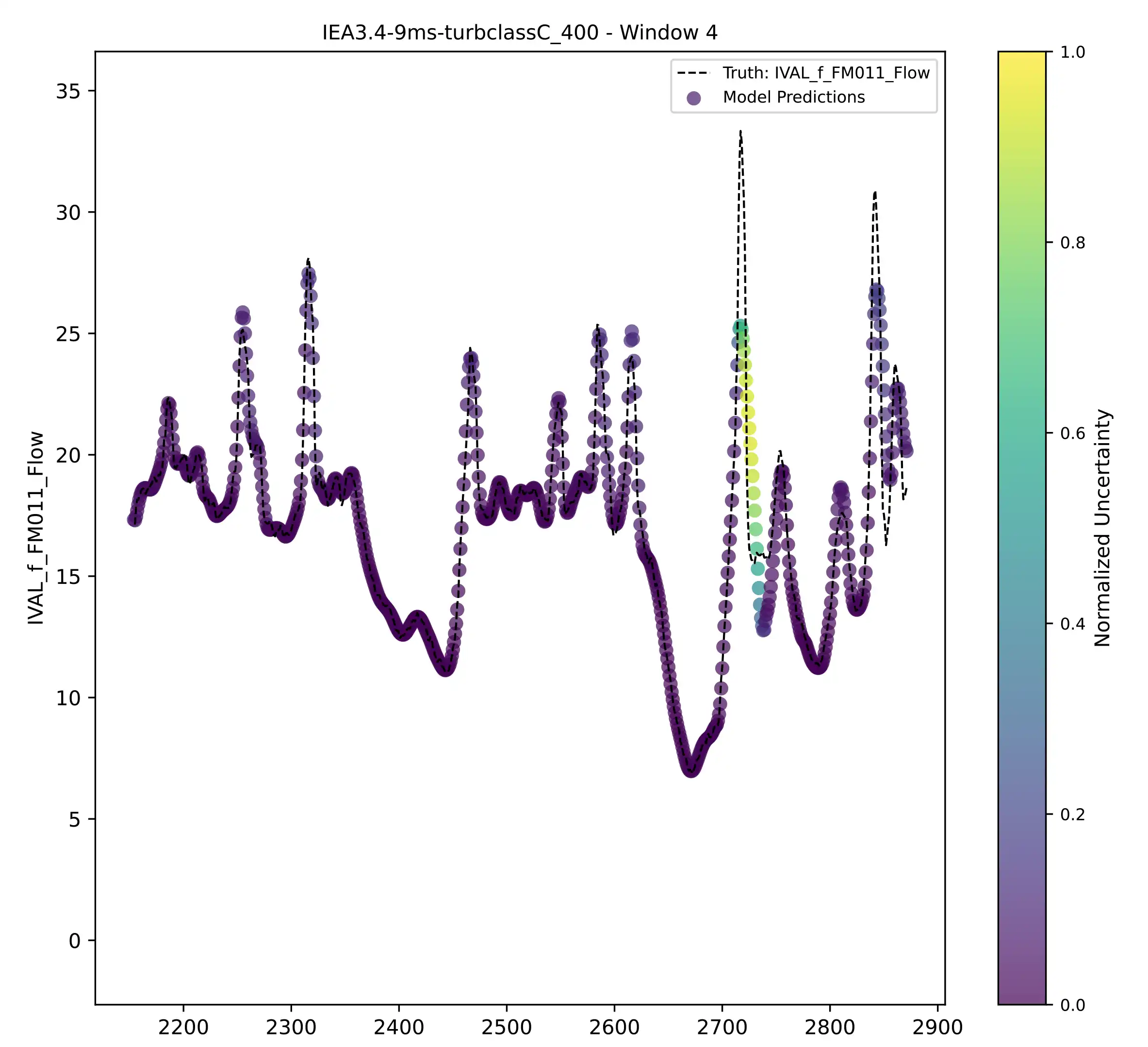
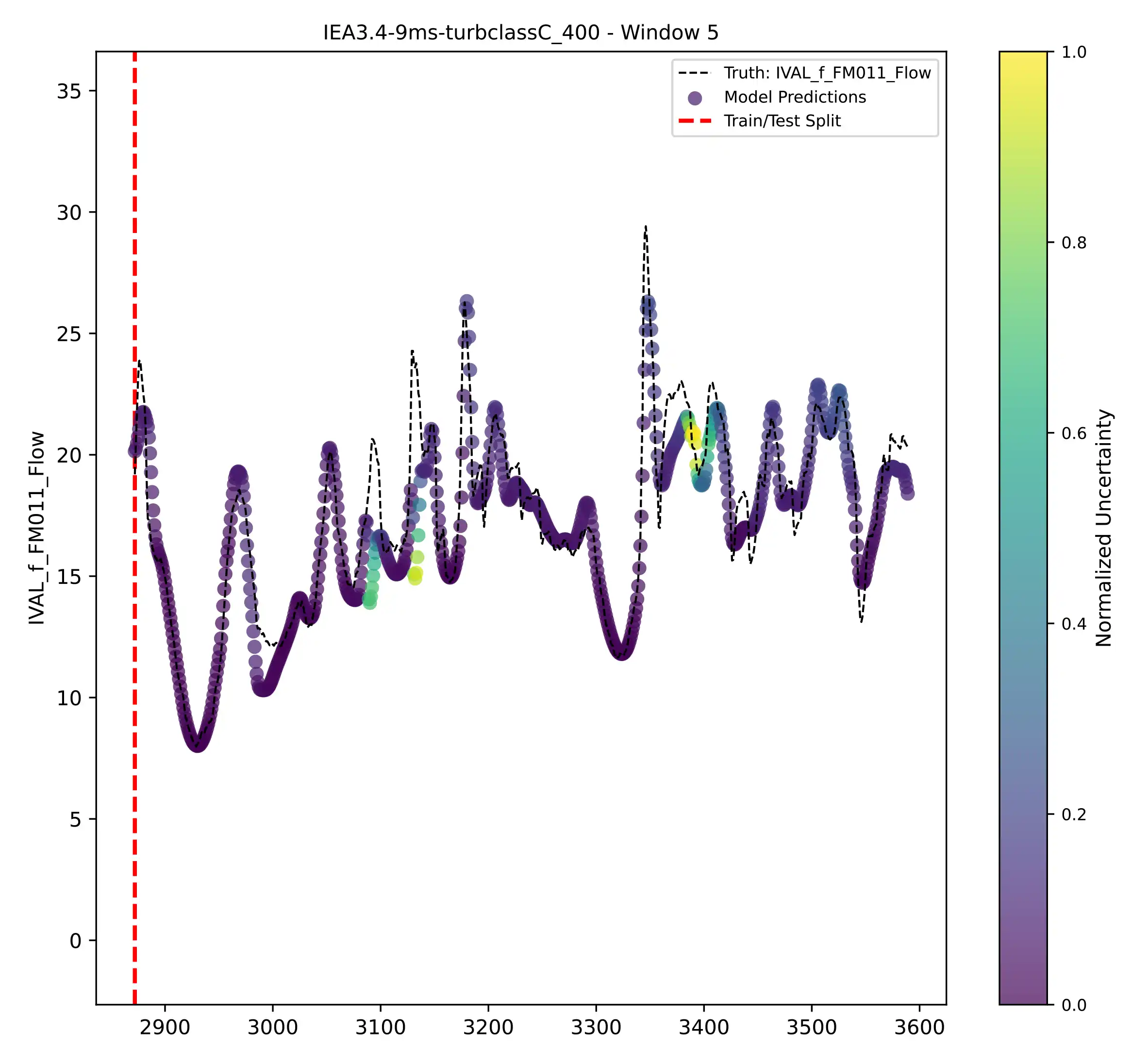
This uncertainty-aware long short-term memory model predicts production from a fuel cell trained on experimental data. The colors show the uncertainty of the prediction, which is greater in regions where the prediction is less accurate.
Download AI User Applications and Support Codes
The software suite can be accessed via a GitHub repo.
Contact
Share

Last Updated April 30, 2026